
TubeCap MKP-Film
TubeCap combines the time response – the "speed" – of a film capacitor with high voltage withstand capability – in a compact design.
Product Finder
Use our product finder to filter for components based on key specifications. This ensures you get the best results tailored to your individual requirements.

TCAP
TubeCap combines the time response – the "speed" – of a film capacitor with high voltage withstand capability – in a compact design.
TCAP-20T5.750
Aluminum metallization (100% aluminum instead of zinc-aluminum mixture)
Pure aluminum metallization replaces the zinc-aluminum mixture commonly used in industry with a homogeneous metal structure. This reduces interface effects at the grain boundaries , stabilizes the conductivity across the electrode surface and results in a significantly quieter noise spectrum. For example, the basic design of an MCap is audibly different from typical industrial capacitors.
Tonal Effects
- Darker, quieter background — subtle artifacts recede
- Clearer, clearer stage without rough-metallic side effects
- Quiet, well-defined overall sound — a real introduction to audiophile quality
Non-Magnetic Connections
Non-magnetic connections minimize micro-microphone modulations in the current path. In a power supply capacitor, the current flows not only through the coil, but also through the connecting wires and contact points — and this is exactly where ferromagnetic materials can produce undesired effects. Non-magnetic connection materials avoid magnetization and hysteresis in the conductor and thus reduce current-synchronous, very fine impedance modulations. This is a micro-microphonic measure in the actual power path: The connection is closer to the ideal conductor, without “magnetic interference.” In addition, there is additional electrotechnical benefit because non-magnetic, highly conductive materials often lower and stabilize contact and transition resistances. As a result, energy is available more evenly at the amplifier stage — and the sound remains quieter and more controlled.
Tonal effects
- quieter background and less “grit” with complex music
- more stable transients because the current path is less finely modulated
- clearer contours and cleaner room images at high levels
- more consistent sound quality due to more stable contact and conduction conditions
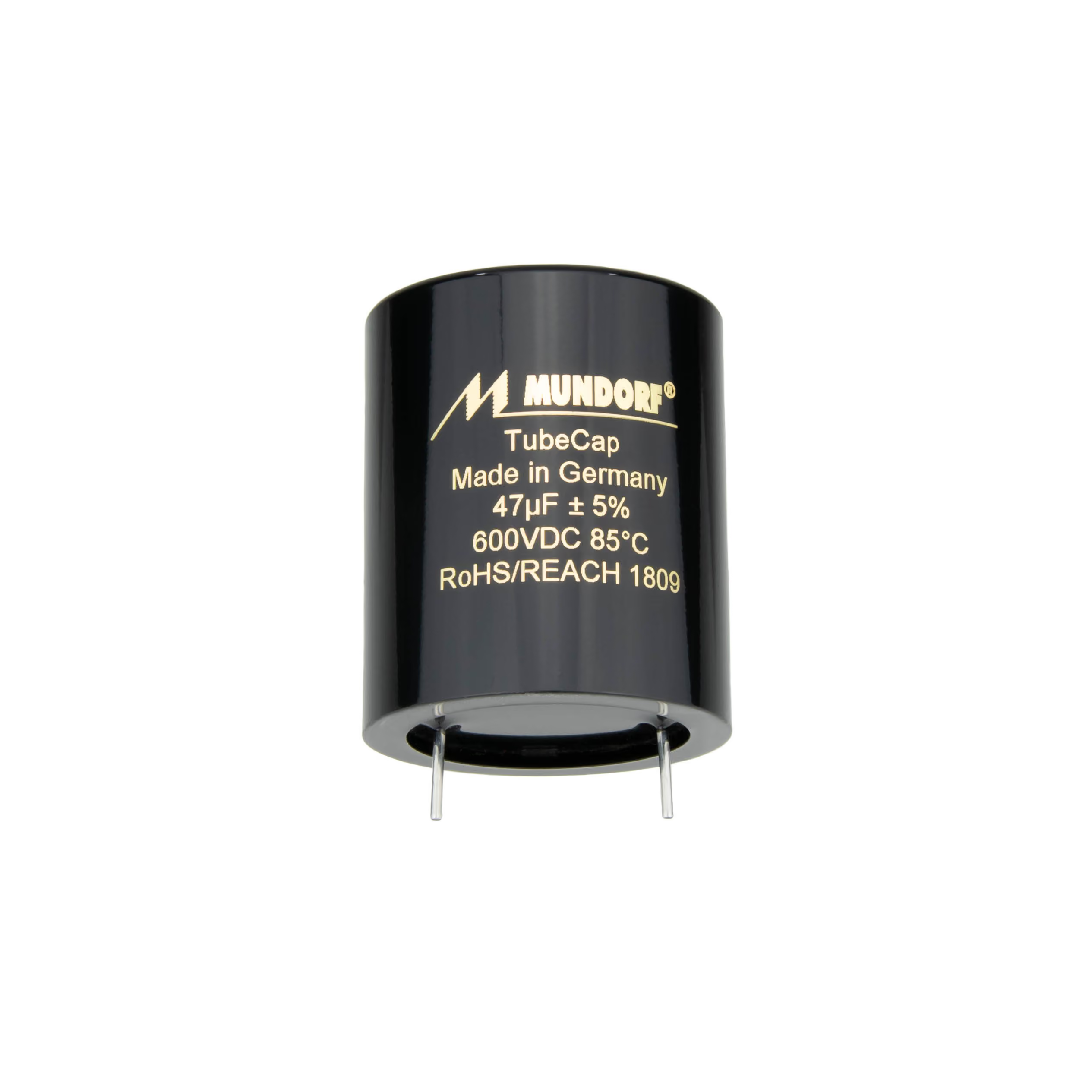
TCAP-47T5.600
Aluminum metallization (100% aluminum instead of zinc-aluminum mixture)
Pure aluminum metallization replaces the zinc-aluminum mixture commonly used in industry with a homogeneous metal structure. This reduces interface effects at the grain boundaries , stabilizes the conductivity across the electrode surface and results in a significantly quieter noise spectrum. For example, the basic design of an MCap is audibly different from typical industrial capacitors.
Tonal Effects
- Darker, quieter background — subtle artifacts recede
- Clearer, clearer stage without rough-metallic side effects
- Quiet, well-defined overall sound — a real introduction to audiophile quality
Non-Magnetic Connections
Non-magnetic connections minimize micro-microphone modulations in the current path. In a power supply capacitor, the current flows not only through the coil, but also through the connecting wires and contact points — and this is exactly where ferromagnetic materials can produce undesired effects. Non-magnetic connection materials avoid magnetization and hysteresis in the conductor and thus reduce current-synchronous, very fine impedance modulations. This is a micro-microphonic measure in the actual power path: The connection is closer to the ideal conductor, without “magnetic interference.” In addition, there is additional electrotechnical benefit because non-magnetic, highly conductive materials often lower and stabilize contact and transition resistances. As a result, energy is available more evenly at the amplifier stage — and the sound remains quieter and more controlled.
Tonal effects
- quieter background and less “grit” with complex music
- more stable transients because the current path is less finely modulated
- clearer contours and cleaner room images at high levels
- more consistent sound quality due to more stable contact and conduction conditions
TCAP-30T5.600
Aluminum metallization (100% aluminum instead of zinc-aluminum mixture)
Pure aluminum metallization replaces the zinc-aluminum mixture commonly used in industry with a homogeneous metal structure. This reduces interface effects at the grain boundaries , stabilizes the conductivity across the electrode surface and results in a significantly quieter noise spectrum. For example, the basic design of an MCap is audibly different from typical industrial capacitors.
Tonal Effects
- Darker, quieter background — subtle artifacts recede
- Clearer, clearer stage without rough-metallic side effects
- Quiet, well-defined overall sound — a real introduction to audiophile quality
Non-Magnetic Connections
Non-magnetic connections minimize micro-microphone modulations in the current path. In a power supply capacitor, the current flows not only through the coil, but also through the connecting wires and contact points — and this is exactly where ferromagnetic materials can produce undesired effects. Non-magnetic connection materials avoid magnetization and hysteresis in the conductor and thus reduce current-synchronous, very fine impedance modulations. This is a micro-microphonic measure in the actual power path: The connection is closer to the ideal conductor, without “magnetic interference.” In addition, there is additional electrotechnical benefit because non-magnetic, highly conductive materials often lower and stabilize contact and transition resistances. As a result, energy is available more evenly at the amplifier stage — and the sound remains quieter and more controlled.
Tonal effects
- quieter background and less “grit” with complex music
- more stable transients because the current path is less finely modulated
- clearer contours and cleaner room images at high levels
- more consistent sound quality due to more stable contact and conduction conditions