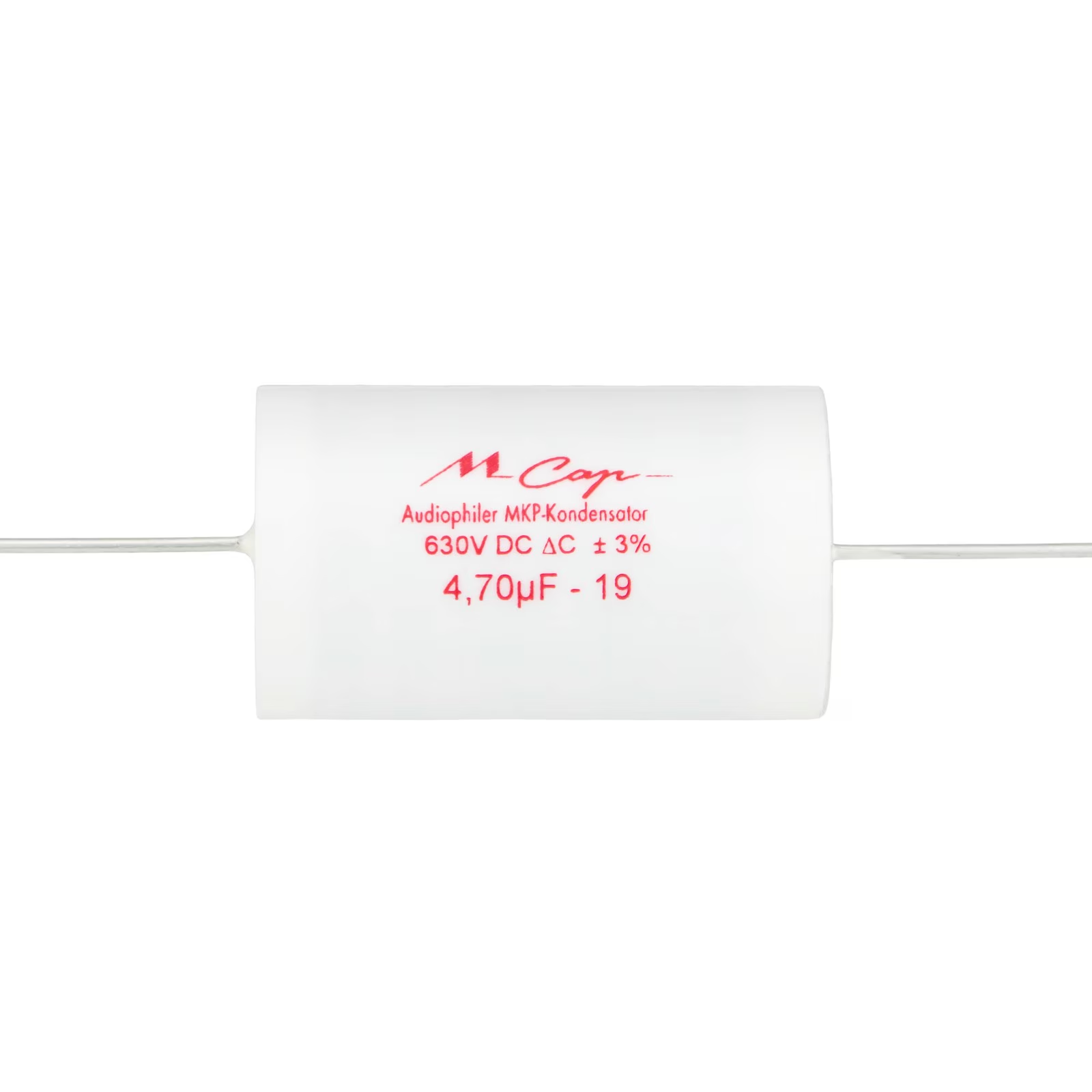
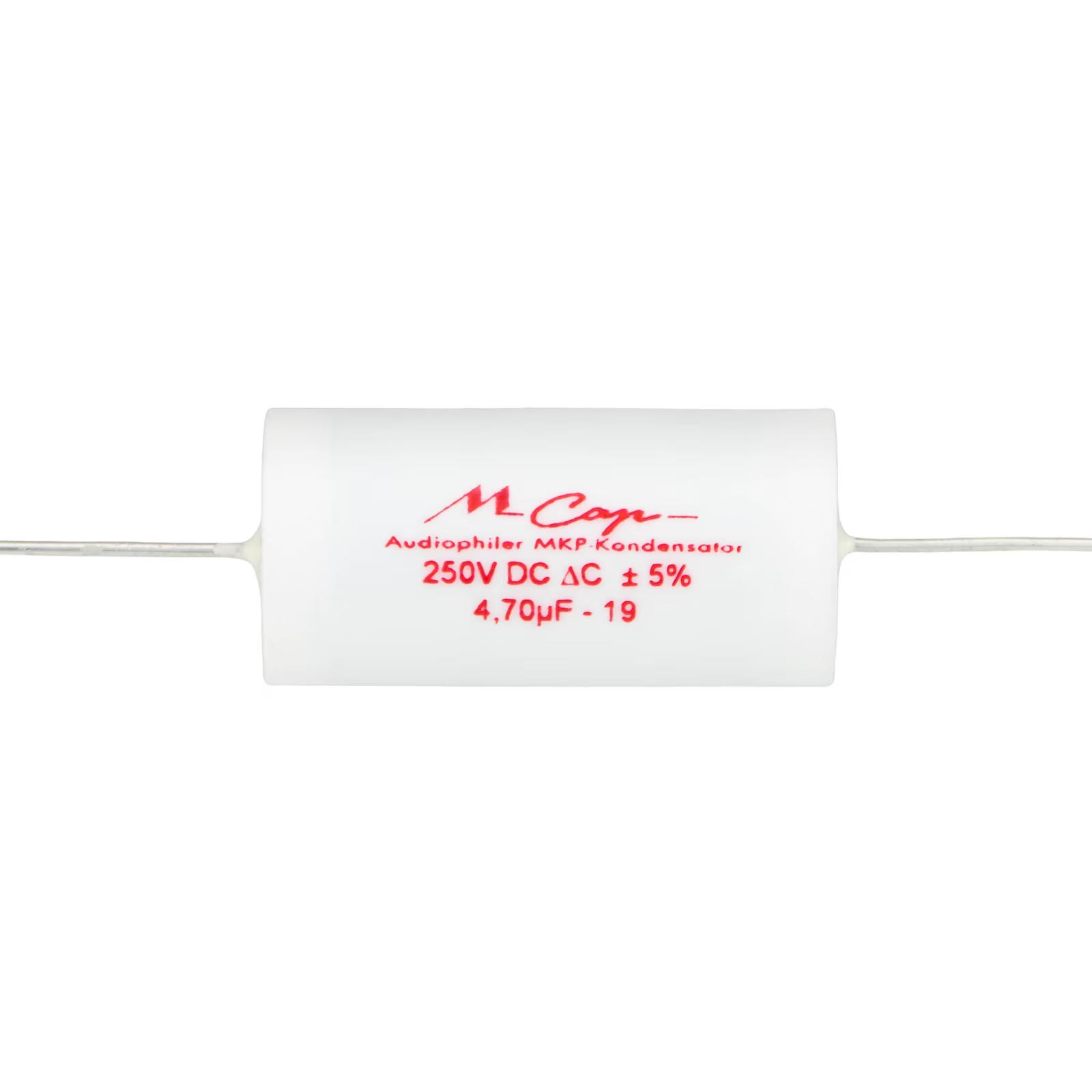
MCAP250-1,5
The MCap 250 is the most compact model in the MCap Classic series. It allows even large capacitances to be realized in a comparatively compact form – ideal for applications with limited space, without compromising on high-quality sound characteristics.
Technologies
Reduces charge carrier dispersion at grain boundaries in the metal, reduces sound roughness, calms the noise spectrum.
Aluminum metallization (100% aluminum instead of zinc-aluminum mixture)
Pure aluminum metallization replaces the zinc-aluminum mixture commonly used in industry with a homogeneous metal structure. This reduces interface effects at the grain boundaries , stabilizes the conductivity across the electrode surface and results in a significantly quieter noise spectrum. For example, the basic design of an MCap is audibly different from typical industrial capacitors.
Tonal Effects
- Darker, quieter background — subtle artifacts recede
- Clearer, clearer stage without rough-metallic side effects
- Quiet, well-defined overall sound — a real introduction to audiophile quality
Soothes the wrap, reduces macro microphones, increases silence and location precision.
Optimized Winding Tension plus Stabilization
Optimized winding tension and additional stabilization mechanically calm the wrap and significantly reduce macro-microphone effects — for a quieter background, a more stable stage and clean transients, even with dynamic music and higher levels.
Tonal effects
- more peace and order in the sound image
- More precise positioning and a more stable stage
- clearer microdetails without smudging
Make sure that the left and right channels work identically, important for stable stage and positioning.
Tight Tolerances
Tight tolerances in capacitance, inductance, and resistance ensure that capacitors of one type are very close together in terms of their electrical properties. In crossovers, the left and right channels therefore work virtually identically: crossover frequencies, level ratios and phase positions match closely. This is the basis for stable, precise stereo imaging and reproducible results — in series production and also after service.
Tonal Effects
- precise, stable soundstage without drifting
- Coherent overall impression: left and right channels fuse into a single, seamless whole
- characteristic sound is reliably retained even after component replacement/repair
- More stable virtual center and clearer spatial layering
Similar configurations
1 VARIANTS
We are happy to advise you
Whether ideal components, technical know-how or individual solutions. Let us find the best solution for your application together!
For industrial customers
Order free samples
Would you like to test our products in yours? As a business customer, you can request free samples and see the quality and design for yourself.
NEWSLETTER
News and tips straight to your inbox. Subscribe to our newsletter and choose which topics matter to you.
Our services for manufacturers and partners
From selecting products from our range to developing custom solutions – we support you through every phase of your project.
Product consulting
Would you like to test our products yourself? As a business customer, you can request free samples to experience our quality and design firsthand.
Project consulting & custom solutions
We create custom designs outside of our standard range, perfectly tailored to your project in terms of dimensions, specifications, and combinations. Available for orders of a commercially viable quantity.

Aluminum metallization (100% aluminum instead of zinc-aluminum mixture)
Pure aluminum metallization replaces the zinc-aluminum mixture commonly used in industry with a homogeneous metal structure. This reduces interface effects at the grain boundaries , stabilizes the conductivity across the electrode surface and results in a significantly quieter noise spectrum. For example, the basic design of an MCap is audibly different from typical industrial capacitors.
Tonal Effects
- Darker, quieter background — subtle artifacts recede
- Clearer, clearer stage without rough-metallic side effects
- Quiet, well-defined overall sound — a real introduction to audiophile quality
Optimized Winding Tension plus Stabilization
Optimized winding tension and additional stabilization mechanically calm the wrap and significantly reduce macro-microphone effects — for a quieter background, a more stable stage and clean transients, even with dynamic music and higher levels.
Tonal effects
- more peace and order in the sound image
- More precise positioning and a more stable stage
- clearer microdetails without smudging
Tight Tolerances
Tight tolerances in capacitance, inductance, and resistance ensure that capacitors of one type are very close together in terms of their electrical properties. In crossovers, the left and right channels therefore work virtually identically: crossover frequencies, level ratios and phase positions match closely. This is the basis for stable, precise stereo imaging and reproducible results — in series production and also after service.
Tonal Effects
- precise, stable soundstage without drifting
- Coherent overall impression: left and right channels fuse into a single, seamless whole
- characteristic sound is reliably retained even after component replacement/repair
- More stable virtual center and clearer spatial layering

Aluminum metallization (100% aluminum instead of zinc-aluminum mixture)
Pure aluminum metallization replaces the zinc-aluminum mixture commonly used in industry with a homogeneous metal structure. This reduces interface effects at the grain boundaries , stabilizes the conductivity across the electrode surface and results in a significantly quieter noise spectrum. For example, the basic design of an MCap is audibly different from typical industrial capacitors.
Tonal Effects
- Darker, quieter background — subtle artifacts recede
- Clearer, clearer stage without rough-metallic side effects
- Quiet, well-defined overall sound — a real introduction to audiophile quality
Optimized Winding Tension plus Stabilization
Optimized winding tension and additional stabilization mechanically calm the wrap and significantly reduce macro-microphone effects — for a quieter background, a more stable stage and clean transients, even with dynamic music and higher levels.
Tonal effects
- more peace and order in the sound image
- More precise positioning and a more stable stage
- clearer microdetails without smudging
Tight Tolerances
Tight tolerances in capacitance, inductance, and resistance ensure that capacitors of one type are very close together in terms of their electrical properties. In crossovers, the left and right channels therefore work virtually identically: crossover frequencies, level ratios and phase positions match closely. This is the basis for stable, precise stereo imaging and reproducible results — in series production and also after service.
Tonal Effects
- precise, stable soundstage without drifting
- Coherent overall impression: left and right channels fuse into a single, seamless whole
- characteristic sound is reliably retained even after component replacement/repair
- More stable virtual center and clearer spatial layering

Aluminum metallization (100% aluminum instead of zinc-aluminum mixture)
Pure aluminum metallization replaces the zinc-aluminum mixture commonly used in industry with a homogeneous metal structure. This reduces interface effects at the grain boundaries , stabilizes the conductivity across the electrode surface and results in a significantly quieter noise spectrum. For example, the basic design of an MCap is audibly different from typical industrial capacitors.
Tonal Effects
- Darker, quieter background — subtle artifacts recede
- Clearer, clearer stage without rough-metallic side effects
- Quiet, well-defined overall sound — a real introduction to audiophile quality
Optimized Winding Tension plus Stabilization
Optimized winding tension and additional stabilization mechanically calm the wrap and significantly reduce macro-microphone effects — for a quieter background, a more stable stage and clean transients, even with dynamic music and higher levels.
Tonal effects
- more peace and order in the sound image
- More precise positioning and a more stable stage
- clearer microdetails without smudging
Tight Tolerances
Tight tolerances in capacitance, inductance, and resistance ensure that capacitors of one type are very close together in terms of their electrical properties. In crossovers, the left and right channels therefore work virtually identically: crossover frequencies, level ratios and phase positions match closely. This is the basis for stable, precise stereo imaging and reproducible results — in series production and also after service.
Tonal Effects
- precise, stable soundstage without drifting
- Coherent overall impression: left and right channels fuse into a single, seamless whole
- characteristic sound is reliably retained even after component replacement/repair
- More stable virtual center and clearer spatial layering

Aluminum metallization (100% aluminum instead of zinc-aluminum mixture)
Pure aluminum metallization replaces the zinc-aluminum mixture commonly used in industry with a homogeneous metal structure. This reduces interface effects at the grain boundaries , stabilizes the conductivity across the electrode surface and results in a significantly quieter noise spectrum. For example, the basic design of an MCap is audibly different from typical industrial capacitors.
Tonal Effects
- Darker, quieter background — subtle artifacts recede
- Clearer, clearer stage without rough-metallic side effects
- Quiet, well-defined overall sound — a real introduction to audiophile quality
Optimized Winding Tension plus Stabilization
Optimized winding tension and additional stabilization mechanically calm the wrap and significantly reduce macro-microphone effects — for a quieter background, a more stable stage and clean transients, even with dynamic music and higher levels.
Tonal effects
- more peace and order in the sound image
- More precise positioning and a more stable stage
- clearer microdetails without smudging
Tight Tolerances
Tight tolerances in capacitance, inductance, and resistance ensure that capacitors of one type are very close together in terms of their electrical properties. In crossovers, the left and right channels therefore work virtually identically: crossover frequencies, level ratios and phase positions match closely. This is the basis for stable, precise stereo imaging and reproducible results — in series production and also after service.
Tonal Effects
- precise, stable soundstage without drifting
- Coherent overall impression: left and right channels fuse into a single, seamless whole
- characteristic sound is reliably retained even after component replacement/repair
- More stable virtual center and clearer spatial layering

Aluminum metallization (100% aluminum instead of zinc-aluminum mixture)
Pure aluminum metallization replaces the zinc-aluminum mixture commonly used in industry with a homogeneous metal structure. This reduces interface effects at the grain boundaries , stabilizes the conductivity across the electrode surface and results in a significantly quieter noise spectrum. For example, the basic design of an MCap is audibly different from typical industrial capacitors.
Tonal Effects
- Darker, quieter background — subtle artifacts recede
- Clearer, clearer stage without rough-metallic side effects
- Quiet, well-defined overall sound — a real introduction to audiophile quality
Optimized Winding Tension plus Stabilization
Optimized winding tension and additional stabilization mechanically calm the wrap and significantly reduce macro-microphone effects — for a quieter background, a more stable stage and clean transients, even with dynamic music and higher levels.
Tonal effects
- more peace and order in the sound image
- More precise positioning and a more stable stage
- clearer microdetails without smudging
Tight Tolerances
Tight tolerances in capacitance, inductance, and resistance ensure that capacitors of one type are very close together in terms of their electrical properties. In crossovers, the left and right channels therefore work virtually identically: crossover frequencies, level ratios and phase positions match closely. This is the basis for stable, precise stereo imaging and reproducible results — in series production and also after service.
Tonal Effects
- precise, stable soundstage without drifting
- Coherent overall impression: left and right channels fuse into a single, seamless whole
- characteristic sound is reliably retained even after component replacement/repair
- More stable virtual center and clearer spatial layering

Aluminum metallization (100% aluminum instead of zinc-aluminum mixture)
Pure aluminum metallization replaces the zinc-aluminum mixture commonly used in industry with a homogeneous metal structure. This reduces interface effects at the grain boundaries , stabilizes the conductivity across the electrode surface and results in a significantly quieter noise spectrum. For example, the basic design of an MCap is audibly different from typical industrial capacitors.
Tonal Effects
- Darker, quieter background — subtle artifacts recede
- Clearer, clearer stage without rough-metallic side effects
- Quiet, well-defined overall sound — a real introduction to audiophile quality
Optimized Winding Tension plus Stabilization
Optimized winding tension and additional stabilization mechanically calm the wrap and significantly reduce macro-microphone effects — for a quieter background, a more stable stage and clean transients, even with dynamic music and higher levels.
Tonal effects
- more peace and order in the sound image
- More precise positioning and a more stable stage
- clearer microdetails without smudging
Tight Tolerances
Tight tolerances in capacitance, inductance, and resistance ensure that capacitors of one type are very close together in terms of their electrical properties. In crossovers, the left and right channels therefore work virtually identically: crossover frequencies, level ratios and phase positions match closely. This is the basis for stable, precise stereo imaging and reproducible results — in series production and also after service.
Tonal Effects
- precise, stable soundstage without drifting
- Coherent overall impression: left and right channels fuse into a single, seamless whole
- characteristic sound is reliably retained even after component replacement/repair
- More stable virtual center and clearer spatial layering

Aluminum metallization (100% aluminum instead of zinc-aluminum mixture)
Pure aluminum metallization replaces the zinc-aluminum mixture commonly used in industry with a homogeneous metal structure. This reduces interface effects at the grain boundaries , stabilizes the conductivity across the electrode surface and results in a significantly quieter noise spectrum. For example, the basic design of an MCap is audibly different from typical industrial capacitors.
Tonal Effects
- Darker, quieter background — subtle artifacts recede
- Clearer, clearer stage without rough-metallic side effects
- Quiet, well-defined overall sound — a real introduction to audiophile quality
Optimized Winding Tension plus Stabilization
Optimized winding tension and additional stabilization mechanically calm the wrap and significantly reduce macro-microphone effects — for a quieter background, a more stable stage and clean transients, even with dynamic music and higher levels.
Tonal effects
- more peace and order in the sound image
- More precise positioning and a more stable stage
- clearer microdetails without smudging
Tight Tolerances
Tight tolerances in capacitance, inductance, and resistance ensure that capacitors of one type are very close together in terms of their electrical properties. In crossovers, the left and right channels therefore work virtually identically: crossover frequencies, level ratios and phase positions match closely. This is the basis for stable, precise stereo imaging and reproducible results — in series production and also after service.
Tonal Effects
- precise, stable soundstage without drifting
- Coherent overall impression: left and right channels fuse into a single, seamless whole
- characteristic sound is reliably retained even after component replacement/repair
- More stable virtual center and clearer spatial layering

Aluminum metallization (100% aluminum instead of zinc-aluminum mixture)
Pure aluminum metallization replaces the zinc-aluminum mixture commonly used in industry with a homogeneous metal structure. This reduces interface effects at the grain boundaries , stabilizes the conductivity across the electrode surface and results in a significantly quieter noise spectrum. For example, the basic design of an MCap is audibly different from typical industrial capacitors.
Tonal Effects
- Darker, quieter background — subtle artifacts recede
- Clearer, clearer stage without rough-metallic side effects
- Quiet, well-defined overall sound — a real introduction to audiophile quality
Optimized Winding Tension plus Stabilization
Optimized winding tension and additional stabilization mechanically calm the wrap and significantly reduce macro-microphone effects — for a quieter background, a more stable stage and clean transients, even with dynamic music and higher levels.
Tonal effects
- more peace and order in the sound image
- More precise positioning and a more stable stage
- clearer microdetails without smudging
Tight Tolerances
Tight tolerances in capacitance, inductance, and resistance ensure that capacitors of one type are very close together in terms of their electrical properties. In crossovers, the left and right channels therefore work virtually identically: crossover frequencies, level ratios and phase positions match closely. This is the basis for stable, precise stereo imaging and reproducible results — in series production and also after service.
Tonal Effects
- precise, stable soundstage without drifting
- Coherent overall impression: left and right channels fuse into a single, seamless whole
- characteristic sound is reliably retained even after component replacement/repair
- More stable virtual center and clearer spatial layering

Aluminum metallization (100% aluminum instead of zinc-aluminum mixture)
Pure aluminum metallization replaces the zinc-aluminum mixture commonly used in industry with a homogeneous metal structure. This reduces interface effects at the grain boundaries , stabilizes the conductivity across the electrode surface and results in a significantly quieter noise spectrum. For example, the basic design of an MCap is audibly different from typical industrial capacitors.
Tonal Effects
- Darker, quieter background — subtle artifacts recede
- Clearer, clearer stage without rough-metallic side effects
- Quiet, well-defined overall sound — a real introduction to audiophile quality
Optimized Winding Tension plus Stabilization
Optimized winding tension and additional stabilization mechanically calm the wrap and significantly reduce macro-microphone effects — for a quieter background, a more stable stage and clean transients, even with dynamic music and higher levels.
Tonal effects
- more peace and order in the sound image
- More precise positioning and a more stable stage
- clearer microdetails without smudging
Tight Tolerances
Tight tolerances in capacitance, inductance, and resistance ensure that capacitors of one type are very close together in terms of their electrical properties. In crossovers, the left and right channels therefore work virtually identically: crossover frequencies, level ratios and phase positions match closely. This is the basis for stable, precise stereo imaging and reproducible results — in series production and also after service.
Tonal Effects
- precise, stable soundstage without drifting
- Coherent overall impression: left and right channels fuse into a single, seamless whole
- characteristic sound is reliably retained even after component replacement/repair
- More stable virtual center and clearer spatial layering

Aluminum metallization (100% aluminum instead of zinc-aluminum mixture)
Pure aluminum metallization replaces the zinc-aluminum mixture commonly used in industry with a homogeneous metal structure. This reduces interface effects at the grain boundaries , stabilizes the conductivity across the electrode surface and results in a significantly quieter noise spectrum. For example, the basic design of an MCap is audibly different from typical industrial capacitors.
Tonal Effects
- Darker, quieter background — subtle artifacts recede
- Clearer, clearer stage without rough-metallic side effects
- Quiet, well-defined overall sound — a real introduction to audiophile quality
Optimized Winding Tension plus Stabilization
Optimized winding tension and additional stabilization mechanically calm the wrap and significantly reduce macro-microphone effects — for a quieter background, a more stable stage and clean transients, even with dynamic music and higher levels.
Tonal effects
- more peace and order in the sound image
- More precise positioning and a more stable stage
- clearer microdetails without smudging
Tight Tolerances
Tight tolerances in capacitance, inductance, and resistance ensure that capacitors of one type are very close together in terms of their electrical properties. In crossovers, the left and right channels therefore work virtually identically: crossover frequencies, level ratios and phase positions match closely. This is the basis for stable, precise stereo imaging and reproducible results — in series production and also after service.
Tonal Effects
- precise, stable soundstage without drifting
- Coherent overall impression: left and right channels fuse into a single, seamless whole
- characteristic sound is reliably retained even after component replacement/repair
- More stable virtual center and clearer spatial layering

Aluminum metallization (100% aluminum instead of zinc-aluminum mixture)
Pure aluminum metallization replaces the zinc-aluminum mixture commonly used in industry with a homogeneous metal structure. This reduces interface effects at the grain boundaries , stabilizes the conductivity across the electrode surface and results in a significantly quieter noise spectrum. For example, the basic design of an MCap is audibly different from typical industrial capacitors.
Tonal Effects
- Darker, quieter background — subtle artifacts recede
- Clearer, clearer stage without rough-metallic side effects
- Quiet, well-defined overall sound — a real introduction to audiophile quality
Optimized Winding Tension plus Stabilization
Optimized winding tension and additional stabilization mechanically calm the wrap and significantly reduce macro-microphone effects — for a quieter background, a more stable stage and clean transients, even with dynamic music and higher levels.
Tonal effects
- more peace and order in the sound image
- More precise positioning and a more stable stage
- clearer microdetails without smudging
Tight Tolerances
Tight tolerances in capacitance, inductance, and resistance ensure that capacitors of one type are very close together in terms of their electrical properties. In crossovers, the left and right channels therefore work virtually identically: crossover frequencies, level ratios and phase positions match closely. This is the basis for stable, precise stereo imaging and reproducible results — in series production and also after service.
Tonal Effects
- precise, stable soundstage without drifting
- Coherent overall impression: left and right channels fuse into a single, seamless whole
- characteristic sound is reliably retained even after component replacement/repair
- More stable virtual center and clearer spatial layering

Aluminum metallization (100% aluminum instead of zinc-aluminum mixture)
Pure aluminum metallization replaces the zinc-aluminum mixture commonly used in industry with a homogeneous metal structure. This reduces interface effects at the grain boundaries , stabilizes the conductivity across the electrode surface and results in a significantly quieter noise spectrum. For example, the basic design of an MCap is audibly different from typical industrial capacitors.
Tonal Effects
- Darker, quieter background — subtle artifacts recede
- Clearer, clearer stage without rough-metallic side effects
- Quiet, well-defined overall sound — a real introduction to audiophile quality
Optimized Winding Tension plus Stabilization
Optimized winding tension and additional stabilization mechanically calm the wrap and significantly reduce macro-microphone effects — for a quieter background, a more stable stage and clean transients, even with dynamic music and higher levels.
Tonal effects
- more peace and order in the sound image
- More precise positioning and a more stable stage
- clearer microdetails without smudging
Tight Tolerances
Tight tolerances in capacitance, inductance, and resistance ensure that capacitors of one type are very close together in terms of their electrical properties. In crossovers, the left and right channels therefore work virtually identically: crossover frequencies, level ratios and phase positions match closely. This is the basis for stable, precise stereo imaging and reproducible results — in series production and also after service.
Tonal Effects
- precise, stable soundstage without drifting
- Coherent overall impression: left and right channels fuse into a single, seamless whole
- characteristic sound is reliably retained even after component replacement/repair
- More stable virtual center and clearer spatial layering

Aluminum metallization (100% aluminum instead of zinc-aluminum mixture)
Pure aluminum metallization replaces the zinc-aluminum mixture commonly used in industry with a homogeneous metal structure. This reduces interface effects at the grain boundaries , stabilizes the conductivity across the electrode surface and results in a significantly quieter noise spectrum. For example, the basic design of an MCap is audibly different from typical industrial capacitors.
Tonal Effects
- Darker, quieter background — subtle artifacts recede
- Clearer, clearer stage without rough-metallic side effects
- Quiet, well-defined overall sound — a real introduction to audiophile quality
Optimized Winding Tension plus Stabilization
Optimized winding tension and additional stabilization mechanically calm the wrap and significantly reduce macro-microphone effects — for a quieter background, a more stable stage and clean transients, even with dynamic music and higher levels.
Tonal effects
- more peace and order in the sound image
- More precise positioning and a more stable stage
- clearer microdetails without smudging
Tight Tolerances
Tight tolerances in capacitance, inductance, and resistance ensure that capacitors of one type are very close together in terms of their electrical properties. In crossovers, the left and right channels therefore work virtually identically: crossover frequencies, level ratios and phase positions match closely. This is the basis for stable, precise stereo imaging and reproducible results — in series production and also after service.
Tonal Effects
- precise, stable soundstage without drifting
- Coherent overall impression: left and right channels fuse into a single, seamless whole
- characteristic sound is reliably retained even after component replacement/repair
- More stable virtual center and clearer spatial layering

Aluminum metallization (100% aluminum instead of zinc-aluminum mixture)
Pure aluminum metallization replaces the zinc-aluminum mixture commonly used in industry with a homogeneous metal structure. This reduces interface effects at the grain boundaries , stabilizes the conductivity across the electrode surface and results in a significantly quieter noise spectrum. For example, the basic design of an MCap is audibly different from typical industrial capacitors.
Tonal Effects
- Darker, quieter background — subtle artifacts recede
- Clearer, clearer stage without rough-metallic side effects
- Quiet, well-defined overall sound — a real introduction to audiophile quality
Optimized Winding Tension plus Stabilization
Optimized winding tension and additional stabilization mechanically calm the wrap and significantly reduce macro-microphone effects — for a quieter background, a more stable stage and clean transients, even with dynamic music and higher levels.
Tonal effects
- more peace and order in the sound image
- More precise positioning and a more stable stage
- clearer microdetails without smudging
Tight Tolerances
Tight tolerances in capacitance, inductance, and resistance ensure that capacitors of one type are very close together in terms of their electrical properties. In crossovers, the left and right channels therefore work virtually identically: crossover frequencies, level ratios and phase positions match closely. This is the basis for stable, precise stereo imaging and reproducible results — in series production and also after service.
Tonal Effects
- precise, stable soundstage without drifting
- Coherent overall impression: left and right channels fuse into a single, seamless whole
- characteristic sound is reliably retained even after component replacement/repair
- More stable virtual center and clearer spatial layering

Aluminum metallization (100% aluminum instead of zinc-aluminum mixture)
Pure aluminum metallization replaces the zinc-aluminum mixture commonly used in industry with a homogeneous metal structure. This reduces interface effects at the grain boundaries , stabilizes the conductivity across the electrode surface and results in a significantly quieter noise spectrum. For example, the basic design of an MCap is audibly different from typical industrial capacitors.
Tonal Effects
- Darker, quieter background — subtle artifacts recede
- Clearer, clearer stage without rough-metallic side effects
- Quiet, well-defined overall sound — a real introduction to audiophile quality
Optimized Winding Tension plus Stabilization
Optimized winding tension and additional stabilization mechanically calm the wrap and significantly reduce macro-microphone effects — for a quieter background, a more stable stage and clean transients, even with dynamic music and higher levels.
Tonal effects
- more peace and order in the sound image
- More precise positioning and a more stable stage
- clearer microdetails without smudging
Tight Tolerances
Tight tolerances in capacitance, inductance, and resistance ensure that capacitors of one type are very close together in terms of their electrical properties. In crossovers, the left and right channels therefore work virtually identically: crossover frequencies, level ratios and phase positions match closely. This is the basis for stable, precise stereo imaging and reproducible results — in series production and also after service.
Tonal Effects
- precise, stable soundstage without drifting
- Coherent overall impression: left and right channels fuse into a single, seamless whole
- characteristic sound is reliably retained even after component replacement/repair
- More stable virtual center and clearer spatial layering

Aluminum metallization (100% aluminum instead of zinc-aluminum mixture)
Pure aluminum metallization replaces the zinc-aluminum mixture commonly used in industry with a homogeneous metal structure. This reduces interface effects at the grain boundaries , stabilizes the conductivity across the electrode surface and results in a significantly quieter noise spectrum. For example, the basic design of an MCap is audibly different from typical industrial capacitors.
Tonal Effects
- Darker, quieter background — subtle artifacts recede
- Clearer, clearer stage without rough-metallic side effects
- Quiet, well-defined overall sound — a real introduction to audiophile quality
Optimized Winding Tension plus Stabilization
Optimized winding tension and additional stabilization mechanically calm the wrap and significantly reduce macro-microphone effects — for a quieter background, a more stable stage and clean transients, even with dynamic music and higher levels.
Tonal effects
- more peace and order in the sound image
- More precise positioning and a more stable stage
- clearer microdetails without smudging
Tight Tolerances
Tight tolerances in capacitance, inductance, and resistance ensure that capacitors of one type are very close together in terms of their electrical properties. In crossovers, the left and right channels therefore work virtually identically: crossover frequencies, level ratios and phase positions match closely. This is the basis for stable, precise stereo imaging and reproducible results — in series production and also after service.
Tonal Effects
- precise, stable soundstage without drifting
- Coherent overall impression: left and right channels fuse into a single, seamless whole
- characteristic sound is reliably retained even after component replacement/repair
- More stable virtual center and clearer spatial layering

Aluminum metallization (100% aluminum instead of zinc-aluminum mixture)
Pure aluminum metallization replaces the zinc-aluminum mixture commonly used in industry with a homogeneous metal structure. This reduces interface effects at the grain boundaries , stabilizes the conductivity across the electrode surface and results in a significantly quieter noise spectrum. For example, the basic design of an MCap is audibly different from typical industrial capacitors.
Tonal Effects
- Darker, quieter background — subtle artifacts recede
- Clearer, clearer stage without rough-metallic side effects
- Quiet, well-defined overall sound — a real introduction to audiophile quality
Optimized Winding Tension plus Stabilization
Optimized winding tension and additional stabilization mechanically calm the wrap and significantly reduce macro-microphone effects — for a quieter background, a more stable stage and clean transients, even with dynamic music and higher levels.
Tonal effects
- more peace and order in the sound image
- More precise positioning and a more stable stage
- clearer microdetails without smudging
Tight Tolerances
Tight tolerances in capacitance, inductance, and resistance ensure that capacitors of one type are very close together in terms of their electrical properties. In crossovers, the left and right channels therefore work virtually identically: crossover frequencies, level ratios and phase positions match closely. This is the basis for stable, precise stereo imaging and reproducible results — in series production and also after service.
Tonal Effects
- precise, stable soundstage without drifting
- Coherent overall impression: left and right channels fuse into a single, seamless whole
- characteristic sound is reliably retained even after component replacement/repair
- More stable virtual center and clearer spatial layering

Aluminum metallization (100% aluminum instead of zinc-aluminum mixture)
Pure aluminum metallization replaces the zinc-aluminum mixture commonly used in industry with a homogeneous metal structure. This reduces interface effects at the grain boundaries , stabilizes the conductivity across the electrode surface and results in a significantly quieter noise spectrum. For example, the basic design of an MCap is audibly different from typical industrial capacitors.
Tonal Effects
- Darker, quieter background — subtle artifacts recede
- Clearer, clearer stage without rough-metallic side effects
- Quiet, well-defined overall sound — a real introduction to audiophile quality
Optimized Winding Tension plus Stabilization
Optimized winding tension and additional stabilization mechanically calm the wrap and significantly reduce macro-microphone effects — for a quieter background, a more stable stage and clean transients, even with dynamic music and higher levels.
Tonal effects
- more peace and order in the sound image
- More precise positioning and a more stable stage
- clearer microdetails without smudging
Tight Tolerances
Tight tolerances in capacitance, inductance, and resistance ensure that capacitors of one type are very close together in terms of their electrical properties. In crossovers, the left and right channels therefore work virtually identically: crossover frequencies, level ratios and phase positions match closely. This is the basis for stable, precise stereo imaging and reproducible results — in series production and also after service.
Tonal Effects
- precise, stable soundstage without drifting
- Coherent overall impression: left and right channels fuse into a single, seamless whole
- characteristic sound is reliably retained even after component replacement/repair
- More stable virtual center and clearer spatial layering

Aluminum metallization (100% aluminum instead of zinc-aluminum mixture)
Pure aluminum metallization replaces the zinc-aluminum mixture commonly used in industry with a homogeneous metal structure. This reduces interface effects at the grain boundaries , stabilizes the conductivity across the electrode surface and results in a significantly quieter noise spectrum. For example, the basic design of an MCap is audibly different from typical industrial capacitors.
Tonal Effects
- Darker, quieter background — subtle artifacts recede
- Clearer, clearer stage without rough-metallic side effects
- Quiet, well-defined overall sound — a real introduction to audiophile quality
Optimized Winding Tension plus Stabilization
Optimized winding tension and additional stabilization mechanically calm the wrap and significantly reduce macro-microphone effects — for a quieter background, a more stable stage and clean transients, even with dynamic music and higher levels.
Tonal effects
- more peace and order in the sound image
- More precise positioning and a more stable stage
- clearer microdetails without smudging
Tight Tolerances
Tight tolerances in capacitance, inductance, and resistance ensure that capacitors of one type are very close together in terms of their electrical properties. In crossovers, the left and right channels therefore work virtually identically: crossover frequencies, level ratios and phase positions match closely. This is the basis for stable, precise stereo imaging and reproducible results — in series production and also after service.
Tonal Effects
- precise, stable soundstage without drifting
- Coherent overall impression: left and right channels fuse into a single, seamless whole
- characteristic sound is reliably retained even after component replacement/repair
- More stable virtual center and clearer spatial layering

Aluminum metallization (100% aluminum instead of zinc-aluminum mixture)
Pure aluminum metallization replaces the zinc-aluminum mixture commonly used in industry with a homogeneous metal structure. This reduces interface effects at the grain boundaries , stabilizes the conductivity across the electrode surface and results in a significantly quieter noise spectrum. For example, the basic design of an MCap is audibly different from typical industrial capacitors.
Tonal Effects
- Darker, quieter background — subtle artifacts recede
- Clearer, clearer stage without rough-metallic side effects
- Quiet, well-defined overall sound — a real introduction to audiophile quality
Optimized Winding Tension plus Stabilization
Optimized winding tension and additional stabilization mechanically calm the wrap and significantly reduce macro-microphone effects — for a quieter background, a more stable stage and clean transients, even with dynamic music and higher levels.
Tonal effects
- more peace and order in the sound image
- More precise positioning and a more stable stage
- clearer microdetails without smudging
Tight Tolerances
Tight tolerances in capacitance, inductance, and resistance ensure that capacitors of one type are very close together in terms of their electrical properties. In crossovers, the left and right channels therefore work virtually identically: crossover frequencies, level ratios and phase positions match closely. This is the basis for stable, precise stereo imaging and reproducible results — in series production and also after service.
Tonal Effects
- precise, stable soundstage without drifting
- Coherent overall impression: left and right channels fuse into a single, seamless whole
- characteristic sound is reliably retained even after component replacement/repair
- More stable virtual center and clearer spatial layering

Aluminum metallization (100% aluminum instead of zinc-aluminum mixture)
Pure aluminum metallization replaces the zinc-aluminum mixture commonly used in industry with a homogeneous metal structure. This reduces interface effects at the grain boundaries , stabilizes the conductivity across the electrode surface and results in a significantly quieter noise spectrum. For example, the basic design of an MCap is audibly different from typical industrial capacitors.
Tonal Effects
- Darker, quieter background — subtle artifacts recede
- Clearer, clearer stage without rough-metallic side effects
- Quiet, well-defined overall sound — a real introduction to audiophile quality
Optimized Winding Tension plus Stabilization
Optimized winding tension and additional stabilization mechanically calm the wrap and significantly reduce macro-microphone effects — for a quieter background, a more stable stage and clean transients, even with dynamic music and higher levels.
Tonal effects
- more peace and order in the sound image
- More precise positioning and a more stable stage
- clearer microdetails without smudging
Tight Tolerances
Tight tolerances in capacitance, inductance, and resistance ensure that capacitors of one type are very close together in terms of their electrical properties. In crossovers, the left and right channels therefore work virtually identically: crossover frequencies, level ratios and phase positions match closely. This is the basis for stable, precise stereo imaging and reproducible results — in series production and also after service.
Tonal Effects
- precise, stable soundstage without drifting
- Coherent overall impression: left and right channels fuse into a single, seamless whole
- characteristic sound is reliably retained even after component replacement/repair
- More stable virtual center and clearer spatial layering

Aluminum metallization (100% aluminum instead of zinc-aluminum mixture)
Pure aluminum metallization replaces the zinc-aluminum mixture commonly used in industry with a homogeneous metal structure. This reduces interface effects at the grain boundaries , stabilizes the conductivity across the electrode surface and results in a significantly quieter noise spectrum. For example, the basic design of an MCap is audibly different from typical industrial capacitors.
Tonal Effects
- Darker, quieter background — subtle artifacts recede
- Clearer, clearer stage without rough-metallic side effects
- Quiet, well-defined overall sound — a real introduction to audiophile quality
Optimized Winding Tension plus Stabilization
Optimized winding tension and additional stabilization mechanically calm the wrap and significantly reduce macro-microphone effects — for a quieter background, a more stable stage and clean transients, even with dynamic music and higher levels.
Tonal effects
- more peace and order in the sound image
- More precise positioning and a more stable stage
- clearer microdetails without smudging
Tight Tolerances
Tight tolerances in capacitance, inductance, and resistance ensure that capacitors of one type are very close together in terms of their electrical properties. In crossovers, the left and right channels therefore work virtually identically: crossover frequencies, level ratios and phase positions match closely. This is the basis for stable, precise stereo imaging and reproducible results — in series production and also after service.
Tonal Effects
- precise, stable soundstage without drifting
- Coherent overall impression: left and right channels fuse into a single, seamless whole
- characteristic sound is reliably retained even after component replacement/repair
- More stable virtual center and clearer spatial layering

Aluminum metallization (100% aluminum instead of zinc-aluminum mixture)
Pure aluminum metallization replaces the zinc-aluminum mixture commonly used in industry with a homogeneous metal structure. This reduces interface effects at the grain boundaries , stabilizes the conductivity across the electrode surface and results in a significantly quieter noise spectrum. For example, the basic design of an MCap is audibly different from typical industrial capacitors.
Tonal Effects
- Darker, quieter background — subtle artifacts recede
- Clearer, clearer stage without rough-metallic side effects
- Quiet, well-defined overall sound — a real introduction to audiophile quality
Optimized Winding Tension plus Stabilization
Optimized winding tension and additional stabilization mechanically calm the wrap and significantly reduce macro-microphone effects — for a quieter background, a more stable stage and clean transients, even with dynamic music and higher levels.
Tonal effects
- more peace and order in the sound image
- More precise positioning and a more stable stage
- clearer microdetails without smudging
Tight Tolerances
Tight tolerances in capacitance, inductance, and resistance ensure that capacitors of one type are very close together in terms of their electrical properties. In crossovers, the left and right channels therefore work virtually identically: crossover frequencies, level ratios and phase positions match closely. This is the basis for stable, precise stereo imaging and reproducible results — in series production and also after service.
Tonal Effects
- precise, stable soundstage without drifting
- Coherent overall impression: left and right channels fuse into a single, seamless whole
- characteristic sound is reliably retained even after component replacement/repair
- More stable virtual center and clearer spatial layering

Aluminum metallization (100% aluminum instead of zinc-aluminum mixture)
Pure aluminum metallization replaces the zinc-aluminum mixture commonly used in industry with a homogeneous metal structure. This reduces interface effects at the grain boundaries , stabilizes the conductivity across the electrode surface and results in a significantly quieter noise spectrum. For example, the basic design of an MCap is audibly different from typical industrial capacitors.
Tonal Effects
- Darker, quieter background — subtle artifacts recede
- Clearer, clearer stage without rough-metallic side effects
- Quiet, well-defined overall sound — a real introduction to audiophile quality
Optimized Winding Tension plus Stabilization
Optimized winding tension and additional stabilization mechanically calm the wrap and significantly reduce macro-microphone effects — for a quieter background, a more stable stage and clean transients, even with dynamic music and higher levels.
Tonal effects
- more peace and order in the sound image
- More precise positioning and a more stable stage
- clearer microdetails without smudging
Tight Tolerances
Tight tolerances in capacitance, inductance, and resistance ensure that capacitors of one type are very close together in terms of their electrical properties. In crossovers, the left and right channels therefore work virtually identically: crossover frequencies, level ratios and phase positions match closely. This is the basis for stable, precise stereo imaging and reproducible results — in series production and also after service.
Tonal Effects
- precise, stable soundstage without drifting
- Coherent overall impression: left and right channels fuse into a single, seamless whole
- characteristic sound is reliably retained even after component replacement/repair
- More stable virtual center and clearer spatial layering

Aluminum metallization (100% aluminum instead of zinc-aluminum mixture)
Pure aluminum metallization replaces the zinc-aluminum mixture commonly used in industry with a homogeneous metal structure. This reduces interface effects at the grain boundaries , stabilizes the conductivity across the electrode surface and results in a significantly quieter noise spectrum. For example, the basic design of an MCap is audibly different from typical industrial capacitors.
Tonal Effects
- Darker, quieter background — subtle artifacts recede
- Clearer, clearer stage without rough-metallic side effects
- Quiet, well-defined overall sound — a real introduction to audiophile quality
Optimized Winding Tension plus Stabilization
Optimized winding tension and additional stabilization mechanically calm the wrap and significantly reduce macro-microphone effects — for a quieter background, a more stable stage and clean transients, even with dynamic music and higher levels.
Tonal effects
- more peace and order in the sound image
- More precise positioning and a more stable stage
- clearer microdetails without smudging
Tight Tolerances
Tight tolerances in capacitance, inductance, and resistance ensure that capacitors of one type are very close together in terms of their electrical properties. In crossovers, the left and right channels therefore work virtually identically: crossover frequencies, level ratios and phase positions match closely. This is the basis for stable, precise stereo imaging and reproducible results — in series production and also after service.
Tonal Effects
- precise, stable soundstage without drifting
- Coherent overall impression: left and right channels fuse into a single, seamless whole
- characteristic sound is reliably retained even after component replacement/repair
- More stable virtual center and clearer spatial layering

Aluminum metallization (100% aluminum instead of zinc-aluminum mixture)
Pure aluminum metallization replaces the zinc-aluminum mixture commonly used in industry with a homogeneous metal structure. This reduces interface effects at the grain boundaries , stabilizes the conductivity across the electrode surface and results in a significantly quieter noise spectrum. For example, the basic design of an MCap is audibly different from typical industrial capacitors.
Tonal Effects
- Darker, quieter background — subtle artifacts recede
- Clearer, clearer stage without rough-metallic side effects
- Quiet, well-defined overall sound — a real introduction to audiophile quality
Optimized Winding Tension plus Stabilization
Optimized winding tension and additional stabilization mechanically calm the wrap and significantly reduce macro-microphone effects — for a quieter background, a more stable stage and clean transients, even with dynamic music and higher levels.
Tonal effects
- more peace and order in the sound image
- More precise positioning and a more stable stage
- clearer microdetails without smudging
Tight Tolerances
Tight tolerances in capacitance, inductance, and resistance ensure that capacitors of one type are very close together in terms of their electrical properties. In crossovers, the left and right channels therefore work virtually identically: crossover frequencies, level ratios and phase positions match closely. This is the basis for stable, precise stereo imaging and reproducible results — in series production and also after service.
Tonal Effects
- precise, stable soundstage without drifting
- Coherent overall impression: left and right channels fuse into a single, seamless whole
- characteristic sound is reliably retained even after component replacement/repair
- More stable virtual center and clearer spatial layering

Aluminum metallization (100% aluminum instead of zinc-aluminum mixture)
Pure aluminum metallization replaces the zinc-aluminum mixture commonly used in industry with a homogeneous metal structure. This reduces interface effects at the grain boundaries , stabilizes the conductivity across the electrode surface and results in a significantly quieter noise spectrum. For example, the basic design of an MCap is audibly different from typical industrial capacitors.
Tonal Effects
- Darker, quieter background — subtle artifacts recede
- Clearer, clearer stage without rough-metallic side effects
- Quiet, well-defined overall sound — a real introduction to audiophile quality
Optimized Winding Tension plus Stabilization
Optimized winding tension and additional stabilization mechanically calm the wrap and significantly reduce macro-microphone effects — for a quieter background, a more stable stage and clean transients, even with dynamic music and higher levels.
Tonal effects
- more peace and order in the sound image
- More precise positioning and a more stable stage
- clearer microdetails without smudging
Tight Tolerances
Tight tolerances in capacitance, inductance, and resistance ensure that capacitors of one type are very close together in terms of their electrical properties. In crossovers, the left and right channels therefore work virtually identically: crossover frequencies, level ratios and phase positions match closely. This is the basis for stable, precise stereo imaging and reproducible results — in series production and also after service.
Tonal Effects
- precise, stable soundstage without drifting
- Coherent overall impression: left and right channels fuse into a single, seamless whole
- characteristic sound is reliably retained even after component replacement/repair
- More stable virtual center and clearer spatial layering

Aluminum metallization (100% aluminum instead of zinc-aluminum mixture)
Pure aluminum metallization replaces the zinc-aluminum mixture commonly used in industry with a homogeneous metal structure. This reduces interface effects at the grain boundaries , stabilizes the conductivity across the electrode surface and results in a significantly quieter noise spectrum. For example, the basic design of an MCap is audibly different from typical industrial capacitors.
Tonal Effects
- Darker, quieter background — subtle artifacts recede
- Clearer, clearer stage without rough-metallic side effects
- Quiet, well-defined overall sound — a real introduction to audiophile quality
Optimized Winding Tension plus Stabilization
Optimized winding tension and additional stabilization mechanically calm the wrap and significantly reduce macro-microphone effects — for a quieter background, a more stable stage and clean transients, even with dynamic music and higher levels.
Tonal effects
- more peace and order in the sound image
- More precise positioning and a more stable stage
- clearer microdetails without smudging
Tight Tolerances
Tight tolerances in capacitance, inductance, and resistance ensure that capacitors of one type are very close together in terms of their electrical properties. In crossovers, the left and right channels therefore work virtually identically: crossover frequencies, level ratios and phase positions match closely. This is the basis for stable, precise stereo imaging and reproducible results — in series production and also after service.
Tonal Effects
- precise, stable soundstage without drifting
- Coherent overall impression: left and right channels fuse into a single, seamless whole
- characteristic sound is reliably retained even after component replacement/repair
- More stable virtual center and clearer spatial layering

Aluminum metallization (100% aluminum instead of zinc-aluminum mixture)
Pure aluminum metallization replaces the zinc-aluminum mixture commonly used in industry with a homogeneous metal structure. This reduces interface effects at the grain boundaries , stabilizes the conductivity across the electrode surface and results in a significantly quieter noise spectrum. For example, the basic design of an MCap is audibly different from typical industrial capacitors.
Tonal Effects
- Darker, quieter background — subtle artifacts recede
- Clearer, clearer stage without rough-metallic side effects
- Quiet, well-defined overall sound — a real introduction to audiophile quality
Optimized Winding Tension plus Stabilization
Optimized winding tension and additional stabilization mechanically calm the wrap and significantly reduce macro-microphone effects — for a quieter background, a more stable stage and clean transients, even with dynamic music and higher levels.
Tonal effects
- more peace and order in the sound image
- More precise positioning and a more stable stage
- clearer microdetails without smudging
Tight Tolerances
Tight tolerances in capacitance, inductance, and resistance ensure that capacitors of one type are very close together in terms of their electrical properties. In crossovers, the left and right channels therefore work virtually identically: crossover frequencies, level ratios and phase positions match closely. This is the basis for stable, precise stereo imaging and reproducible results — in series production and also after service.
Tonal Effects
- precise, stable soundstage without drifting
- Coherent overall impression: left and right channels fuse into a single, seamless whole
- characteristic sound is reliably retained even after component replacement/repair
- More stable virtual center and clearer spatial layering

Aluminum metallization (100% aluminum instead of zinc-aluminum mixture)
Pure aluminum metallization replaces the zinc-aluminum mixture commonly used in industry with a homogeneous metal structure. This reduces interface effects at the grain boundaries , stabilizes the conductivity across the electrode surface and results in a significantly quieter noise spectrum. For example, the basic design of an MCap is audibly different from typical industrial capacitors.
Tonal Effects
- Darker, quieter background — subtle artifacts recede
- Clearer, clearer stage without rough-metallic side effects
- Quiet, well-defined overall sound — a real introduction to audiophile quality
Optimized Winding Tension plus Stabilization
Optimized winding tension and additional stabilization mechanically calm the wrap and significantly reduce macro-microphone effects — for a quieter background, a more stable stage and clean transients, even with dynamic music and higher levels.
Tonal effects
- more peace and order in the sound image
- More precise positioning and a more stable stage
- clearer microdetails without smudging
Tight Tolerances
Tight tolerances in capacitance, inductance, and resistance ensure that capacitors of one type are very close together in terms of their electrical properties. In crossovers, the left and right channels therefore work virtually identically: crossover frequencies, level ratios and phase positions match closely. This is the basis for stable, precise stereo imaging and reproducible results — in series production and also after service.
Tonal Effects
- precise, stable soundstage without drifting
- Coherent overall impression: left and right channels fuse into a single, seamless whole
- characteristic sound is reliably retained even after component replacement/repair
- More stable virtual center and clearer spatial layering

Aluminum metallization (100% aluminum instead of zinc-aluminum mixture)
Pure aluminum metallization replaces the zinc-aluminum mixture commonly used in industry with a homogeneous metal structure. This reduces interface effects at the grain boundaries , stabilizes the conductivity across the electrode surface and results in a significantly quieter noise spectrum. For example, the basic design of an MCap is audibly different from typical industrial capacitors.
Tonal Effects
- Darker, quieter background — subtle artifacts recede
- Clearer, clearer stage without rough-metallic side effects
- Quiet, well-defined overall sound — a real introduction to audiophile quality
Optimized Winding Tension plus Stabilization
Optimized winding tension and additional stabilization mechanically calm the wrap and significantly reduce macro-microphone effects — for a quieter background, a more stable stage and clean transients, even with dynamic music and higher levels.
Tonal effects
- more peace and order in the sound image
- More precise positioning and a more stable stage
- clearer microdetails without smudging
Tight Tolerances
Tight tolerances in capacitance, inductance, and resistance ensure that capacitors of one type are very close together in terms of their electrical properties. In crossovers, the left and right channels therefore work virtually identically: crossover frequencies, level ratios and phase positions match closely. This is the basis for stable, precise stereo imaging and reproducible results — in series production and also after service.
Tonal Effects
- precise, stable soundstage without drifting
- Coherent overall impression: left and right channels fuse into a single, seamless whole
- characteristic sound is reliably retained even after component replacement/repair
- More stable virtual center and clearer spatial layering

Aluminum metallization (100% aluminum instead of zinc-aluminum mixture)
Pure aluminum metallization replaces the zinc-aluminum mixture commonly used in industry with a homogeneous metal structure. This reduces interface effects at the grain boundaries , stabilizes the conductivity across the electrode surface and results in a significantly quieter noise spectrum. For example, the basic design of an MCap is audibly different from typical industrial capacitors.
Tonal Effects
- Darker, quieter background — subtle artifacts recede
- Clearer, clearer stage without rough-metallic side effects
- Quiet, well-defined overall sound — a real introduction to audiophile quality
Optimized Winding Tension plus Stabilization
Optimized winding tension and additional stabilization mechanically calm the wrap and significantly reduce macro-microphone effects — for a quieter background, a more stable stage and clean transients, even with dynamic music and higher levels.
Tonal effects
- more peace and order in the sound image
- More precise positioning and a more stable stage
- clearer microdetails without smudging
Tight Tolerances
Tight tolerances in capacitance, inductance, and resistance ensure that capacitors of one type are very close together in terms of their electrical properties. In crossovers, the left and right channels therefore work virtually identically: crossover frequencies, level ratios and phase positions match closely. This is the basis for stable, precise stereo imaging and reproducible results — in series production and also after service.
Tonal Effects
- precise, stable soundstage without drifting
- Coherent overall impression: left and right channels fuse into a single, seamless whole
- characteristic sound is reliably retained even after component replacement/repair
- More stable virtual center and clearer spatial layering

Aluminum metallization (100% aluminum instead of zinc-aluminum mixture)
Pure aluminum metallization replaces the zinc-aluminum mixture commonly used in industry with a homogeneous metal structure. This reduces interface effects at the grain boundaries , stabilizes the conductivity across the electrode surface and results in a significantly quieter noise spectrum. For example, the basic design of an MCap is audibly different from typical industrial capacitors.
Tonal Effects
- Darker, quieter background — subtle artifacts recede
- Clearer, clearer stage without rough-metallic side effects
- Quiet, well-defined overall sound — a real introduction to audiophile quality
Optimized Winding Tension plus Stabilization
Optimized winding tension and additional stabilization mechanically calm the wrap and significantly reduce macro-microphone effects — for a quieter background, a more stable stage and clean transients, even with dynamic music and higher levels.
Tonal effects
- more peace and order in the sound image
- More precise positioning and a more stable stage
- clearer microdetails without smudging
Tight Tolerances
Tight tolerances in capacitance, inductance, and resistance ensure that capacitors of one type are very close together in terms of their electrical properties. In crossovers, the left and right channels therefore work virtually identically: crossover frequencies, level ratios and phase positions match closely. This is the basis for stable, precise stereo imaging and reproducible results — in series production and also after service.
Tonal Effects
- precise, stable soundstage without drifting
- Coherent overall impression: left and right channels fuse into a single, seamless whole
- characteristic sound is reliably retained even after component replacement/repair
- More stable virtual center and clearer spatial layering

Aluminum metallization (100% aluminum instead of zinc-aluminum mixture)
Pure aluminum metallization replaces the zinc-aluminum mixture commonly used in industry with a homogeneous metal structure. This reduces interface effects at the grain boundaries , stabilizes the conductivity across the electrode surface and results in a significantly quieter noise spectrum. For example, the basic design of an MCap is audibly different from typical industrial capacitors.
Tonal Effects
- Darker, quieter background — subtle artifacts recede
- Clearer, clearer stage without rough-metallic side effects
- Quiet, well-defined overall sound — a real introduction to audiophile quality
Optimized Winding Tension plus Stabilization
Optimized winding tension and additional stabilization mechanically calm the wrap and significantly reduce macro-microphone effects — for a quieter background, a more stable stage and clean transients, even with dynamic music and higher levels.
Tonal effects
- more peace and order in the sound image
- More precise positioning and a more stable stage
- clearer microdetails without smudging
Tight Tolerances
Tight tolerances in capacitance, inductance, and resistance ensure that capacitors of one type are very close together in terms of their electrical properties. In crossovers, the left and right channels therefore work virtually identically: crossover frequencies, level ratios and phase positions match closely. This is the basis for stable, precise stereo imaging and reproducible results — in series production and also after service.
Tonal Effects
- precise, stable soundstage without drifting
- Coherent overall impression: left and right channels fuse into a single, seamless whole
- characteristic sound is reliably retained even after component replacement/repair
- More stable virtual center and clearer spatial layering

Aluminum metallization (100% aluminum instead of zinc-aluminum mixture)
Pure aluminum metallization replaces the zinc-aluminum mixture commonly used in industry with a homogeneous metal structure. This reduces interface effects at the grain boundaries , stabilizes the conductivity across the electrode surface and results in a significantly quieter noise spectrum. For example, the basic design of an MCap is audibly different from typical industrial capacitors.
Tonal Effects
- Darker, quieter background — subtle artifacts recede
- Clearer, clearer stage without rough-metallic side effects
- Quiet, well-defined overall sound — a real introduction to audiophile quality
Optimized Winding Tension plus Stabilization
Optimized winding tension and additional stabilization mechanically calm the wrap and significantly reduce macro-microphone effects — for a quieter background, a more stable stage and clean transients, even with dynamic music and higher levels.
Tonal effects
- more peace and order in the sound image
- More precise positioning and a more stable stage
- clearer microdetails without smudging
Tight Tolerances
Tight tolerances in capacitance, inductance, and resistance ensure that capacitors of one type are very close together in terms of their electrical properties. In crossovers, the left and right channels therefore work virtually identically: crossover frequencies, level ratios and phase positions match closely. This is the basis for stable, precise stereo imaging and reproducible results — in series production and also after service.
Tonal Effects
- precise, stable soundstage without drifting
- Coherent overall impression: left and right channels fuse into a single, seamless whole
- characteristic sound is reliably retained even after component replacement/repair
- More stable virtual center and clearer spatial layering

Aluminum metallization (100% aluminum instead of zinc-aluminum mixture)
Pure aluminum metallization replaces the zinc-aluminum mixture commonly used in industry with a homogeneous metal structure. This reduces interface effects at the grain boundaries , stabilizes the conductivity across the electrode surface and results in a significantly quieter noise spectrum. For example, the basic design of an MCap is audibly different from typical industrial capacitors.
Tonal Effects
- Darker, quieter background — subtle artifacts recede
- Clearer, clearer stage without rough-metallic side effects
- Quiet, well-defined overall sound — a real introduction to audiophile quality
Optimized Winding Tension plus Stabilization
Optimized winding tension and additional stabilization mechanically calm the wrap and significantly reduce macro-microphone effects — for a quieter background, a more stable stage and clean transients, even with dynamic music and higher levels.
Tonal effects
- more peace and order in the sound image
- More precise positioning and a more stable stage
- clearer microdetails without smudging
Tight Tolerances
Tight tolerances in capacitance, inductance, and resistance ensure that capacitors of one type are very close together in terms of their electrical properties. In crossovers, the left and right channels therefore work virtually identically: crossover frequencies, level ratios and phase positions match closely. This is the basis for stable, precise stereo imaging and reproducible results — in series production and also after service.
Tonal Effects
- precise, stable soundstage without drifting
- Coherent overall impression: left and right channels fuse into a single, seamless whole
- characteristic sound is reliably retained even after component replacement/repair
- More stable virtual center and clearer spatial layering

Aluminum metallization (100% aluminum instead of zinc-aluminum mixture)
Pure aluminum metallization replaces the zinc-aluminum mixture commonly used in industry with a homogeneous metal structure. This reduces interface effects at the grain boundaries , stabilizes the conductivity across the electrode surface and results in a significantly quieter noise spectrum. For example, the basic design of an MCap is audibly different from typical industrial capacitors.
Tonal Effects
- Darker, quieter background — subtle artifacts recede
- Clearer, clearer stage without rough-metallic side effects
- Quiet, well-defined overall sound — a real introduction to audiophile quality
Optimized Winding Tension plus Stabilization
Optimized winding tension and additional stabilization mechanically calm the wrap and significantly reduce macro-microphone effects — for a quieter background, a more stable stage and clean transients, even with dynamic music and higher levels.
Tonal effects
- more peace and order in the sound image
- More precise positioning and a more stable stage
- clearer microdetails without smudging
Tight Tolerances
Tight tolerances in capacitance, inductance, and resistance ensure that capacitors of one type are very close together in terms of their electrical properties. In crossovers, the left and right channels therefore work virtually identically: crossover frequencies, level ratios and phase positions match closely. This is the basis for stable, precise stereo imaging and reproducible results — in series production and also after service.
Tonal Effects
- precise, stable soundstage without drifting
- Coherent overall impression: left and right channels fuse into a single, seamless whole
- characteristic sound is reliably retained even after component replacement/repair
- More stable virtual center and clearer spatial layering

Aluminum metallization (100% aluminum instead of zinc-aluminum mixture)
Pure aluminum metallization replaces the zinc-aluminum mixture commonly used in industry with a homogeneous metal structure. This reduces interface effects at the grain boundaries , stabilizes the conductivity across the electrode surface and results in a significantly quieter noise spectrum. For example, the basic design of an MCap is audibly different from typical industrial capacitors.
Tonal Effects
- Darker, quieter background — subtle artifacts recede
- Clearer, clearer stage without rough-metallic side effects
- Quiet, well-defined overall sound — a real introduction to audiophile quality
Optimized Winding Tension plus Stabilization
Optimized winding tension and additional stabilization mechanically calm the wrap and significantly reduce macro-microphone effects — for a quieter background, a more stable stage and clean transients, even with dynamic music and higher levels.
Tonal effects
- more peace and order in the sound image
- More precise positioning and a more stable stage
- clearer microdetails without smudging
Tight Tolerances
Tight tolerances in capacitance, inductance, and resistance ensure that capacitors of one type are very close together in terms of their electrical properties. In crossovers, the left and right channels therefore work virtually identically: crossover frequencies, level ratios and phase positions match closely. This is the basis for stable, precise stereo imaging and reproducible results — in series production and also after service.
Tonal Effects
- precise, stable soundstage without drifting
- Coherent overall impression: left and right channels fuse into a single, seamless whole
- characteristic sound is reliably retained even after component replacement/repair
- More stable virtual center and clearer spatial layering

Aluminum metallization (100% aluminum instead of zinc-aluminum mixture)
Pure aluminum metallization replaces the zinc-aluminum mixture commonly used in industry with a homogeneous metal structure. This reduces interface effects at the grain boundaries , stabilizes the conductivity across the electrode surface and results in a significantly quieter noise spectrum. For example, the basic design of an MCap is audibly different from typical industrial capacitors.
Tonal Effects
- Darker, quieter background — subtle artifacts recede
- Clearer, clearer stage without rough-metallic side effects
- Quiet, well-defined overall sound — a real introduction to audiophile quality
Optimized Winding Tension plus Stabilization
Optimized winding tension and additional stabilization mechanically calm the wrap and significantly reduce macro-microphone effects — for a quieter background, a more stable stage and clean transients, even with dynamic music and higher levels.
Tonal effects
- more peace and order in the sound image
- More precise positioning and a more stable stage
- clearer microdetails without smudging
Tight Tolerances
Tight tolerances in capacitance, inductance, and resistance ensure that capacitors of one type are very close together in terms of their electrical properties. In crossovers, the left and right channels therefore work virtually identically: crossover frequencies, level ratios and phase positions match closely. This is the basis for stable, precise stereo imaging and reproducible results — in series production and also after service.
Tonal Effects
- precise, stable soundstage without drifting
- Coherent overall impression: left and right channels fuse into a single, seamless whole
- characteristic sound is reliably retained even after component replacement/repair
- More stable virtual center and clearer spatial layering

Aluminum metallization (100% aluminum instead of zinc-aluminum mixture)
Pure aluminum metallization replaces the zinc-aluminum mixture commonly used in industry with a homogeneous metal structure. This reduces interface effects at the grain boundaries , stabilizes the conductivity across the electrode surface and results in a significantly quieter noise spectrum. For example, the basic design of an MCap is audibly different from typical industrial capacitors.
Tonal Effects
- Darker, quieter background — subtle artifacts recede
- Clearer, clearer stage without rough-metallic side effects
- Quiet, well-defined overall sound — a real introduction to audiophile quality
Optimized Winding Tension plus Stabilization
Optimized winding tension and additional stabilization mechanically calm the wrap and significantly reduce macro-microphone effects — for a quieter background, a more stable stage and clean transients, even with dynamic music and higher levels.
Tonal effects
- more peace and order in the sound image
- More precise positioning and a more stable stage
- clearer microdetails without smudging
Tight Tolerances
Tight tolerances in capacitance, inductance, and resistance ensure that capacitors of one type are very close together in terms of their electrical properties. In crossovers, the left and right channels therefore work virtually identically: crossover frequencies, level ratios and phase positions match closely. This is the basis for stable, precise stereo imaging and reproducible results — in series production and also after service.
Tonal Effects
- precise, stable soundstage without drifting
- Coherent overall impression: left and right channels fuse into a single, seamless whole
- characteristic sound is reliably retained even after component replacement/repair
- More stable virtual center and clearer spatial layering

Aluminum metallization (100% aluminum instead of zinc-aluminum mixture)
Pure aluminum metallization replaces the zinc-aluminum mixture commonly used in industry with a homogeneous metal structure. This reduces interface effects at the grain boundaries , stabilizes the conductivity across the electrode surface and results in a significantly quieter noise spectrum. For example, the basic design of an MCap is audibly different from typical industrial capacitors.
Tonal Effects
- Darker, quieter background — subtle artifacts recede
- Clearer, clearer stage without rough-metallic side effects
- Quiet, well-defined overall sound — a real introduction to audiophile quality
Optimized Winding Tension plus Stabilization
Optimized winding tension and additional stabilization mechanically calm the wrap and significantly reduce macro-microphone effects — for a quieter background, a more stable stage and clean transients, even with dynamic music and higher levels.
Tonal effects
- more peace and order in the sound image
- More precise positioning and a more stable stage
- clearer microdetails without smudging
Tight Tolerances
Tight tolerances in capacitance, inductance, and resistance ensure that capacitors of one type are very close together in terms of their electrical properties. In crossovers, the left and right channels therefore work virtually identically: crossover frequencies, level ratios and phase positions match closely. This is the basis for stable, precise stereo imaging and reproducible results — in series production and also after service.
Tonal Effects
- precise, stable soundstage without drifting
- Coherent overall impression: left and right channels fuse into a single, seamless whole
- characteristic sound is reliably retained even after component replacement/repair
- More stable virtual center and clearer spatial layering

Aluminum metallization (100% aluminum instead of zinc-aluminum mixture)
Pure aluminum metallization replaces the zinc-aluminum mixture commonly used in industry with a homogeneous metal structure. This reduces interface effects at the grain boundaries , stabilizes the conductivity across the electrode surface and results in a significantly quieter noise spectrum. For example, the basic design of an MCap is audibly different from typical industrial capacitors.
Tonal Effects
- Darker, quieter background — subtle artifacts recede
- Clearer, clearer stage without rough-metallic side effects
- Quiet, well-defined overall sound — a real introduction to audiophile quality
Optimized Winding Tension plus Stabilization
Optimized winding tension and additional stabilization mechanically calm the wrap and significantly reduce macro-microphone effects — for a quieter background, a more stable stage and clean transients, even with dynamic music and higher levels.
Tonal effects
- more peace and order in the sound image
- More precise positioning and a more stable stage
- clearer microdetails without smudging
Tight Tolerances
Tight tolerances in capacitance, inductance, and resistance ensure that capacitors of one type are very close together in terms of their electrical properties. In crossovers, the left and right channels therefore work virtually identically: crossover frequencies, level ratios and phase positions match closely. This is the basis for stable, precise stereo imaging and reproducible results — in series production and also after service.
Tonal Effects
- precise, stable soundstage without drifting
- Coherent overall impression: left and right channels fuse into a single, seamless whole
- characteristic sound is reliably retained even after component replacement/repair
- More stable virtual center and clearer spatial layering

Aluminum metallization (100% aluminum instead of zinc-aluminum mixture)
Pure aluminum metallization replaces the zinc-aluminum mixture commonly used in industry with a homogeneous metal structure. This reduces interface effects at the grain boundaries , stabilizes the conductivity across the electrode surface and results in a significantly quieter noise spectrum. For example, the basic design of an MCap is audibly different from typical industrial capacitors.
Tonal Effects
- Darker, quieter background — subtle artifacts recede
- Clearer, clearer stage without rough-metallic side effects
- Quiet, well-defined overall sound — a real introduction to audiophile quality
Optimized Winding Tension plus Stabilization
Optimized winding tension and additional stabilization mechanically calm the wrap and significantly reduce macro-microphone effects — for a quieter background, a more stable stage and clean transients, even with dynamic music and higher levels.
Tonal effects
- more peace and order in the sound image
- More precise positioning and a more stable stage
- clearer microdetails without smudging
Tight Tolerances
Tight tolerances in capacitance, inductance, and resistance ensure that capacitors of one type are very close together in terms of their electrical properties. In crossovers, the left and right channels therefore work virtually identically: crossover frequencies, level ratios and phase positions match closely. This is the basis for stable, precise stereo imaging and reproducible results — in series production and also after service.
Tonal Effects
- precise, stable soundstage without drifting
- Coherent overall impression: left and right channels fuse into a single, seamless whole
- characteristic sound is reliably retained even after component replacement/repair
- More stable virtual center and clearer spatial layering
Contact
Thank you! We have received your request and will get back to you shortly.
Oops! Something went wrong while submitting. Please try again.
Sample request
Thank you! We have received your sample request and will get back to you shortly.
Oops! Something went wrong while submitting. Please try again.
Dealer search
Sample orders are currently available to business customers only. If you have any questions about our products, you can reach us at any time by email at info@mundorf.com or by phone on +49 221 977705 - 0.
Newsletter
News and tips straight to your inbox. Subscribe to our newsletter and choose the topics that matter to you.
Thank you! Your newsletter subscription has been received.
Oops! Something went wrong while submitting. Please try again.
Find a dealer
Art & Voice Medien GmbH
Davenstedter Str. 111,
30453 Hannover
Tel. +49 511 441046
www.highend-hifi-shop.de