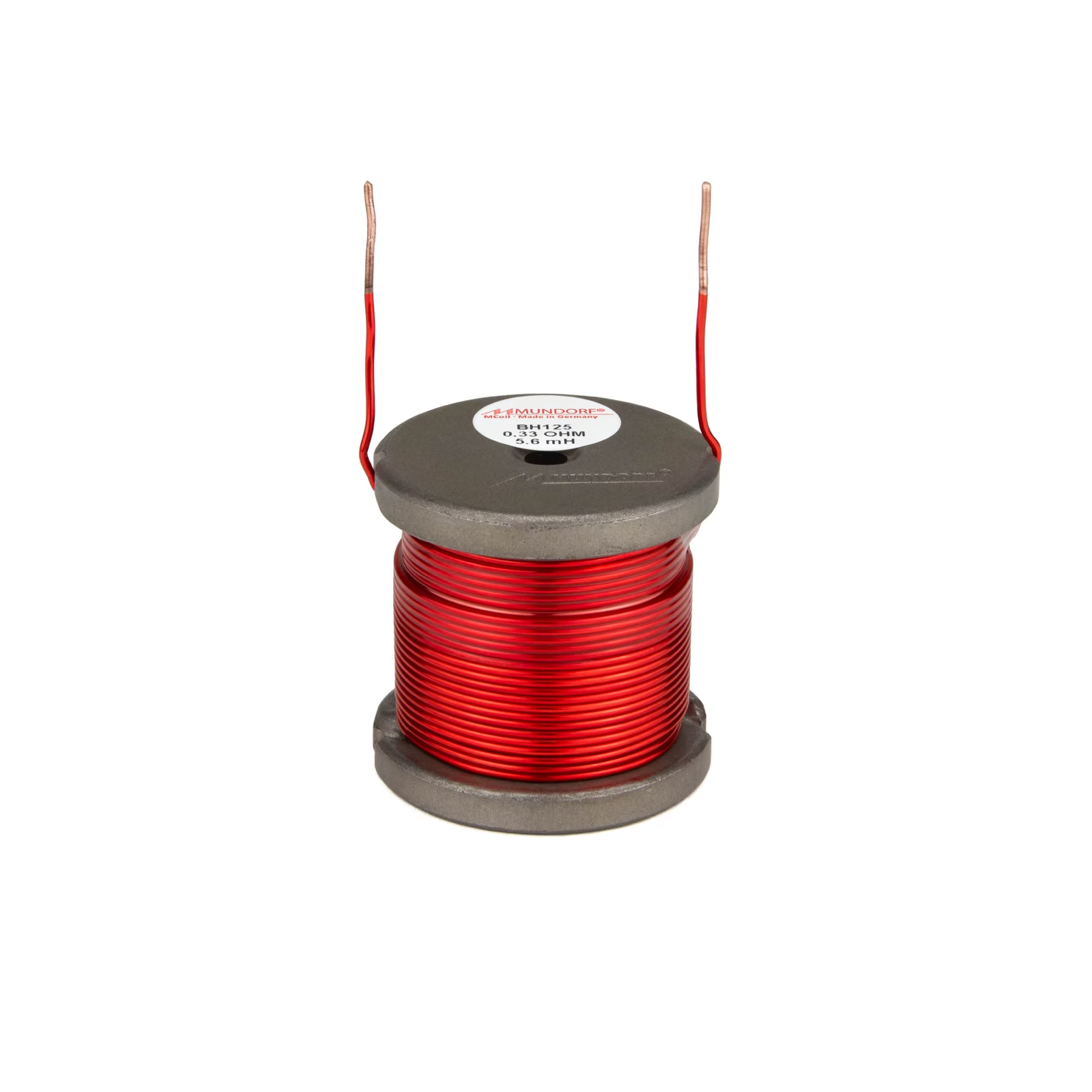
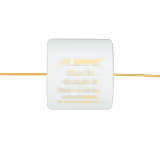


BH125
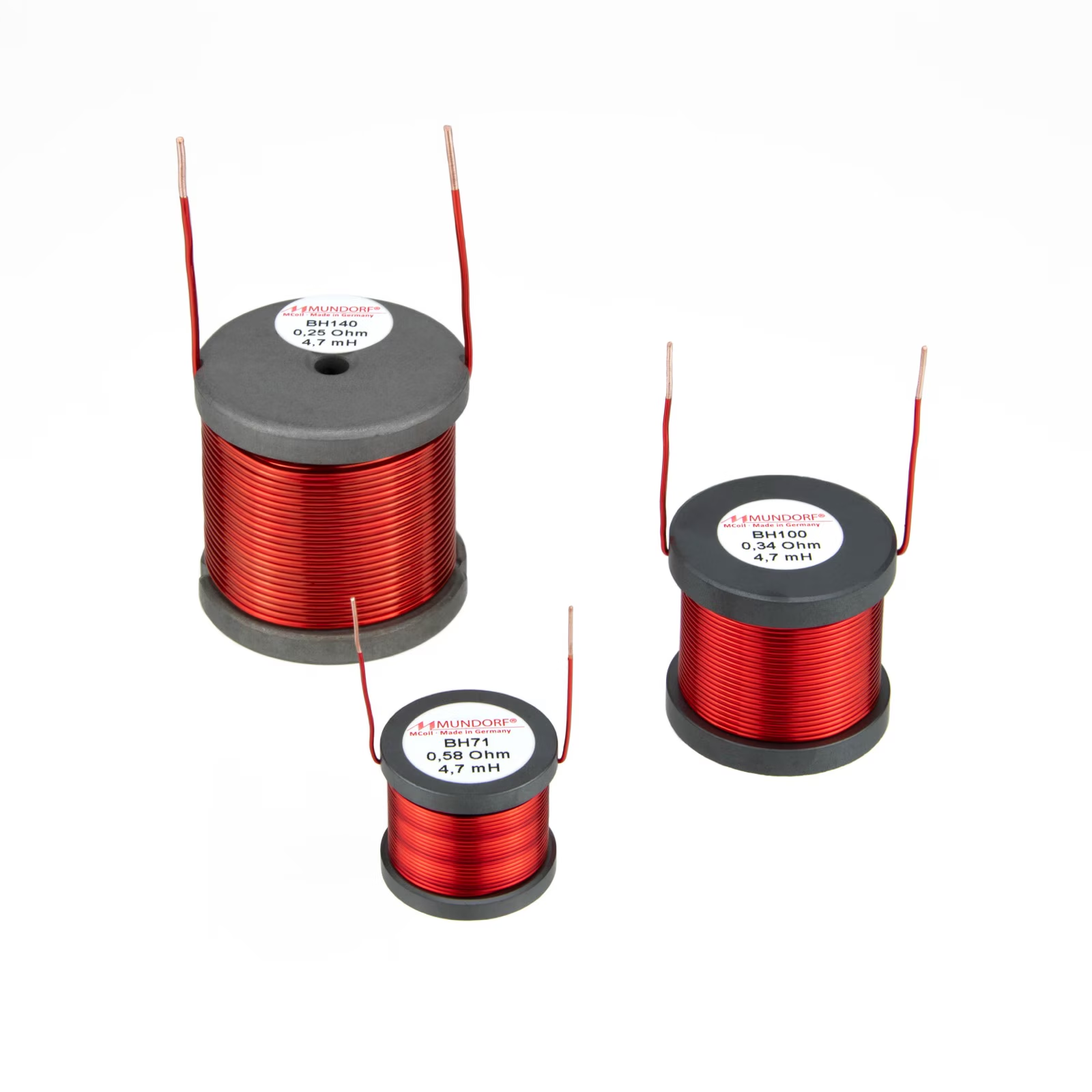
Ferrite drum core coil in an H-core configuration based on the high-performance ferrite HP3616 for compact and precision applications. The closed magnetic circuit enables particularly low RDC values with high efficiency in a small form factor.
We are happy to advise you
Whether ideal components, technical know-how or individual solutions. Let us find the best solution for your application together!
For industrial customers
Order free samples
Would you like to test our products in yours? As a business customer, you can request free samples and see the quality and design for yourself.
NEWSLETTER
News and tips straight to your inbox. Subscribe to our newsletter and choose which topics matter to you.

Aronit Core
Aronit is an iron powder composite core that processes high currents very reliably. Due to the material and construction, behavior remains benign under load, and saturation sets in late and softly. At the same time, eddy current losses are significantly reduced because the iron particles are electrically insulated from one another by the plastic bond.
The result is a robust, level-resistant coil with a stable filter effect. Ideal for bass and fundamental frequency branches when high currents need to be processed safely.
OFC Copper
- Purity: at least 99.995% Cu, often 99.999% (4N) or higher
- Feature: almost oxygen-free (typically <10 ppm)
- Result: more stable grain boundaries, less oxide formation, more uniform electron flow
Tight Tolerances
Tight tolerances in capacitance, inductance, and resistance ensure that capacitors of one type are very close together in terms of their electrical properties. In crossovers, the left and right channels therefore work virtually identically: crossover frequencies, level ratios and phase positions match closely. This is the basis for stable, precise stereo imaging and reproducible results — in series production and also after service.
Tonal Effects
- precise, stable soundstage without drifting
- Coherent overall impression: left and right channels fuse into a single, seamless whole
- characteristic sound is reliably retained even after component replacement/repair
- More stable virtual center and clearer spatial layering

Baked Varnish Wire/ Resin Soaking
Baked varnish wire is enamel-insulated wire with an additional, activatable hot-melt outer layer, which has an adhesive effect when heated. The windings are thus fixed together.
Impact in practice
- The coil becomes mechanically stable and „works“ significantly less
- Micro-movements between windings are reduced
- In particular, this reduces macro-microphonic effects (the windings „work“ less) and increases “silence” during operation
Resin soaking as an alternative to baked varnish wire
If no baked lacquer wire is used, resin soaking carried out under vacuum can take over the mechanical fixing. The resin penetrates into the wrap, reduces cavities and degrees of freedom of movement and transforms the wrap into a stable compound. The result: significantly less macro microphones and an overall quieter, more precise operation of the coil.
OFC Copper
- Purity: at least 99.995% Cu, often 99.999% (4N) or higher
- Feature: almost oxygen-free (typically <10 ppm)
- Result: more stable grain boundaries, less oxide formation, more uniform electron flow
Tight Tolerances
Tight tolerances in capacitance, inductance, and resistance ensure that capacitors of one type are very close together in terms of their electrical properties. In crossovers, the left and right channels therefore work virtually identically: crossover frequencies, level ratios and phase positions match closely. This is the basis for stable, precise stereo imaging and reproducible results — in series production and also after service.
Tonal Effects
- precise, stable soundstage without drifting
- Coherent overall impression: left and right channels fuse into a single, seamless whole
- characteristic sound is reliably retained even after component replacement/repair
- More stable virtual center and clearer spatial layering

Baked Varnish Wire/ Resin Soaking
Baked varnish wire is enamel-insulated wire with an additional, activatable hot-melt outer layer, which has an adhesive effect when heated. The windings are thus fixed together.
Impact in practice
- The coil becomes mechanically stable and „works“ significantly less
- Micro-movements between windings are reduced
- In particular, this reduces macro-microphonic effects (the windings „work“ less) and increases “silence” during operation
Resin soaking as an alternative to baked varnish wire
If no baked lacquer wire is used, resin soaking carried out under vacuum can take over the mechanical fixing. The resin penetrates into the wrap, reduces cavities and degrees of freedom of movement and transforms the wrap into a stable compound. The result: significantly less macro microphones and an overall quieter, more precise operation of the coil.
OFC Copper
- Purity: at least 99.995% Cu, often 99.999% (4N) or higher
- Feature: almost oxygen-free (typically <10 ppm)
- Result: more stable grain boundaries, less oxide formation, more uniform electron flow
Tight Tolerances
Tight tolerances in capacitance, inductance, and resistance ensure that capacitors of one type are very close together in terms of their electrical properties. In crossovers, the left and right channels therefore work virtually identically: crossover frequencies, level ratios and phase positions match closely. This is the basis for stable, precise stereo imaging and reproducible results — in series production and also after service.
Tonal Effects
- precise, stable soundstage without drifting
- Coherent overall impression: left and right channels fuse into a single, seamless whole
- characteristic sound is reliably retained even after component replacement/repair
- More stable virtual center and clearer spatial layering

Baked Varnish Wire/ Resin Soaking
Baked varnish wire is enamel-insulated wire with an additional, activatable hot-melt outer layer, which has an adhesive effect when heated. The windings are thus fixed together.
Impact in practice
- The coil becomes mechanically stable and „works“ significantly less
- Micro-movements between windings are reduced
- In particular, this reduces macro-microphonic effects (the windings „work“ less) and increases “silence” during operation
Resin soaking as an alternative to baked varnish wire
If no baked lacquer wire is used, resin soaking carried out under vacuum can take over the mechanical fixing. The resin penetrates into the wrap, reduces cavities and degrees of freedom of movement and transforms the wrap into a stable compound. The result: significantly less macro microphones and an overall quieter, more precise operation of the coil.
OFC Copper
- Purity: at least 99.995% Cu, often 99.999% (4N) or higher
- Feature: almost oxygen-free (typically <10 ppm)
- Result: more stable grain boundaries, less oxide formation, more uniform electron flow
Tight Tolerances
Tight tolerances in capacitance, inductance, and resistance ensure that capacitors of one type are very close together in terms of their electrical properties. In crossovers, the left and right channels therefore work virtually identically: crossover frequencies, level ratios and phase positions match closely. This is the basis for stable, precise stereo imaging and reproducible results — in series production and also after service.
Tonal Effects
- precise, stable soundstage without drifting
- Coherent overall impression: left and right channels fuse into a single, seamless whole
- characteristic sound is reliably retained even after component replacement/repair
- More stable virtual center and clearer spatial layering

Baked Varnish Wire/ Resin Soaking
Baked varnish wire is enamel-insulated wire with an additional, activatable hot-melt outer layer, which has an adhesive effect when heated. The windings are thus fixed together.
Impact in practice
- The coil becomes mechanically stable and „works“ significantly less
- Micro-movements between windings are reduced
- In particular, this reduces macro-microphonic effects (the windings „work“ less) and increases “silence” during operation
Resin soaking as an alternative to baked varnish wire
If no baked lacquer wire is used, resin soaking carried out under vacuum can take over the mechanical fixing. The resin penetrates into the wrap, reduces cavities and degrees of freedom of movement and transforms the wrap into a stable compound. The result: significantly less macro microphones and an overall quieter, more precise operation of the coil.
OFC Copper
- Purity: at least 99.995% Cu, often 99.999% (4N) or higher
- Feature: almost oxygen-free (typically <10 ppm)
- Result: more stable grain boundaries, less oxide formation, more uniform electron flow
Tight Tolerances
Tight tolerances in capacitance, inductance, and resistance ensure that capacitors of one type are very close together in terms of their electrical properties. In crossovers, the left and right channels therefore work virtually identically: crossover frequencies, level ratios and phase positions match closely. This is the basis for stable, precise stereo imaging and reproducible results — in series production and also after service.
Tonal Effects
- precise, stable soundstage without drifting
- Coherent overall impression: left and right channels fuse into a single, seamless whole
- characteristic sound is reliably retained even after component replacement/repair
- More stable virtual center and clearer spatial layering

Baked Varnish Wire/ Resin Soaking
Baked varnish wire is enamel-insulated wire with an additional, activatable hot-melt outer layer, which has an adhesive effect when heated. The windings are thus fixed together.
Impact in practice
- The coil becomes mechanically stable and „works“ significantly less
- Micro-movements between windings are reduced
- In particular, this reduces macro-microphonic effects (the windings „work“ less) and increases “silence” during operation
Resin soaking as an alternative to baked varnish wire
If no baked lacquer wire is used, resin soaking carried out under vacuum can take over the mechanical fixing. The resin penetrates into the wrap, reduces cavities and degrees of freedom of movement and transforms the wrap into a stable compound. The result: significantly less macro microphones and an overall quieter, more precise operation of the coil.
OFC Copper
- Purity: at least 99.995% Cu, often 99.999% (4N) or higher
- Feature: almost oxygen-free (typically <10 ppm)
- Result: more stable grain boundaries, less oxide formation, more uniform electron flow
Tight Tolerances
Tight tolerances in capacitance, inductance, and resistance ensure that capacitors of one type are very close together in terms of their electrical properties. In crossovers, the left and right channels therefore work virtually identically: crossover frequencies, level ratios and phase positions match closely. This is the basis for stable, precise stereo imaging and reproducible results — in series production and also after service.
Tonal Effects
- precise, stable soundstage without drifting
- Coherent overall impression: left and right channels fuse into a single, seamless whole
- characteristic sound is reliably retained even after component replacement/repair
- More stable virtual center and clearer spatial layering

Baked Varnish Wire/ Resin Soaking
Baked varnish wire is enamel-insulated wire with an additional, activatable hot-melt outer layer, which has an adhesive effect when heated. The windings are thus fixed together.
Impact in practice
- The coil becomes mechanically stable and „works“ significantly less
- Micro-movements between windings are reduced
- In particular, this reduces macro-microphonic effects (the windings „work“ less) and increases “silence” during operation
Resin soaking as an alternative to baked varnish wire
If no baked lacquer wire is used, resin soaking carried out under vacuum can take over the mechanical fixing. The resin penetrates into the wrap, reduces cavities and degrees of freedom of movement and transforms the wrap into a stable compound. The result: significantly less macro microphones and an overall quieter, more precise operation of the coil.
OFC Copper
- Purity: at least 99.995% Cu, often 99.999% (4N) or higher
- Feature: almost oxygen-free (typically <10 ppm)
- Result: more stable grain boundaries, less oxide formation, more uniform electron flow
Tight Tolerances
Tight tolerances in capacitance, inductance, and resistance ensure that capacitors of one type are very close together in terms of their electrical properties. In crossovers, the left and right channels therefore work virtually identically: crossover frequencies, level ratios and phase positions match closely. This is the basis for stable, precise stereo imaging and reproducible results — in series production and also after service.
Tonal Effects
- precise, stable soundstage without drifting
- Coherent overall impression: left and right channels fuse into a single, seamless whole
- characteristic sound is reliably retained even after component replacement/repair
- More stable virtual center and clearer spatial layering

Baked Varnish Wire/ Resin Soaking
Baked varnish wire is enamel-insulated wire with an additional, activatable hot-melt outer layer, which has an adhesive effect when heated. The windings are thus fixed together.
Impact in practice
- The coil becomes mechanically stable and „works“ significantly less
- Micro-movements between windings are reduced
- In particular, this reduces macro-microphonic effects (the windings „work“ less) and increases “silence” during operation
Resin soaking as an alternative to baked varnish wire
If no baked lacquer wire is used, resin soaking carried out under vacuum can take over the mechanical fixing. The resin penetrates into the wrap, reduces cavities and degrees of freedom of movement and transforms the wrap into a stable compound. The result: significantly less macro microphones and an overall quieter, more precise operation of the coil.
OFC Copper
- Purity: at least 99.995% Cu, often 99.999% (4N) or higher
- Feature: almost oxygen-free (typically <10 ppm)
- Result: more stable grain boundaries, less oxide formation, more uniform electron flow
Tight Tolerances
Tight tolerances in capacitance, inductance, and resistance ensure that capacitors of one type are very close together in terms of their electrical properties. In crossovers, the left and right channels therefore work virtually identically: crossover frequencies, level ratios and phase positions match closely. This is the basis for stable, precise stereo imaging and reproducible results — in series production and also after service.
Tonal Effects
- precise, stable soundstage without drifting
- Coherent overall impression: left and right channels fuse into a single, seamless whole
- characteristic sound is reliably retained even after component replacement/repair
- More stable virtual center and clearer spatial layering

Baked Varnish Wire/ Resin Soaking
Baked varnish wire is enamel-insulated wire with an additional, activatable hot-melt outer layer, which has an adhesive effect when heated. The windings are thus fixed together.
Impact in practice
- The coil becomes mechanically stable and „works“ significantly less
- Micro-movements between windings are reduced
- In particular, this reduces macro-microphonic effects (the windings „work“ less) and increases “silence” during operation
Resin soaking as an alternative to baked varnish wire
If no baked lacquer wire is used, resin soaking carried out under vacuum can take over the mechanical fixing. The resin penetrates into the wrap, reduces cavities and degrees of freedom of movement and transforms the wrap into a stable compound. The result: significantly less macro microphones and an overall quieter, more precise operation of the coil.
OFC Copper
- Purity: at least 99.995% Cu, often 99.999% (4N) or higher
- Feature: almost oxygen-free (typically <10 ppm)
- Result: more stable grain boundaries, less oxide formation, more uniform electron flow
Tight Tolerances
Tight tolerances in capacitance, inductance, and resistance ensure that capacitors of one type are very close together in terms of their electrical properties. In crossovers, the left and right channels therefore work virtually identically: crossover frequencies, level ratios and phase positions match closely. This is the basis for stable, precise stereo imaging and reproducible results — in series production and also after service.
Tonal Effects
- precise, stable soundstage without drifting
- Coherent overall impression: left and right channels fuse into a single, seamless whole
- characteristic sound is reliably retained even after component replacement/repair
- More stable virtual center and clearer spatial layering

Baked Varnish Wire/ Resin Soaking
Baked varnish wire is enamel-insulated wire with an additional, activatable hot-melt outer layer, which has an adhesive effect when heated. The windings are thus fixed together.
Impact in practice
- The coil becomes mechanically stable and „works“ significantly less
- Micro-movements between windings are reduced
- In particular, this reduces macro-microphonic effects (the windings „work“ less) and increases “silence” during operation
Resin soaking as an alternative to baked varnish wire
If no baked lacquer wire is used, resin soaking carried out under vacuum can take over the mechanical fixing. The resin penetrates into the wrap, reduces cavities and degrees of freedom of movement and transforms the wrap into a stable compound. The result: significantly less macro microphones and an overall quieter, more precise operation of the coil.
OFC Copper
- Purity: at least 99.995% Cu, often 99.999% (4N) or higher
- Feature: almost oxygen-free (typically <10 ppm)
- Result: more stable grain boundaries, less oxide formation, more uniform electron flow
Tight Tolerances
Tight tolerances in capacitance, inductance, and resistance ensure that capacitors of one type are very close together in terms of their electrical properties. In crossovers, the left and right channels therefore work virtually identically: crossover frequencies, level ratios and phase positions match closely. This is the basis for stable, precise stereo imaging and reproducible results — in series production and also after service.
Tonal Effects
- precise, stable soundstage without drifting
- Coherent overall impression: left and right channels fuse into a single, seamless whole
- characteristic sound is reliably retained even after component replacement/repair
- More stable virtual center and clearer spatial layering

Aronit Core
Aronit is an iron powder composite core that processes high currents very reliably. Due to the material and construction, behavior remains benign under load, and saturation sets in late and softly. At the same time, eddy current losses are significantly reduced because the iron particles are electrically insulated from one another by the plastic bond.
The result is a robust, level-resistant coil with a stable filter effect. Ideal for bass and fundamental frequency branches when high currents need to be processed safely.
OFC Copper
- Purity: at least 99.995% Cu, often 99.999% (4N) or higher
- Feature: almost oxygen-free (typically <10 ppm)
- Result: more stable grain boundaries, less oxide formation, more uniform electron flow
Tight Tolerances
Tight tolerances in capacitance, inductance, and resistance ensure that capacitors of one type are very close together in terms of their electrical properties. In crossovers, the left and right channels therefore work virtually identically: crossover frequencies, level ratios and phase positions match closely. This is the basis for stable, precise stereo imaging and reproducible results — in series production and also after service.
Tonal Effects
- precise, stable soundstage without drifting
- Coherent overall impression: left and right channels fuse into a single, seamless whole
- characteristic sound is reliably retained even after component replacement/repair
- More stable virtual center and clearer spatial layering

Baked Varnish Wire/ Resin Soaking
Baked varnish wire is enamel-insulated wire with an additional, activatable hot-melt outer layer, which has an adhesive effect when heated. The windings are thus fixed together.
Impact in practice
- The coil becomes mechanically stable and „works“ significantly less
- Micro-movements between windings are reduced
- In particular, this reduces macro-microphonic effects (the windings „work“ less) and increases “silence” during operation
Resin soaking as an alternative to baked varnish wire
If no baked lacquer wire is used, resin soaking carried out under vacuum can take over the mechanical fixing. The resin penetrates into the wrap, reduces cavities and degrees of freedom of movement and transforms the wrap into a stable compound. The result: significantly less macro microphones and an overall quieter, more precise operation of the coil.
OFC Copper
- Purity: at least 99.995% Cu, often 99.999% (4N) or higher
- Feature: almost oxygen-free (typically <10 ppm)
- Result: more stable grain boundaries, less oxide formation, more uniform electron flow
Tight Tolerances
Tight tolerances in capacitance, inductance, and resistance ensure that capacitors of one type are very close together in terms of their electrical properties. In crossovers, the left and right channels therefore work virtually identically: crossover frequencies, level ratios and phase positions match closely. This is the basis for stable, precise stereo imaging and reproducible results — in series production and also after service.
Tonal Effects
- precise, stable soundstage without drifting
- Coherent overall impression: left and right channels fuse into a single, seamless whole
- characteristic sound is reliably retained even after component replacement/repair
- More stable virtual center and clearer spatial layering

Baked Varnish Wire/ Resin Soaking
Baked varnish wire is enamel-insulated wire with an additional, activatable hot-melt outer layer, which has an adhesive effect when heated. The windings are thus fixed together.
Impact in practice
- The coil becomes mechanically stable and „works“ significantly less
- Micro-movements between windings are reduced
- In particular, this reduces macro-microphonic effects (the windings „work“ less) and increases “silence” during operation
Resin soaking as an alternative to baked varnish wire
If no baked lacquer wire is used, resin soaking carried out under vacuum can take over the mechanical fixing. The resin penetrates into the wrap, reduces cavities and degrees of freedom of movement and transforms the wrap into a stable compound. The result: significantly less macro microphones and an overall quieter, more precise operation of the coil.
OFC Copper
- Purity: at least 99.995% Cu, often 99.999% (4N) or higher
- Feature: almost oxygen-free (typically <10 ppm)
- Result: more stable grain boundaries, less oxide formation, more uniform electron flow
Tight Tolerances
Tight tolerances in capacitance, inductance, and resistance ensure that capacitors of one type are very close together in terms of their electrical properties. In crossovers, the left and right channels therefore work virtually identically: crossover frequencies, level ratios and phase positions match closely. This is the basis for stable, precise stereo imaging and reproducible results — in series production and also after service.
Tonal Effects
- precise, stable soundstage without drifting
- Coherent overall impression: left and right channels fuse into a single, seamless whole
- characteristic sound is reliably retained even after component replacement/repair
- More stable virtual center and clearer spatial layering

Baked Varnish Wire/ Resin Soaking
Baked varnish wire is enamel-insulated wire with an additional, activatable hot-melt outer layer, which has an adhesive effect when heated. The windings are thus fixed together.
Impact in practice
- The coil becomes mechanically stable and „works“ significantly less
- Micro-movements between windings are reduced
- In particular, this reduces macro-microphonic effects (the windings „work“ less) and increases “silence” during operation
Resin soaking as an alternative to baked varnish wire
If no baked lacquer wire is used, resin soaking carried out under vacuum can take over the mechanical fixing. The resin penetrates into the wrap, reduces cavities and degrees of freedom of movement and transforms the wrap into a stable compound. The result: significantly less macro microphones and an overall quieter, more precise operation of the coil.
OFC Copper
- Purity: at least 99.995% Cu, often 99.999% (4N) or higher
- Feature: almost oxygen-free (typically <10 ppm)
- Result: more stable grain boundaries, less oxide formation, more uniform electron flow
Tight Tolerances
Tight tolerances in capacitance, inductance, and resistance ensure that capacitors of one type are very close together in terms of their electrical properties. In crossovers, the left and right channels therefore work virtually identically: crossover frequencies, level ratios and phase positions match closely. This is the basis for stable, precise stereo imaging and reproducible results — in series production and also after service.
Tonal Effects
- precise, stable soundstage without drifting
- Coherent overall impression: left and right channels fuse into a single, seamless whole
- characteristic sound is reliably retained even after component replacement/repair
- More stable virtual center and clearer spatial layering

Baked Varnish Wire/ Resin Soaking
Baked varnish wire is enamel-insulated wire with an additional, activatable hot-melt outer layer, which has an adhesive effect when heated. The windings are thus fixed together.
Impact in practice
- The coil becomes mechanically stable and „works“ significantly less
- Micro-movements between windings are reduced
- In particular, this reduces macro-microphonic effects (the windings „work“ less) and increases “silence” during operation
Resin soaking as an alternative to baked varnish wire
If no baked lacquer wire is used, resin soaking carried out under vacuum can take over the mechanical fixing. The resin penetrates into the wrap, reduces cavities and degrees of freedom of movement and transforms the wrap into a stable compound. The result: significantly less macro microphones and an overall quieter, more precise operation of the coil.
OFC Copper
- Purity: at least 99.995% Cu, often 99.999% (4N) or higher
- Feature: almost oxygen-free (typically <10 ppm)
- Result: more stable grain boundaries, less oxide formation, more uniform electron flow
Tight Tolerances
Tight tolerances in capacitance, inductance, and resistance ensure that capacitors of one type are very close together in terms of their electrical properties. In crossovers, the left and right channels therefore work virtually identically: crossover frequencies, level ratios and phase positions match closely. This is the basis for stable, precise stereo imaging and reproducible results — in series production and also after service.
Tonal Effects
- precise, stable soundstage without drifting
- Coherent overall impression: left and right channels fuse into a single, seamless whole
- characteristic sound is reliably retained even after component replacement/repair
- More stable virtual center and clearer spatial layering

Baked Varnish Wire/ Resin Soaking
Baked varnish wire is enamel-insulated wire with an additional, activatable hot-melt outer layer, which has an adhesive effect when heated. The windings are thus fixed together.
Impact in practice
- The coil becomes mechanically stable and „works“ significantly less
- Micro-movements between windings are reduced
- In particular, this reduces macro-microphonic effects (the windings „work“ less) and increases “silence” during operation
Resin soaking as an alternative to baked varnish wire
If no baked lacquer wire is used, resin soaking carried out under vacuum can take over the mechanical fixing. The resin penetrates into the wrap, reduces cavities and degrees of freedom of movement and transforms the wrap into a stable compound. The result: significantly less macro microphones and an overall quieter, more precise operation of the coil.
OFC Copper
- Purity: at least 99.995% Cu, often 99.999% (4N) or higher
- Feature: almost oxygen-free (typically <10 ppm)
- Result: more stable grain boundaries, less oxide formation, more uniform electron flow
Tight Tolerances
Tight tolerances in capacitance, inductance, and resistance ensure that capacitors of one type are very close together in terms of their electrical properties. In crossovers, the left and right channels therefore work virtually identically: crossover frequencies, level ratios and phase positions match closely. This is the basis for stable, precise stereo imaging and reproducible results — in series production and also after service.
Tonal Effects
- precise, stable soundstage without drifting
- Coherent overall impression: left and right channels fuse into a single, seamless whole
- characteristic sound is reliably retained even after component replacement/repair
- More stable virtual center and clearer spatial layering

Baked Varnish Wire/ Resin Soaking
Baked varnish wire is enamel-insulated wire with an additional, activatable hot-melt outer layer, which has an adhesive effect when heated. The windings are thus fixed together.
Impact in practice
- The coil becomes mechanically stable and „works“ significantly less
- Micro-movements between windings are reduced
- In particular, this reduces macro-microphonic effects (the windings „work“ less) and increases “silence” during operation
Resin soaking as an alternative to baked varnish wire
If no baked lacquer wire is used, resin soaking carried out under vacuum can take over the mechanical fixing. The resin penetrates into the wrap, reduces cavities and degrees of freedom of movement and transforms the wrap into a stable compound. The result: significantly less macro microphones and an overall quieter, more precise operation of the coil.
OFC Copper
- Purity: at least 99.995% Cu, often 99.999% (4N) or higher
- Feature: almost oxygen-free (typically <10 ppm)
- Result: more stable grain boundaries, less oxide formation, more uniform electron flow
Tight Tolerances
Tight tolerances in capacitance, inductance, and resistance ensure that capacitors of one type are very close together in terms of their electrical properties. In crossovers, the left and right channels therefore work virtually identically: crossover frequencies, level ratios and phase positions match closely. This is the basis for stable, precise stereo imaging and reproducible results — in series production and also after service.
Tonal Effects
- precise, stable soundstage without drifting
- Coherent overall impression: left and right channels fuse into a single, seamless whole
- characteristic sound is reliably retained even after component replacement/repair
- More stable virtual center and clearer spatial layering

Baked Varnish Wire/ Resin Soaking
Baked varnish wire is enamel-insulated wire with an additional, activatable hot-melt outer layer, which has an adhesive effect when heated. The windings are thus fixed together.
Impact in practice
- The coil becomes mechanically stable and „works“ significantly less
- Micro-movements between windings are reduced
- In particular, this reduces macro-microphonic effects (the windings „work“ less) and increases “silence” during operation
Resin soaking as an alternative to baked varnish wire
If no baked lacquer wire is used, resin soaking carried out under vacuum can take over the mechanical fixing. The resin penetrates into the wrap, reduces cavities and degrees of freedom of movement and transforms the wrap into a stable compound. The result: significantly less macro microphones and an overall quieter, more precise operation of the coil.
OFC Copper
- Purity: at least 99.995% Cu, often 99.999% (4N) or higher
- Feature: almost oxygen-free (typically <10 ppm)
- Result: more stable grain boundaries, less oxide formation, more uniform electron flow
Tight Tolerances
Tight tolerances in capacitance, inductance, and resistance ensure that capacitors of one type are very close together in terms of their electrical properties. In crossovers, the left and right channels therefore work virtually identically: crossover frequencies, level ratios and phase positions match closely. This is the basis for stable, precise stereo imaging and reproducible results — in series production and also after service.
Tonal Effects
- precise, stable soundstage without drifting
- Coherent overall impression: left and right channels fuse into a single, seamless whole
- characteristic sound is reliably retained even after component replacement/repair
- More stable virtual center and clearer spatial layering

Baked Varnish Wire/ Resin Soaking
Baked varnish wire is enamel-insulated wire with an additional, activatable hot-melt outer layer, which has an adhesive effect when heated. The windings are thus fixed together.
Impact in practice
- The coil becomes mechanically stable and „works“ significantly less
- Micro-movements between windings are reduced
- In particular, this reduces macro-microphonic effects (the windings „work“ less) and increases “silence” during operation
Resin soaking as an alternative to baked varnish wire
If no baked lacquer wire is used, resin soaking carried out under vacuum can take over the mechanical fixing. The resin penetrates into the wrap, reduces cavities and degrees of freedom of movement and transforms the wrap into a stable compound. The result: significantly less macro microphones and an overall quieter, more precise operation of the coil.
OFC Copper
- Purity: at least 99.995% Cu, often 99.999% (4N) or higher
- Feature: almost oxygen-free (typically <10 ppm)
- Result: more stable grain boundaries, less oxide formation, more uniform electron flow
Tight Tolerances
Tight tolerances in capacitance, inductance, and resistance ensure that capacitors of one type are very close together in terms of their electrical properties. In crossovers, the left and right channels therefore work virtually identically: crossover frequencies, level ratios and phase positions match closely. This is the basis for stable, precise stereo imaging and reproducible results — in series production and also after service.
Tonal Effects
- precise, stable soundstage without drifting
- Coherent overall impression: left and right channels fuse into a single, seamless whole
- characteristic sound is reliably retained even after component replacement/repair
- More stable virtual center and clearer spatial layering

Baked Varnish Wire/ Resin Soaking
Baked varnish wire is enamel-insulated wire with an additional, activatable hot-melt outer layer, which has an adhesive effect when heated. The windings are thus fixed together.
Impact in practice
- The coil becomes mechanically stable and „works“ significantly less
- Micro-movements between windings are reduced
- In particular, this reduces macro-microphonic effects (the windings „work“ less) and increases “silence” during operation
Resin soaking as an alternative to baked varnish wire
If no baked lacquer wire is used, resin soaking carried out under vacuum can take over the mechanical fixing. The resin penetrates into the wrap, reduces cavities and degrees of freedom of movement and transforms the wrap into a stable compound. The result: significantly less macro microphones and an overall quieter, more precise operation of the coil.
OFC Copper
- Purity: at least 99.995% Cu, often 99.999% (4N) or higher
- Feature: almost oxygen-free (typically <10 ppm)
- Result: more stable grain boundaries, less oxide formation, more uniform electron flow
Tight Tolerances
Tight tolerances in capacitance, inductance, and resistance ensure that capacitors of one type are very close together in terms of their electrical properties. In crossovers, the left and right channels therefore work virtually identically: crossover frequencies, level ratios and phase positions match closely. This is the basis for stable, precise stereo imaging and reproducible results — in series production and also after service.
Tonal Effects
- precise, stable soundstage without drifting
- Coherent overall impression: left and right channels fuse into a single, seamless whole
- characteristic sound is reliably retained even after component replacement/repair
- More stable virtual center and clearer spatial layering

Baked Varnish Wire/ Resin Soaking
Baked varnish wire is enamel-insulated wire with an additional, activatable hot-melt outer layer, which has an adhesive effect when heated. The windings are thus fixed together.
Impact in practice
- The coil becomes mechanically stable and „works“ significantly less
- Micro-movements between windings are reduced
- In particular, this reduces macro-microphonic effects (the windings „work“ less) and increases “silence” during operation
Resin soaking as an alternative to baked varnish wire
If no baked lacquer wire is used, resin soaking carried out under vacuum can take over the mechanical fixing. The resin penetrates into the wrap, reduces cavities and degrees of freedom of movement and transforms the wrap into a stable compound. The result: significantly less macro microphones and an overall quieter, more precise operation of the coil.
OFC Copper
- Purity: at least 99.995% Cu, often 99.999% (4N) or higher
- Feature: almost oxygen-free (typically <10 ppm)
- Result: more stable grain boundaries, less oxide formation, more uniform electron flow
Tight Tolerances
Tight tolerances in capacitance, inductance, and resistance ensure that capacitors of one type are very close together in terms of their electrical properties. In crossovers, the left and right channels therefore work virtually identically: crossover frequencies, level ratios and phase positions match closely. This is the basis for stable, precise stereo imaging and reproducible results — in series production and also after service.
Tonal Effects
- precise, stable soundstage without drifting
- Coherent overall impression: left and right channels fuse into a single, seamless whole
- characteristic sound is reliably retained even after component replacement/repair
- More stable virtual center and clearer spatial layering

Baked Varnish Wire/ Resin Soaking
Baked varnish wire is enamel-insulated wire with an additional, activatable hot-melt outer layer, which has an adhesive effect when heated. The windings are thus fixed together.
Impact in practice
- The coil becomes mechanically stable and „works“ significantly less
- Micro-movements between windings are reduced
- In particular, this reduces macro-microphonic effects (the windings „work“ less) and increases “silence” during operation
Resin soaking as an alternative to baked varnish wire
If no baked lacquer wire is used, resin soaking carried out under vacuum can take over the mechanical fixing. The resin penetrates into the wrap, reduces cavities and degrees of freedom of movement and transforms the wrap into a stable compound. The result: significantly less macro microphones and an overall quieter, more precise operation of the coil.
OFC Copper
- Purity: at least 99.995% Cu, often 99.999% (4N) or higher
- Feature: almost oxygen-free (typically <10 ppm)
- Result: more stable grain boundaries, less oxide formation, more uniform electron flow
Tight Tolerances
Tight tolerances in capacitance, inductance, and resistance ensure that capacitors of one type are very close together in terms of their electrical properties. In crossovers, the left and right channels therefore work virtually identically: crossover frequencies, level ratios and phase positions match closely. This is the basis for stable, precise stereo imaging and reproducible results — in series production and also after service.
Tonal Effects
- precise, stable soundstage without drifting
- Coherent overall impression: left and right channels fuse into a single, seamless whole
- characteristic sound is reliably retained even after component replacement/repair
- More stable virtual center and clearer spatial layering

Baked Varnish Wire/ Resin Soaking
Baked varnish wire is enamel-insulated wire with an additional, activatable hot-melt outer layer, which has an adhesive effect when heated. The windings are thus fixed together.
Impact in practice
- The coil becomes mechanically stable and „works“ significantly less
- Micro-movements between windings are reduced
- In particular, this reduces macro-microphonic effects (the windings „work“ less) and increases “silence” during operation
Resin soaking as an alternative to baked varnish wire
If no baked lacquer wire is used, resin soaking carried out under vacuum can take over the mechanical fixing. The resin penetrates into the wrap, reduces cavities and degrees of freedom of movement and transforms the wrap into a stable compound. The result: significantly less macro microphones and an overall quieter, more precise operation of the coil.
OFC Copper
- Purity: at least 99.995% Cu, often 99.999% (4N) or higher
- Feature: almost oxygen-free (typically <10 ppm)
- Result: more stable grain boundaries, less oxide formation, more uniform electron flow
Tight Tolerances
Tight tolerances in capacitance, inductance, and resistance ensure that capacitors of one type are very close together in terms of their electrical properties. In crossovers, the left and right channels therefore work virtually identically: crossover frequencies, level ratios and phase positions match closely. This is the basis for stable, precise stereo imaging and reproducible results — in series production and also after service.
Tonal Effects
- precise, stable soundstage without drifting
- Coherent overall impression: left and right channels fuse into a single, seamless whole
- characteristic sound is reliably retained even after component replacement/repair
- More stable virtual center and clearer spatial layering

Baked Varnish Wire/ Resin Soaking
Baked varnish wire is enamel-insulated wire with an additional, activatable hot-melt outer layer, which has an adhesive effect when heated. The windings are thus fixed together.
Impact in practice
- The coil becomes mechanically stable and „works“ significantly less
- Micro-movements between windings are reduced
- In particular, this reduces macro-microphonic effects (the windings „work“ less) and increases “silence” during operation
Resin soaking as an alternative to baked varnish wire
If no baked lacquer wire is used, resin soaking carried out under vacuum can take over the mechanical fixing. The resin penetrates into the wrap, reduces cavities and degrees of freedom of movement and transforms the wrap into a stable compound. The result: significantly less macro microphones and an overall quieter, more precise operation of the coil.
OFC Copper
- Purity: at least 99.995% Cu, often 99.999% (4N) or higher
- Feature: almost oxygen-free (typically <10 ppm)
- Result: more stable grain boundaries, less oxide formation, more uniform electron flow
Tight Tolerances
Tight tolerances in capacitance, inductance, and resistance ensure that capacitors of one type are very close together in terms of their electrical properties. In crossovers, the left and right channels therefore work virtually identically: crossover frequencies, level ratios and phase positions match closely. This is the basis for stable, precise stereo imaging and reproducible results — in series production and also after service.
Tonal Effects
- precise, stable soundstage without drifting
- Coherent overall impression: left and right channels fuse into a single, seamless whole
- characteristic sound is reliably retained even after component replacement/repair
- More stable virtual center and clearer spatial layering

Baked Varnish Wire/ Resin Soaking
Baked varnish wire is enamel-insulated wire with an additional, activatable hot-melt outer layer, which has an adhesive effect when heated. The windings are thus fixed together.
Impact in practice
- The coil becomes mechanically stable and „works“ significantly less
- Micro-movements between windings are reduced
- In particular, this reduces macro-microphonic effects (the windings „work“ less) and increases “silence” during operation
Resin soaking as an alternative to baked varnish wire
If no baked lacquer wire is used, resin soaking carried out under vacuum can take over the mechanical fixing. The resin penetrates into the wrap, reduces cavities and degrees of freedom of movement and transforms the wrap into a stable compound. The result: significantly less macro microphones and an overall quieter, more precise operation of the coil.
OFC Copper
- Purity: at least 99.995% Cu, often 99.999% (4N) or higher
- Feature: almost oxygen-free (typically <10 ppm)
- Result: more stable grain boundaries, less oxide formation, more uniform electron flow
Tight Tolerances
Tight tolerances in capacitance, inductance, and resistance ensure that capacitors of one type are very close together in terms of their electrical properties. In crossovers, the left and right channels therefore work virtually identically: crossover frequencies, level ratios and phase positions match closely. This is the basis for stable, precise stereo imaging and reproducible results — in series production and also after service.
Tonal Effects
- precise, stable soundstage without drifting
- Coherent overall impression: left and right channels fuse into a single, seamless whole
- characteristic sound is reliably retained even after component replacement/repair
- More stable virtual center and clearer spatial layering

Baked Varnish Wire/ Resin Soaking
Baked varnish wire is enamel-insulated wire with an additional, activatable hot-melt outer layer, which has an adhesive effect when heated. The windings are thus fixed together.
Impact in practice
- The coil becomes mechanically stable and „works“ significantly less
- Micro-movements between windings are reduced
- In particular, this reduces macro-microphonic effects (the windings „work“ less) and increases “silence” during operation
Resin soaking as an alternative to baked varnish wire
If no baked lacquer wire is used, resin soaking carried out under vacuum can take over the mechanical fixing. The resin penetrates into the wrap, reduces cavities and degrees of freedom of movement and transforms the wrap into a stable compound. The result: significantly less macro microphones and an overall quieter, more precise operation of the coil.
OFC Copper
- Purity: at least 99.995% Cu, often 99.999% (4N) or higher
- Feature: almost oxygen-free (typically <10 ppm)
- Result: more stable grain boundaries, less oxide formation, more uniform electron flow
Tight Tolerances
Tight tolerances in capacitance, inductance, and resistance ensure that capacitors of one type are very close together in terms of their electrical properties. In crossovers, the left and right channels therefore work virtually identically: crossover frequencies, level ratios and phase positions match closely. This is the basis for stable, precise stereo imaging and reproducible results — in series production and also after service.
Tonal Effects
- precise, stable soundstage without drifting
- Coherent overall impression: left and right channels fuse into a single, seamless whole
- characteristic sound is reliably retained even after component replacement/repair
- More stable virtual center and clearer spatial layering

Baked Varnish Wire/ Resin Soaking
Baked varnish wire is enamel-insulated wire with an additional, activatable hot-melt outer layer, which has an adhesive effect when heated. The windings are thus fixed together.
Impact in practice
- The coil becomes mechanically stable and „works“ significantly less
- Micro-movements between windings are reduced
- In particular, this reduces macro-microphonic effects (the windings „work“ less) and increases “silence” during operation
Resin soaking as an alternative to baked varnish wire
If no baked lacquer wire is used, resin soaking carried out under vacuum can take over the mechanical fixing. The resin penetrates into the wrap, reduces cavities and degrees of freedom of movement and transforms the wrap into a stable compound. The result: significantly less macro microphones and an overall quieter, more precise operation of the coil.
OFC Copper
- Purity: at least 99.995% Cu, often 99.999% (4N) or higher
- Feature: almost oxygen-free (typically <10 ppm)
- Result: more stable grain boundaries, less oxide formation, more uniform electron flow
Tight Tolerances
Tight tolerances in capacitance, inductance, and resistance ensure that capacitors of one type are very close together in terms of their electrical properties. In crossovers, the left and right channels therefore work virtually identically: crossover frequencies, level ratios and phase positions match closely. This is the basis for stable, precise stereo imaging and reproducible results — in series production and also after service.
Tonal Effects
- precise, stable soundstage without drifting
- Coherent overall impression: left and right channels fuse into a single, seamless whole
- characteristic sound is reliably retained even after component replacement/repair
- More stable virtual center and clearer spatial layering

Baked Varnish Wire/ Resin Soaking
Baked varnish wire is enamel-insulated wire with an additional, activatable hot-melt outer layer, which has an adhesive effect when heated. The windings are thus fixed together.
Impact in practice
- The coil becomes mechanically stable and „works“ significantly less
- Micro-movements between windings are reduced
- In particular, this reduces macro-microphonic effects (the windings „work“ less) and increases “silence” during operation
Resin soaking as an alternative to baked varnish wire
If no baked lacquer wire is used, resin soaking carried out under vacuum can take over the mechanical fixing. The resin penetrates into the wrap, reduces cavities and degrees of freedom of movement and transforms the wrap into a stable compound. The result: significantly less macro microphones and an overall quieter, more precise operation of the coil.
OFC Copper
- Purity: at least 99.995% Cu, often 99.999% (4N) or higher
- Feature: almost oxygen-free (typically <10 ppm)
- Result: more stable grain boundaries, less oxide formation, more uniform electron flow
Tight Tolerances
Tight tolerances in capacitance, inductance, and resistance ensure that capacitors of one type are very close together in terms of their electrical properties. In crossovers, the left and right channels therefore work virtually identically: crossover frequencies, level ratios and phase positions match closely. This is the basis for stable, precise stereo imaging and reproducible results — in series production and also after service.
Tonal Effects
- precise, stable soundstage without drifting
- Coherent overall impression: left and right channels fuse into a single, seamless whole
- characteristic sound is reliably retained even after component replacement/repair
- More stable virtual center and clearer spatial layering

Baked Varnish Wire/ Resin Soaking
Baked varnish wire is enamel-insulated wire with an additional, activatable hot-melt outer layer, which has an adhesive effect when heated. The windings are thus fixed together.
Impact in practice
- The coil becomes mechanically stable and „works“ significantly less
- Micro-movements between windings are reduced
- In particular, this reduces macro-microphonic effects (the windings „work“ less) and increases “silence” during operation
Resin soaking as an alternative to baked varnish wire
If no baked lacquer wire is used, resin soaking carried out under vacuum can take over the mechanical fixing. The resin penetrates into the wrap, reduces cavities and degrees of freedom of movement and transforms the wrap into a stable compound. The result: significantly less macro microphones and an overall quieter, more precise operation of the coil.
OFC Copper
- Purity: at least 99.995% Cu, often 99.999% (4N) or higher
- Feature: almost oxygen-free (typically <10 ppm)
- Result: more stable grain boundaries, less oxide formation, more uniform electron flow
Tight Tolerances
Tight tolerances in capacitance, inductance, and resistance ensure that capacitors of one type are very close together in terms of their electrical properties. In crossovers, the left and right channels therefore work virtually identically: crossover frequencies, level ratios and phase positions match closely. This is the basis for stable, precise stereo imaging and reproducible results — in series production and also after service.
Tonal Effects
- precise, stable soundstage without drifting
- Coherent overall impression: left and right channels fuse into a single, seamless whole
- characteristic sound is reliably retained even after component replacement/repair
- More stable virtual center and clearer spatial layering

Baked Varnish Wire/ Resin Soaking
Baked varnish wire is enamel-insulated wire with an additional, activatable hot-melt outer layer, which has an adhesive effect when heated. The windings are thus fixed together.
Impact in practice
- The coil becomes mechanically stable and „works“ significantly less
- Micro-movements between windings are reduced
- In particular, this reduces macro-microphonic effects (the windings „work“ less) and increases “silence” during operation
Resin soaking as an alternative to baked varnish wire
If no baked lacquer wire is used, resin soaking carried out under vacuum can take over the mechanical fixing. The resin penetrates into the wrap, reduces cavities and degrees of freedom of movement and transforms the wrap into a stable compound. The result: significantly less macro microphones and an overall quieter, more precise operation of the coil.
OFC Copper
- Purity: at least 99.995% Cu, often 99.999% (4N) or higher
- Feature: almost oxygen-free (typically <10 ppm)
- Result: more stable grain boundaries, less oxide formation, more uniform electron flow
Tight Tolerances
Tight tolerances in capacitance, inductance, and resistance ensure that capacitors of one type are very close together in terms of their electrical properties. In crossovers, the left and right channels therefore work virtually identically: crossover frequencies, level ratios and phase positions match closely. This is the basis for stable, precise stereo imaging and reproducible results — in series production and also after service.
Tonal Effects
- precise, stable soundstage without drifting
- Coherent overall impression: left and right channels fuse into a single, seamless whole
- characteristic sound is reliably retained even after component replacement/repair
- More stable virtual center and clearer spatial layering

Baked Varnish Wire/ Resin Soaking
Baked varnish wire is enamel-insulated wire with an additional, activatable hot-melt outer layer, which has an adhesive effect when heated. The windings are thus fixed together.
Impact in practice
- The coil becomes mechanically stable and „works“ significantly less
- Micro-movements between windings are reduced
- In particular, this reduces macro-microphonic effects (the windings „work“ less) and increases “silence” during operation
Resin soaking as an alternative to baked varnish wire
If no baked lacquer wire is used, resin soaking carried out under vacuum can take over the mechanical fixing. The resin penetrates into the wrap, reduces cavities and degrees of freedom of movement and transforms the wrap into a stable compound. The result: significantly less macro microphones and an overall quieter, more precise operation of the coil.
OFC Copper
- Purity: at least 99.995% Cu, often 99.999% (4N) or higher
- Feature: almost oxygen-free (typically <10 ppm)
- Result: more stable grain boundaries, less oxide formation, more uniform electron flow
Tight Tolerances
Tight tolerances in capacitance, inductance, and resistance ensure that capacitors of one type are very close together in terms of their electrical properties. In crossovers, the left and right channels therefore work virtually identically: crossover frequencies, level ratios and phase positions match closely. This is the basis for stable, precise stereo imaging and reproducible results — in series production and also after service.
Tonal Effects
- precise, stable soundstage without drifting
- Coherent overall impression: left and right channels fuse into a single, seamless whole
- characteristic sound is reliably retained even after component replacement/repair
- More stable virtual center and clearer spatial layering

Baked Varnish Wire/ Resin Soaking
Baked varnish wire is enamel-insulated wire with an additional, activatable hot-melt outer layer, which has an adhesive effect when heated. The windings are thus fixed together.
Impact in practice
- The coil becomes mechanically stable and „works“ significantly less
- Micro-movements between windings are reduced
- In particular, this reduces macro-microphonic effects (the windings „work“ less) and increases “silence” during operation
Resin soaking as an alternative to baked varnish wire
If no baked lacquer wire is used, resin soaking carried out under vacuum can take over the mechanical fixing. The resin penetrates into the wrap, reduces cavities and degrees of freedom of movement and transforms the wrap into a stable compound. The result: significantly less macro microphones and an overall quieter, more precise operation of the coil.
OFC Copper
- Purity: at least 99.995% Cu, often 99.999% (4N) or higher
- Feature: almost oxygen-free (typically <10 ppm)
- Result: more stable grain boundaries, less oxide formation, more uniform electron flow
Tight Tolerances
Tight tolerances in capacitance, inductance, and resistance ensure that capacitors of one type are very close together in terms of their electrical properties. In crossovers, the left and right channels therefore work virtually identically: crossover frequencies, level ratios and phase positions match closely. This is the basis for stable, precise stereo imaging and reproducible results — in series production and also after service.
Tonal Effects
- precise, stable soundstage without drifting
- Coherent overall impression: left and right channels fuse into a single, seamless whole
- characteristic sound is reliably retained even after component replacement/repair
- More stable virtual center and clearer spatial layering

Baked Varnish Wire/ Resin Soaking
Baked varnish wire is enamel-insulated wire with an additional, activatable hot-melt outer layer, which has an adhesive effect when heated. The windings are thus fixed together.
Impact in practice
- The coil becomes mechanically stable and „works“ significantly less
- Micro-movements between windings are reduced
- In particular, this reduces macro-microphonic effects (the windings „work“ less) and increases “silence” during operation
Resin soaking as an alternative to baked varnish wire
If no baked lacquer wire is used, resin soaking carried out under vacuum can take over the mechanical fixing. The resin penetrates into the wrap, reduces cavities and degrees of freedom of movement and transforms the wrap into a stable compound. The result: significantly less macro microphones and an overall quieter, more precise operation of the coil.
OFC Copper
- Purity: at least 99.995% Cu, often 99.999% (4N) or higher
- Feature: almost oxygen-free (typically <10 ppm)
- Result: more stable grain boundaries, less oxide formation, more uniform electron flow
Tight Tolerances
Tight tolerances in capacitance, inductance, and resistance ensure that capacitors of one type are very close together in terms of their electrical properties. In crossovers, the left and right channels therefore work virtually identically: crossover frequencies, level ratios and phase positions match closely. This is the basis for stable, precise stereo imaging and reproducible results — in series production and also after service.
Tonal Effects
- precise, stable soundstage without drifting
- Coherent overall impression: left and right channels fuse into a single, seamless whole
- characteristic sound is reliably retained even after component replacement/repair
- More stable virtual center and clearer spatial layering

Baked Varnish Wire/ Resin Soaking
Baked varnish wire is enamel-insulated wire with an additional, activatable hot-melt outer layer, which has an adhesive effect when heated. The windings are thus fixed together.
Impact in practice
- The coil becomes mechanically stable and „works“ significantly less
- Micro-movements between windings are reduced
- In particular, this reduces macro-microphonic effects (the windings „work“ less) and increases “silence” during operation
Resin soaking as an alternative to baked varnish wire
If no baked lacquer wire is used, resin soaking carried out under vacuum can take over the mechanical fixing. The resin penetrates into the wrap, reduces cavities and degrees of freedom of movement and transforms the wrap into a stable compound. The result: significantly less macro microphones and an overall quieter, more precise operation of the coil.
OFC Copper
- Purity: at least 99.995% Cu, often 99.999% (4N) or higher
- Feature: almost oxygen-free (typically <10 ppm)
- Result: more stable grain boundaries, less oxide formation, more uniform electron flow
Tight Tolerances
Tight tolerances in capacitance, inductance, and resistance ensure that capacitors of one type are very close together in terms of their electrical properties. In crossovers, the left and right channels therefore work virtually identically: crossover frequencies, level ratios and phase positions match closely. This is the basis for stable, precise stereo imaging and reproducible results — in series production and also after service.
Tonal Effects
- precise, stable soundstage without drifting
- Coherent overall impression: left and right channels fuse into a single, seamless whole
- characteristic sound is reliably retained even after component replacement/repair
- More stable virtual center and clearer spatial layering

Baked Varnish Wire/ Resin Soaking
Baked varnish wire is enamel-insulated wire with an additional, activatable hot-melt outer layer, which has an adhesive effect when heated. The windings are thus fixed together.
Impact in practice
- The coil becomes mechanically stable and „works“ significantly less
- Micro-movements between windings are reduced
- In particular, this reduces macro-microphonic effects (the windings „work“ less) and increases “silence” during operation
Resin soaking as an alternative to baked varnish wire
If no baked lacquer wire is used, resin soaking carried out under vacuum can take over the mechanical fixing. The resin penetrates into the wrap, reduces cavities and degrees of freedom of movement and transforms the wrap into a stable compound. The result: significantly less macro microphones and an overall quieter, more precise operation of the coil.
OFC Copper
- Purity: at least 99.995% Cu, often 99.999% (4N) or higher
- Feature: almost oxygen-free (typically <10 ppm)
- Result: more stable grain boundaries, less oxide formation, more uniform electron flow
Tight Tolerances
Tight tolerances in capacitance, inductance, and resistance ensure that capacitors of one type are very close together in terms of their electrical properties. In crossovers, the left and right channels therefore work virtually identically: crossover frequencies, level ratios and phase positions match closely. This is the basis for stable, precise stereo imaging and reproducible results — in series production and also after service.
Tonal Effects
- precise, stable soundstage without drifting
- Coherent overall impression: left and right channels fuse into a single, seamless whole
- characteristic sound is reliably retained even after component replacement/repair
- More stable virtual center and clearer spatial layering