


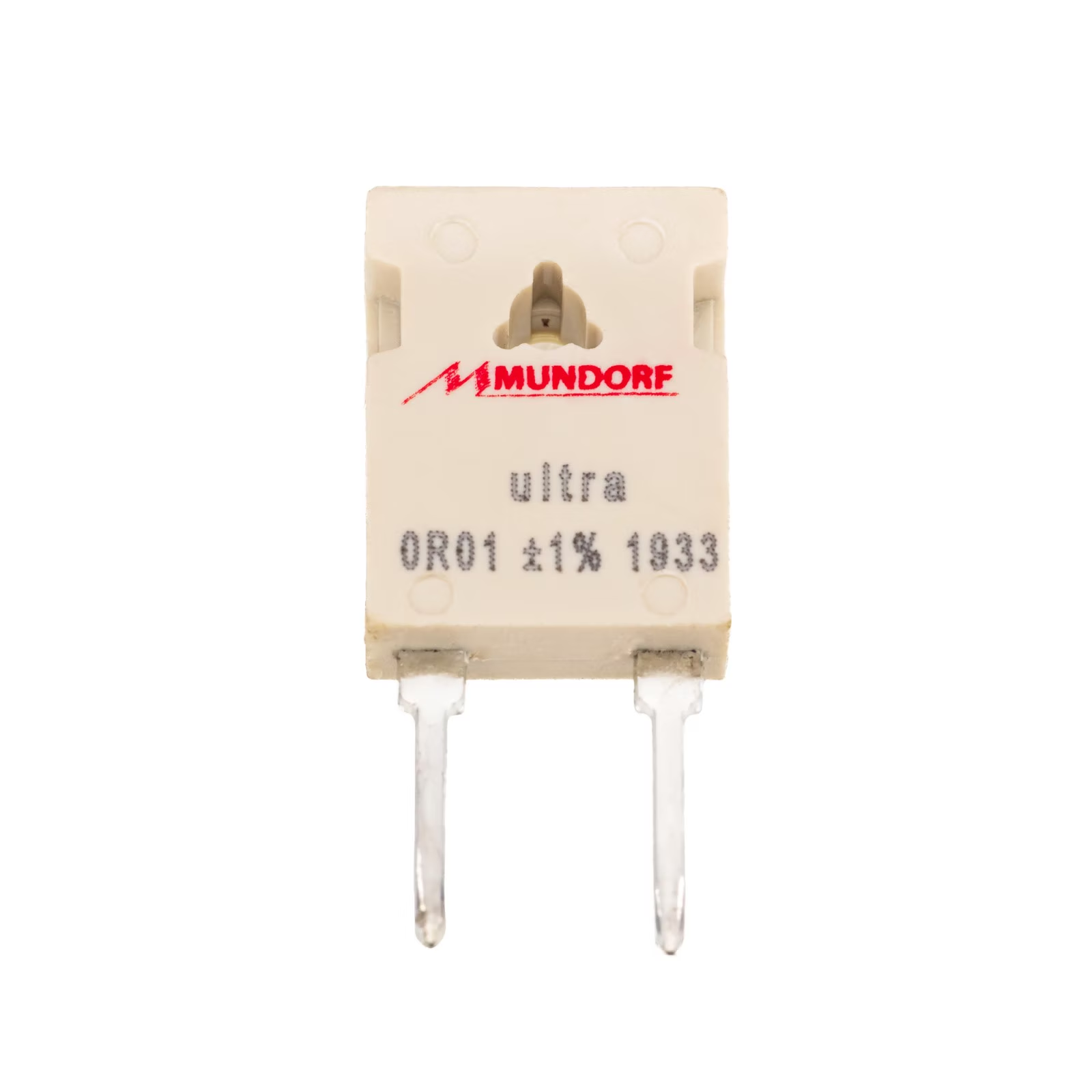
MResist MREU-COOL
Maximum neutrality and tranquility, the finest details, holographically precise spatial information.
We are happy to advise you
Whether ideal components, technical know-how or individual solutions. Let us find the best solution for your application together!
For industrial customers
Order free samples
Would you like to test our products in yours? As a business customer, you can request free samples and see the quality and design for yourself.
NEWSLETTER
News and tips straight to your inbox. Subscribe to our newsletter and choose which topics matter to you.

Non-Magnetic Connections
Non-magnetic connections minimize micro-microphone modulations in the current path. In a power supply capacitor, the current flows not only through the coil, but also through the connecting wires and contact points — and this is exactly where ferromagnetic materials can produce undesired effects. Non-magnetic connection materials avoid magnetization and hysteresis in the conductor and thus reduce current-synchronous, very fine impedance modulations. This is a micro-microphonic measure in the actual power path: The connection is closer to the ideal conductor, without “magnetic interference.” In addition, there is additional electrotechnical benefit because non-magnetic, highly conductive materials often lower and stabilize contact and transition resistances. As a result, energy is available more evenly at the amplifier stage — and the sound remains quieter and more controlled.
Tonal effects
- quieter background and less “grit” with complex music
- more stable transients because the current path is less finely modulated
- clearer contours and cleaner room images at high levels
- more consistent sound quality due to more stable contact and conduction conditions

Maximum Conductive Surface
With alternating current, the current flow is increasingly shifted to the surface of the conductor as the frequency increases (skin effect). The larger the effective conductor surface, the more evenly the current is distributed. This reduces local current density peaks, frequency-dependent increases in resistance and additional losses.
Damping Encapsulation/Bonding
Potting or bonding with a vibration-damping material reduces vibrations, stabilizes contact zones and minimizes mechanical stimulation caused by the electrical signal, which can otherwise couple back into the signal as an undesired nonlinearity via electromagnetic interaction. Active and passive macro-microphony is thus effectively suppressed.
Induction free layout
In AC applications, any conductor geometry potentially looks like a small inductor, even if it doesn't look directly like a coil on the outside. If a resistor is wound or unfavorably guided, an inductive residual component is produced. An induction-free layout constructively reduces this parasitic inductance — for example through layer technology (MOX), bifilar winding or flat thin-film/film structures.
The aim is to achieve as purely ohmic behavior as possible over the relevant frequency range.
Manganin Alloy
Manganin is a copper-based resistance alloy with a defined content of manganese and nickel. It is characterized by a very low temperature coefficient (TCR), high long-term stability and mechanically “softer” behavior in metal lattices. This results in lower conductance fluctuations and reduced micro-microphonic effects compared to harder oxidic layer systems.

Non-Magnetic Connections
Non-magnetic connections minimize micro-microphone modulations in the current path. In a power supply capacitor, the current flows not only through the coil, but also through the connecting wires and contact points — and this is exactly where ferromagnetic materials can produce undesired effects. Non-magnetic connection materials avoid magnetization and hysteresis in the conductor and thus reduce current-synchronous, very fine impedance modulations. This is a micro-microphonic measure in the actual power path: The connection is closer to the ideal conductor, without “magnetic interference.” In addition, there is additional electrotechnical benefit because non-magnetic, highly conductive materials often lower and stabilize contact and transition resistances. As a result, energy is available more evenly at the amplifier stage — and the sound remains quieter and more controlled.
Tonal effects
- quieter background and less “grit” with complex music
- more stable transients because the current path is less finely modulated
- clearer contours and cleaner room images at high levels
- more consistent sound quality due to more stable contact and conduction conditions
Maximum Conductive Surface
With alternating current, the current flow is increasingly shifted to the surface of the conductor as the frequency increases (skin effect). The larger the effective conductor surface, the more evenly the current is distributed. This reduces local current density peaks, frequency-dependent increases in resistance and additional losses.
Damping Encapsulation/Bonding
Potting or bonding with a vibration-damping material reduces vibrations, stabilizes contact zones and minimizes mechanical stimulation caused by the electrical signal, which can otherwise couple back into the signal as an undesired nonlinearity via electromagnetic interaction. Active and passive macro-microphony is thus effectively suppressed.
Induction free layout
In AC applications, any conductor geometry potentially looks like a small inductor, even if it doesn't look directly like a coil on the outside. If a resistor is wound or unfavorably guided, an inductive residual component is produced. An induction-free layout constructively reduces this parasitic inductance — for example through layer technology (MOX), bifilar winding or flat thin-film/film structures.
The aim is to achieve as purely ohmic behavior as possible over the relevant frequency range.
Manganin Alloy
Manganin is a copper-based resistance alloy with a defined content of manganese and nickel. It is characterized by a very low temperature coefficient (TCR), high long-term stability and mechanically “softer” behavior in metal lattices. This results in lower conductance fluctuations and reduced micro-microphonic effects compared to harder oxidic layer systems.

Non-Magnetic Connections
Non-magnetic connections minimize micro-microphone modulations in the current path. In a power supply capacitor, the current flows not only through the coil, but also through the connecting wires and contact points — and this is exactly where ferromagnetic materials can produce undesired effects. Non-magnetic connection materials avoid magnetization and hysteresis in the conductor and thus reduce current-synchronous, very fine impedance modulations. This is a micro-microphonic measure in the actual power path: The connection is closer to the ideal conductor, without “magnetic interference.” In addition, there is additional electrotechnical benefit because non-magnetic, highly conductive materials often lower and stabilize contact and transition resistances. As a result, energy is available more evenly at the amplifier stage — and the sound remains quieter and more controlled.
Tonal effects
- quieter background and less “grit” with complex music
- more stable transients because the current path is less finely modulated
- clearer contours and cleaner room images at high levels
- more consistent sound quality due to more stable contact and conduction conditions
Maximum Conductive Surface
With alternating current, the current flow is increasingly shifted to the surface of the conductor as the frequency increases (skin effect). The larger the effective conductor surface, the more evenly the current is distributed. This reduces local current density peaks, frequency-dependent increases in resistance and additional losses.
Damping Encapsulation/Bonding
Potting or bonding with a vibration-damping material reduces vibrations, stabilizes contact zones and minimizes mechanical stimulation caused by the electrical signal, which can otherwise couple back into the signal as an undesired nonlinearity via electromagnetic interaction. Active and passive macro-microphony is thus effectively suppressed.
Induction free layout
In AC applications, any conductor geometry potentially looks like a small inductor, even if it doesn't look directly like a coil on the outside. If a resistor is wound or unfavorably guided, an inductive residual component is produced. An induction-free layout constructively reduces this parasitic inductance — for example through layer technology (MOX), bifilar winding or flat thin-film/film structures.
The aim is to achieve as purely ohmic behavior as possible over the relevant frequency range.
Manganin Alloy
Manganin is a copper-based resistance alloy with a defined content of manganese and nickel. It is characterized by a very low temperature coefficient (TCR), high long-term stability and mechanically “softer” behavior in metal lattices. This results in lower conductance fluctuations and reduced micro-microphonic effects compared to harder oxidic layer systems.

Non-Magnetic Connections
Non-magnetic connections minimize micro-microphone modulations in the current path. In a power supply capacitor, the current flows not only through the coil, but also through the connecting wires and contact points — and this is exactly where ferromagnetic materials can produce undesired effects. Non-magnetic connection materials avoid magnetization and hysteresis in the conductor and thus reduce current-synchronous, very fine impedance modulations. This is a micro-microphonic measure in the actual power path: The connection is closer to the ideal conductor, without “magnetic interference.” In addition, there is additional electrotechnical benefit because non-magnetic, highly conductive materials often lower and stabilize contact and transition resistances. As a result, energy is available more evenly at the amplifier stage — and the sound remains quieter and more controlled.
Tonal effects
- quieter background and less “grit” with complex music
- more stable transients because the current path is less finely modulated
- clearer contours and cleaner room images at high levels
- more consistent sound quality due to more stable contact and conduction conditions
Maximum Conductive Surface
With alternating current, the current flow is increasingly shifted to the surface of the conductor as the frequency increases (skin effect). The larger the effective conductor surface, the more evenly the current is distributed. This reduces local current density peaks, frequency-dependent increases in resistance and additional losses.
Damping Encapsulation/Bonding
Potting or bonding with a vibration-damping material reduces vibrations, stabilizes contact zones and minimizes mechanical stimulation caused by the electrical signal, which can otherwise couple back into the signal as an undesired nonlinearity via electromagnetic interaction. Active and passive macro-microphony is thus effectively suppressed.
Induction free layout
In AC applications, any conductor geometry potentially looks like a small inductor, even if it doesn't look directly like a coil on the outside. If a resistor is wound or unfavorably guided, an inductive residual component is produced. An induction-free layout constructively reduces this parasitic inductance — for example through layer technology (MOX), bifilar winding or flat thin-film/film structures.
The aim is to achieve as purely ohmic behavior as possible over the relevant frequency range.
Manganin Alloy
Manganin is a copper-based resistance alloy with a defined content of manganese and nickel. It is characterized by a very low temperature coefficient (TCR), high long-term stability and mechanically “softer” behavior in metal lattices. This results in lower conductance fluctuations and reduced micro-microphonic effects compared to harder oxidic layer systems.

Non-Magnetic Connections
Non-magnetic connections minimize micro-microphone modulations in the current path. In a power supply capacitor, the current flows not only through the coil, but also through the connecting wires and contact points — and this is exactly where ferromagnetic materials can produce undesired effects. Non-magnetic connection materials avoid magnetization and hysteresis in the conductor and thus reduce current-synchronous, very fine impedance modulations. This is a micro-microphonic measure in the actual power path: The connection is closer to the ideal conductor, without “magnetic interference.” In addition, there is additional electrotechnical benefit because non-magnetic, highly conductive materials often lower and stabilize contact and transition resistances. As a result, energy is available more evenly at the amplifier stage — and the sound remains quieter and more controlled.
Tonal effects
- quieter background and less “grit” with complex music
- more stable transients because the current path is less finely modulated
- clearer contours and cleaner room images at high levels
- more consistent sound quality due to more stable contact and conduction conditions
Maximum Conductive Surface
With alternating current, the current flow is increasingly shifted to the surface of the conductor as the frequency increases (skin effect). The larger the effective conductor surface, the more evenly the current is distributed. This reduces local current density peaks, frequency-dependent increases in resistance and additional losses.
Damping Encapsulation/Bonding
Potting or bonding with a vibration-damping material reduces vibrations, stabilizes contact zones and minimizes mechanical stimulation caused by the electrical signal, which can otherwise couple back into the signal as an undesired nonlinearity via electromagnetic interaction. Active and passive macro-microphony is thus effectively suppressed.
Induction free layout
In AC applications, any conductor geometry potentially looks like a small inductor, even if it doesn't look directly like a coil on the outside. If a resistor is wound or unfavorably guided, an inductive residual component is produced. An induction-free layout constructively reduces this parasitic inductance — for example through layer technology (MOX), bifilar winding or flat thin-film/film structures.
The aim is to achieve as purely ohmic behavior as possible over the relevant frequency range.
Manganin Alloy
Manganin is a copper-based resistance alloy with a defined content of manganese and nickel. It is characterized by a very low temperature coefficient (TCR), high long-term stability and mechanically “softer” behavior in metal lattices. This results in lower conductance fluctuations and reduced micro-microphonic effects compared to harder oxidic layer systems.

Non-Magnetic Connections
Non-magnetic connections minimize micro-microphone modulations in the current path. In a power supply capacitor, the current flows not only through the coil, but also through the connecting wires and contact points — and this is exactly where ferromagnetic materials can produce undesired effects. Non-magnetic connection materials avoid magnetization and hysteresis in the conductor and thus reduce current-synchronous, very fine impedance modulations. This is a micro-microphonic measure in the actual power path: The connection is closer to the ideal conductor, without “magnetic interference.” In addition, there is additional electrotechnical benefit because non-magnetic, highly conductive materials often lower and stabilize contact and transition resistances. As a result, energy is available more evenly at the amplifier stage — and the sound remains quieter and more controlled.
Tonal effects
- quieter background and less “grit” with complex music
- more stable transients because the current path is less finely modulated
- clearer contours and cleaner room images at high levels
- more consistent sound quality due to more stable contact and conduction conditions
Maximum Conductive Surface
With alternating current, the current flow is increasingly shifted to the surface of the conductor as the frequency increases (skin effect). The larger the effective conductor surface, the more evenly the current is distributed. This reduces local current density peaks, frequency-dependent increases in resistance and additional losses.
Damping Encapsulation/Bonding
Potting or bonding with a vibration-damping material reduces vibrations, stabilizes contact zones and minimizes mechanical stimulation caused by the electrical signal, which can otherwise couple back into the signal as an undesired nonlinearity via electromagnetic interaction. Active and passive macro-microphony is thus effectively suppressed.
Induction free layout
In AC applications, any conductor geometry potentially looks like a small inductor, even if it doesn't look directly like a coil on the outside. If a resistor is wound or unfavorably guided, an inductive residual component is produced. An induction-free layout constructively reduces this parasitic inductance — for example through layer technology (MOX), bifilar winding or flat thin-film/film structures.
The aim is to achieve as purely ohmic behavior as possible over the relevant frequency range.
Manganin Alloy
Manganin is a copper-based resistance alloy with a defined content of manganese and nickel. It is characterized by a very low temperature coefficient (TCR), high long-term stability and mechanically “softer” behavior in metal lattices. This results in lower conductance fluctuations and reduced micro-microphonic effects compared to harder oxidic layer systems.

Non-Magnetic Connections
Non-magnetic connections minimize micro-microphone modulations in the current path. In a power supply capacitor, the current flows not only through the coil, but also through the connecting wires and contact points — and this is exactly where ferromagnetic materials can produce undesired effects. Non-magnetic connection materials avoid magnetization and hysteresis in the conductor and thus reduce current-synchronous, very fine impedance modulations. This is a micro-microphonic measure in the actual power path: The connection is closer to the ideal conductor, without “magnetic interference.” In addition, there is additional electrotechnical benefit because non-magnetic, highly conductive materials often lower and stabilize contact and transition resistances. As a result, energy is available more evenly at the amplifier stage — and the sound remains quieter and more controlled.
Tonal effects
- quieter background and less “grit” with complex music
- more stable transients because the current path is less finely modulated
- clearer contours and cleaner room images at high levels
- more consistent sound quality due to more stable contact and conduction conditions
Maximum Conductive Surface
With alternating current, the current flow is increasingly shifted to the surface of the conductor as the frequency increases (skin effect). The larger the effective conductor surface, the more evenly the current is distributed. This reduces local current density peaks, frequency-dependent increases in resistance and additional losses.
Damping Encapsulation/Bonding
Potting or bonding with a vibration-damping material reduces vibrations, stabilizes contact zones and minimizes mechanical stimulation caused by the electrical signal, which can otherwise couple back into the signal as an undesired nonlinearity via electromagnetic interaction. Active and passive macro-microphony is thus effectively suppressed.
Induction free layout
In AC applications, any conductor geometry potentially looks like a small inductor, even if it doesn't look directly like a coil on the outside. If a resistor is wound or unfavorably guided, an inductive residual component is produced. An induction-free layout constructively reduces this parasitic inductance — for example through layer technology (MOX), bifilar winding or flat thin-film/film structures.
The aim is to achieve as purely ohmic behavior as possible over the relevant frequency range.
Manganin Alloy
Manganin is a copper-based resistance alloy with a defined content of manganese and nickel. It is characterized by a very low temperature coefficient (TCR), high long-term stability and mechanically “softer” behavior in metal lattices. This results in lower conductance fluctuations and reduced micro-microphonic effects compared to harder oxidic layer systems.

Non-Magnetic Connections
Non-magnetic connections minimize micro-microphone modulations in the current path. In a power supply capacitor, the current flows not only through the coil, but also through the connecting wires and contact points — and this is exactly where ferromagnetic materials can produce undesired effects. Non-magnetic connection materials avoid magnetization and hysteresis in the conductor and thus reduce current-synchronous, very fine impedance modulations. This is a micro-microphonic measure in the actual power path: The connection is closer to the ideal conductor, without “magnetic interference.” In addition, there is additional electrotechnical benefit because non-magnetic, highly conductive materials often lower and stabilize contact and transition resistances. As a result, energy is available more evenly at the amplifier stage — and the sound remains quieter and more controlled.
Tonal effects
- quieter background and less “grit” with complex music
- more stable transients because the current path is less finely modulated
- clearer contours and cleaner room images at high levels
- more consistent sound quality due to more stable contact and conduction conditions
Maximum Conductive Surface
With alternating current, the current flow is increasingly shifted to the surface of the conductor as the frequency increases (skin effect). The larger the effective conductor surface, the more evenly the current is distributed. This reduces local current density peaks, frequency-dependent increases in resistance and additional losses.
Damping Encapsulation/Bonding
Potting or bonding with a vibration-damping material reduces vibrations, stabilizes contact zones and minimizes mechanical stimulation caused by the electrical signal, which can otherwise couple back into the signal as an undesired nonlinearity via electromagnetic interaction. Active and passive macro-microphony is thus effectively suppressed.
Induction free layout
In AC applications, any conductor geometry potentially looks like a small inductor, even if it doesn't look directly like a coil on the outside. If a resistor is wound or unfavorably guided, an inductive residual component is produced. An induction-free layout constructively reduces this parasitic inductance — for example through layer technology (MOX), bifilar winding or flat thin-film/film structures.
The aim is to achieve as purely ohmic behavior as possible over the relevant frequency range.
Manganin Alloy
Manganin is a copper-based resistance alloy with a defined content of manganese and nickel. It is characterized by a very low temperature coefficient (TCR), high long-term stability and mechanically “softer” behavior in metal lattices. This results in lower conductance fluctuations and reduced micro-microphonic effects compared to harder oxidic layer systems.

Non-Magnetic Connections
Non-magnetic connections minimize micro-microphone modulations in the current path. In a power supply capacitor, the current flows not only through the coil, but also through the connecting wires and contact points — and this is exactly where ferromagnetic materials can produce undesired effects. Non-magnetic connection materials avoid magnetization and hysteresis in the conductor and thus reduce current-synchronous, very fine impedance modulations. This is a micro-microphonic measure in the actual power path: The connection is closer to the ideal conductor, without “magnetic interference.” In addition, there is additional electrotechnical benefit because non-magnetic, highly conductive materials often lower and stabilize contact and transition resistances. As a result, energy is available more evenly at the amplifier stage — and the sound remains quieter and more controlled.
Tonal effects
- quieter background and less “grit” with complex music
- more stable transients because the current path is less finely modulated
- clearer contours and cleaner room images at high levels
- more consistent sound quality due to more stable contact and conduction conditions
Maximum Conductive Surface
With alternating current, the current flow is increasingly shifted to the surface of the conductor as the frequency increases (skin effect). The larger the effective conductor surface, the more evenly the current is distributed. This reduces local current density peaks, frequency-dependent increases in resistance and additional losses.
Damping Encapsulation/Bonding
Potting or bonding with a vibration-damping material reduces vibrations, stabilizes contact zones and minimizes mechanical stimulation caused by the electrical signal, which can otherwise couple back into the signal as an undesired nonlinearity via electromagnetic interaction. Active and passive macro-microphony is thus effectively suppressed.
Induction free layout
In AC applications, any conductor geometry potentially looks like a small inductor, even if it doesn't look directly like a coil on the outside. If a resistor is wound or unfavorably guided, an inductive residual component is produced. An induction-free layout constructively reduces this parasitic inductance — for example through layer technology (MOX), bifilar winding or flat thin-film/film structures.
The aim is to achieve as purely ohmic behavior as possible over the relevant frequency range.
Manganin Alloy
Manganin is a copper-based resistance alloy with a defined content of manganese and nickel. It is characterized by a very low temperature coefficient (TCR), high long-term stability and mechanically “softer” behavior in metal lattices. This results in lower conductance fluctuations and reduced micro-microphonic effects compared to harder oxidic layer systems.

Non-Magnetic Connections
Non-magnetic connections minimize micro-microphone modulations in the current path. In a power supply capacitor, the current flows not only through the coil, but also through the connecting wires and contact points — and this is exactly where ferromagnetic materials can produce undesired effects. Non-magnetic connection materials avoid magnetization and hysteresis in the conductor and thus reduce current-synchronous, very fine impedance modulations. This is a micro-microphonic measure in the actual power path: The connection is closer to the ideal conductor, without “magnetic interference.” In addition, there is additional electrotechnical benefit because non-magnetic, highly conductive materials often lower and stabilize contact and transition resistances. As a result, energy is available more evenly at the amplifier stage — and the sound remains quieter and more controlled.
Tonal effects
- quieter background and less “grit” with complex music
- more stable transients because the current path is less finely modulated
- clearer contours and cleaner room images at high levels
- more consistent sound quality due to more stable contact and conduction conditions
Maximum Conductive Surface
With alternating current, the current flow is increasingly shifted to the surface of the conductor as the frequency increases (skin effect). The larger the effective conductor surface, the more evenly the current is distributed. This reduces local current density peaks, frequency-dependent increases in resistance and additional losses.
Damping Encapsulation/Bonding
Potting or bonding with a vibration-damping material reduces vibrations, stabilizes contact zones and minimizes mechanical stimulation caused by the electrical signal, which can otherwise couple back into the signal as an undesired nonlinearity via electromagnetic interaction. Active and passive macro-microphony is thus effectively suppressed.
Induction free layout
In AC applications, any conductor geometry potentially looks like a small inductor, even if it doesn't look directly like a coil on the outside. If a resistor is wound or unfavorably guided, an inductive residual component is produced. An induction-free layout constructively reduces this parasitic inductance — for example through layer technology (MOX), bifilar winding or flat thin-film/film structures.
The aim is to achieve as purely ohmic behavior as possible over the relevant frequency range.
Manganin Alloy
Manganin is a copper-based resistance alloy with a defined content of manganese and nickel. It is characterized by a very low temperature coefficient (TCR), high long-term stability and mechanically “softer” behavior in metal lattices. This results in lower conductance fluctuations and reduced micro-microphonic effects compared to harder oxidic layer systems.

Non-Magnetic Connections
Non-magnetic connections minimize micro-microphone modulations in the current path. In a power supply capacitor, the current flows not only through the coil, but also through the connecting wires and contact points — and this is exactly where ferromagnetic materials can produce undesired effects. Non-magnetic connection materials avoid magnetization and hysteresis in the conductor and thus reduce current-synchronous, very fine impedance modulations. This is a micro-microphonic measure in the actual power path: The connection is closer to the ideal conductor, without “magnetic interference.” In addition, there is additional electrotechnical benefit because non-magnetic, highly conductive materials often lower and stabilize contact and transition resistances. As a result, energy is available more evenly at the amplifier stage — and the sound remains quieter and more controlled.
Tonal effects
- quieter background and less “grit” with complex music
- more stable transients because the current path is less finely modulated
- clearer contours and cleaner room images at high levels
- more consistent sound quality due to more stable contact and conduction conditions
Maximum Conductive Surface
With alternating current, the current flow is increasingly shifted to the surface of the conductor as the frequency increases (skin effect). The larger the effective conductor surface, the more evenly the current is distributed. This reduces local current density peaks, frequency-dependent increases in resistance and additional losses.
Damping Encapsulation/Bonding
Potting or bonding with a vibration-damping material reduces vibrations, stabilizes contact zones and minimizes mechanical stimulation caused by the electrical signal, which can otherwise couple back into the signal as an undesired nonlinearity via electromagnetic interaction. Active and passive macro-microphony is thus effectively suppressed.
Induction free layout
In AC applications, any conductor geometry potentially looks like a small inductor, even if it doesn't look directly like a coil on the outside. If a resistor is wound or unfavorably guided, an inductive residual component is produced. An induction-free layout constructively reduces this parasitic inductance — for example through layer technology (MOX), bifilar winding or flat thin-film/film structures.
The aim is to achieve as purely ohmic behavior as possible over the relevant frequency range.
Manganin Alloy
Manganin is a copper-based resistance alloy with a defined content of manganese and nickel. It is characterized by a very low temperature coefficient (TCR), high long-term stability and mechanically “softer” behavior in metal lattices. This results in lower conductance fluctuations and reduced micro-microphonic effects compared to harder oxidic layer systems.

Non-Magnetic Connections
Non-magnetic connections minimize micro-microphone modulations in the current path. In a power supply capacitor, the current flows not only through the coil, but also through the connecting wires and contact points — and this is exactly where ferromagnetic materials can produce undesired effects. Non-magnetic connection materials avoid magnetization and hysteresis in the conductor and thus reduce current-synchronous, very fine impedance modulations. This is a micro-microphonic measure in the actual power path: The connection is closer to the ideal conductor, without “magnetic interference.” In addition, there is additional electrotechnical benefit because non-magnetic, highly conductive materials often lower and stabilize contact and transition resistances. As a result, energy is available more evenly at the amplifier stage — and the sound remains quieter and more controlled.
Tonal effects
- quieter background and less “grit” with complex music
- more stable transients because the current path is less finely modulated
- clearer contours and cleaner room images at high levels
- more consistent sound quality due to more stable contact and conduction conditions
Maximum Conductive Surface
With alternating current, the current flow is increasingly shifted to the surface of the conductor as the frequency increases (skin effect). The larger the effective conductor surface, the more evenly the current is distributed. This reduces local current density peaks, frequency-dependent increases in resistance and additional losses.
Damping Encapsulation/Bonding
Potting or bonding with a vibration-damping material reduces vibrations, stabilizes contact zones and minimizes mechanical stimulation caused by the electrical signal, which can otherwise couple back into the signal as an undesired nonlinearity via electromagnetic interaction. Active and passive macro-microphony is thus effectively suppressed.
Induction free layout
In AC applications, any conductor geometry potentially looks like a small inductor, even if it doesn't look directly like a coil on the outside. If a resistor is wound or unfavorably guided, an inductive residual component is produced. An induction-free layout constructively reduces this parasitic inductance — for example through layer technology (MOX), bifilar winding or flat thin-film/film structures.
The aim is to achieve as purely ohmic behavior as possible over the relevant frequency range.
Manganin Alloy
Manganin is a copper-based resistance alloy with a defined content of manganese and nickel. It is characterized by a very low temperature coefficient (TCR), high long-term stability and mechanically “softer” behavior in metal lattices. This results in lower conductance fluctuations and reduced micro-microphonic effects compared to harder oxidic layer systems.

Non-Magnetic Connections
Non-magnetic connections minimize micro-microphone modulations in the current path. In a power supply capacitor, the current flows not only through the coil, but also through the connecting wires and contact points — and this is exactly where ferromagnetic materials can produce undesired effects. Non-magnetic connection materials avoid magnetization and hysteresis in the conductor and thus reduce current-synchronous, very fine impedance modulations. This is a micro-microphonic measure in the actual power path: The connection is closer to the ideal conductor, without “magnetic interference.” In addition, there is additional electrotechnical benefit because non-magnetic, highly conductive materials often lower and stabilize contact and transition resistances. As a result, energy is available more evenly at the amplifier stage — and the sound remains quieter and more controlled.
Tonal effects
- quieter background and less “grit” with complex music
- more stable transients because the current path is less finely modulated
- clearer contours and cleaner room images at high levels
- more consistent sound quality due to more stable contact and conduction conditions
Maximum Conductive Surface
With alternating current, the current flow is increasingly shifted to the surface of the conductor as the frequency increases (skin effect). The larger the effective conductor surface, the more evenly the current is distributed. This reduces local current density peaks, frequency-dependent increases in resistance and additional losses.
Damping Encapsulation/Bonding
Potting or bonding with a vibration-damping material reduces vibrations, stabilizes contact zones and minimizes mechanical stimulation caused by the electrical signal, which can otherwise couple back into the signal as an undesired nonlinearity via electromagnetic interaction. Active and passive macro-microphony is thus effectively suppressed.
Induction free layout
In AC applications, any conductor geometry potentially looks like a small inductor, even if it doesn't look directly like a coil on the outside. If a resistor is wound or unfavorably guided, an inductive residual component is produced. An induction-free layout constructively reduces this parasitic inductance — for example through layer technology (MOX), bifilar winding or flat thin-film/film structures.
The aim is to achieve as purely ohmic behavior as possible over the relevant frequency range.
Manganin Alloy
Manganin is a copper-based resistance alloy with a defined content of manganese and nickel. It is characterized by a very low temperature coefficient (TCR), high long-term stability and mechanically “softer” behavior in metal lattices. This results in lower conductance fluctuations and reduced micro-microphonic effects compared to harder oxidic layer systems.

Non-Magnetic Connections
Non-magnetic connections minimize micro-microphone modulations in the current path. In a power supply capacitor, the current flows not only through the coil, but also through the connecting wires and contact points — and this is exactly where ferromagnetic materials can produce undesired effects. Non-magnetic connection materials avoid magnetization and hysteresis in the conductor and thus reduce current-synchronous, very fine impedance modulations. This is a micro-microphonic measure in the actual power path: The connection is closer to the ideal conductor, without “magnetic interference.” In addition, there is additional electrotechnical benefit because non-magnetic, highly conductive materials often lower and stabilize contact and transition resistances. As a result, energy is available more evenly at the amplifier stage — and the sound remains quieter and more controlled.
Tonal effects
- quieter background and less “grit” with complex music
- more stable transients because the current path is less finely modulated
- clearer contours and cleaner room images at high levels
- more consistent sound quality due to more stable contact and conduction conditions
Maximum Conductive Surface
With alternating current, the current flow is increasingly shifted to the surface of the conductor as the frequency increases (skin effect). The larger the effective conductor surface, the more evenly the current is distributed. This reduces local current density peaks, frequency-dependent increases in resistance and additional losses.
Damping Encapsulation/Bonding
Potting or bonding with a vibration-damping material reduces vibrations, stabilizes contact zones and minimizes mechanical stimulation caused by the electrical signal, which can otherwise couple back into the signal as an undesired nonlinearity via electromagnetic interaction. Active and passive macro-microphony is thus effectively suppressed.
Induction free layout
In AC applications, any conductor geometry potentially looks like a small inductor, even if it doesn't look directly like a coil on the outside. If a resistor is wound or unfavorably guided, an inductive residual component is produced. An induction-free layout constructively reduces this parasitic inductance — for example through layer technology (MOX), bifilar winding or flat thin-film/film structures.
The aim is to achieve as purely ohmic behavior as possible over the relevant frequency range.
Manganin Alloy
Manganin is a copper-based resistance alloy with a defined content of manganese and nickel. It is characterized by a very low temperature coefficient (TCR), high long-term stability and mechanically “softer” behavior in metal lattices. This results in lower conductance fluctuations and reduced micro-microphonic effects compared to harder oxidic layer systems.

Non-Magnetic Connections
Non-magnetic connections minimize micro-microphone modulations in the current path. In a power supply capacitor, the current flows not only through the coil, but also through the connecting wires and contact points — and this is exactly where ferromagnetic materials can produce undesired effects. Non-magnetic connection materials avoid magnetization and hysteresis in the conductor and thus reduce current-synchronous, very fine impedance modulations. This is a micro-microphonic measure in the actual power path: The connection is closer to the ideal conductor, without “magnetic interference.” In addition, there is additional electrotechnical benefit because non-magnetic, highly conductive materials often lower and stabilize contact and transition resistances. As a result, energy is available more evenly at the amplifier stage — and the sound remains quieter and more controlled.
Tonal effects
- quieter background and less “grit” with complex music
- more stable transients because the current path is less finely modulated
- clearer contours and cleaner room images at high levels
- more consistent sound quality due to more stable contact and conduction conditions
Maximum Conductive Surface
With alternating current, the current flow is increasingly shifted to the surface of the conductor as the frequency increases (skin effect). The larger the effective conductor surface, the more evenly the current is distributed. This reduces local current density peaks, frequency-dependent increases in resistance and additional losses.
Damping Encapsulation/Bonding
Potting or bonding with a vibration-damping material reduces vibrations, stabilizes contact zones and minimizes mechanical stimulation caused by the electrical signal, which can otherwise couple back into the signal as an undesired nonlinearity via electromagnetic interaction. Active and passive macro-microphony is thus effectively suppressed.
Induction free layout
In AC applications, any conductor geometry potentially looks like a small inductor, even if it doesn't look directly like a coil on the outside. If a resistor is wound or unfavorably guided, an inductive residual component is produced. An induction-free layout constructively reduces this parasitic inductance — for example through layer technology (MOX), bifilar winding or flat thin-film/film structures.
The aim is to achieve as purely ohmic behavior as possible over the relevant frequency range.
Manganin Alloy
Manganin is a copper-based resistance alloy with a defined content of manganese and nickel. It is characterized by a very low temperature coefficient (TCR), high long-term stability and mechanically “softer” behavior in metal lattices. This results in lower conductance fluctuations and reduced micro-microphonic effects compared to harder oxidic layer systems.

Non-Magnetic Connections
Non-magnetic connections minimize micro-microphone modulations in the current path. In a power supply capacitor, the current flows not only through the coil, but also through the connecting wires and contact points — and this is exactly where ferromagnetic materials can produce undesired effects. Non-magnetic connection materials avoid magnetization and hysteresis in the conductor and thus reduce current-synchronous, very fine impedance modulations. This is a micro-microphonic measure in the actual power path: The connection is closer to the ideal conductor, without “magnetic interference.” In addition, there is additional electrotechnical benefit because non-magnetic, highly conductive materials often lower and stabilize contact and transition resistances. As a result, energy is available more evenly at the amplifier stage — and the sound remains quieter and more controlled.
Tonal effects
- quieter background and less “grit” with complex music
- more stable transients because the current path is less finely modulated
- clearer contours and cleaner room images at high levels
- more consistent sound quality due to more stable contact and conduction conditions
Maximum Conductive Surface
With alternating current, the current flow is increasingly shifted to the surface of the conductor as the frequency increases (skin effect). The larger the effective conductor surface, the more evenly the current is distributed. This reduces local current density peaks, frequency-dependent increases in resistance and additional losses.
Damping Encapsulation/Bonding
Potting or bonding with a vibration-damping material reduces vibrations, stabilizes contact zones and minimizes mechanical stimulation caused by the electrical signal, which can otherwise couple back into the signal as an undesired nonlinearity via electromagnetic interaction. Active and passive macro-microphony is thus effectively suppressed.
Induction free layout
In AC applications, any conductor geometry potentially looks like a small inductor, even if it doesn't look directly like a coil on the outside. If a resistor is wound or unfavorably guided, an inductive residual component is produced. An induction-free layout constructively reduces this parasitic inductance — for example through layer technology (MOX), bifilar winding or flat thin-film/film structures.
The aim is to achieve as purely ohmic behavior as possible over the relevant frequency range.
Manganin Alloy
Manganin is a copper-based resistance alloy with a defined content of manganese and nickel. It is characterized by a very low temperature coefficient (TCR), high long-term stability and mechanically “softer” behavior in metal lattices. This results in lower conductance fluctuations and reduced micro-microphonic effects compared to harder oxidic layer systems.

Non-Magnetic Connections
Non-magnetic connections minimize micro-microphone modulations in the current path. In a power supply capacitor, the current flows not only through the coil, but also through the connecting wires and contact points — and this is exactly where ferromagnetic materials can produce undesired effects. Non-magnetic connection materials avoid magnetization and hysteresis in the conductor and thus reduce current-synchronous, very fine impedance modulations. This is a micro-microphonic measure in the actual power path: The connection is closer to the ideal conductor, without “magnetic interference.” In addition, there is additional electrotechnical benefit because non-magnetic, highly conductive materials often lower and stabilize contact and transition resistances. As a result, energy is available more evenly at the amplifier stage — and the sound remains quieter and more controlled.
Tonal effects
- quieter background and less “grit” with complex music
- more stable transients because the current path is less finely modulated
- clearer contours and cleaner room images at high levels
- more consistent sound quality due to more stable contact and conduction conditions
Maximum Conductive Surface
With alternating current, the current flow is increasingly shifted to the surface of the conductor as the frequency increases (skin effect). The larger the effective conductor surface, the more evenly the current is distributed. This reduces local current density peaks, frequency-dependent increases in resistance and additional losses.
Damping Encapsulation/Bonding
Potting or bonding with a vibration-damping material reduces vibrations, stabilizes contact zones and minimizes mechanical stimulation caused by the electrical signal, which can otherwise couple back into the signal as an undesired nonlinearity via electromagnetic interaction. Active and passive macro-microphony is thus effectively suppressed.
Induction free layout
In AC applications, any conductor geometry potentially looks like a small inductor, even if it doesn't look directly like a coil on the outside. If a resistor is wound or unfavorably guided, an inductive residual component is produced. An induction-free layout constructively reduces this parasitic inductance — for example through layer technology (MOX), bifilar winding or flat thin-film/film structures.
The aim is to achieve as purely ohmic behavior as possible over the relevant frequency range.
Manganin Alloy
Manganin is a copper-based resistance alloy with a defined content of manganese and nickel. It is characterized by a very low temperature coefficient (TCR), high long-term stability and mechanically “softer” behavior in metal lattices. This results in lower conductance fluctuations and reduced micro-microphonic effects compared to harder oxidic layer systems.

Damping Encapsulation/Bonding
Potting or bonding with a vibration-damping material reduces vibrations, stabilizes contact zones and minimizes mechanical stimulation caused by the electrical signal, which can otherwise couple back into the signal as an undesired nonlinearity via electromagnetic interaction. Active and passive macro-microphony is thus effectively suppressed.
Manganin Alloy
Manganin is a copper-based resistance alloy with a defined content of manganese and nickel. It is characterized by a very low temperature coefficient (TCR), high long-term stability and mechanically “softer” behavior in metal lattices. This results in lower conductance fluctuations and reduced micro-microphonic effects compared to harder oxidic layer systems.
Non-Magnetic Connections
Non-magnetic connections minimize micro-microphone modulations in the current path. In a power supply capacitor, the current flows not only through the coil, but also through the connecting wires and contact points — and this is exactly where ferromagnetic materials can produce undesired effects. Non-magnetic connection materials avoid magnetization and hysteresis in the conductor and thus reduce current-synchronous, very fine impedance modulations. This is a micro-microphonic measure in the actual power path: The connection is closer to the ideal conductor, without “magnetic interference.” In addition, there is additional electrotechnical benefit because non-magnetic, highly conductive materials often lower and stabilize contact and transition resistances. As a result, energy is available more evenly at the amplifier stage — and the sound remains quieter and more controlled.
Tonal effects
- quieter background and less “grit” with complex music
- more stable transients because the current path is less finely modulated
- clearer contours and cleaner room images at high levels
- more consistent sound quality due to more stable contact and conduction conditions
Induction free layout
In AC applications, any conductor geometry potentially looks like a small inductor, even if it doesn't look directly like a coil on the outside. If a resistor is wound or unfavorably guided, an inductive residual component is produced. An induction-free layout constructively reduces this parasitic inductance — for example through layer technology (MOX), bifilar winding or flat thin-film/film structures.
The aim is to achieve as purely ohmic behavior as possible over the relevant frequency range.
Maximum Conductive Surface
With alternating current, the current flow is increasingly shifted to the surface of the conductor as the frequency increases (skin effect). The larger the effective conductor surface, the more evenly the current is distributed. This reduces local current density peaks, frequency-dependent increases in resistance and additional losses.

Non-Magnetic Connections
Non-magnetic connections minimize micro-microphone modulations in the current path. In a power supply capacitor, the current flows not only through the coil, but also through the connecting wires and contact points — and this is exactly where ferromagnetic materials can produce undesired effects. Non-magnetic connection materials avoid magnetization and hysteresis in the conductor and thus reduce current-synchronous, very fine impedance modulations. This is a micro-microphonic measure in the actual power path: The connection is closer to the ideal conductor, without “magnetic interference.” In addition, there is additional electrotechnical benefit because non-magnetic, highly conductive materials often lower and stabilize contact and transition resistances. As a result, energy is available more evenly at the amplifier stage — and the sound remains quieter and more controlled.
Tonal effects
- quieter background and less “grit” with complex music
- more stable transients because the current path is less finely modulated
- clearer contours and cleaner room images at high levels
- more consistent sound quality due to more stable contact and conduction conditions
Maximum Conductive Surface
With alternating current, the current flow is increasingly shifted to the surface of the conductor as the frequency increases (skin effect). The larger the effective conductor surface, the more evenly the current is distributed. This reduces local current density peaks, frequency-dependent increases in resistance and additional losses.
Damping Encapsulation/Bonding
Potting or bonding with a vibration-damping material reduces vibrations, stabilizes contact zones and minimizes mechanical stimulation caused by the electrical signal, which can otherwise couple back into the signal as an undesired nonlinearity via electromagnetic interaction. Active and passive macro-microphony is thus effectively suppressed.
Induction free layout
In AC applications, any conductor geometry potentially looks like a small inductor, even if it doesn't look directly like a coil on the outside. If a resistor is wound or unfavorably guided, an inductive residual component is produced. An induction-free layout constructively reduces this parasitic inductance — for example through layer technology (MOX), bifilar winding or flat thin-film/film structures.
The aim is to achieve as purely ohmic behavior as possible over the relevant frequency range.
Manganin Alloy
Manganin is a copper-based resistance alloy with a defined content of manganese and nickel. It is characterized by a very low temperature coefficient (TCR), high long-term stability and mechanically “softer” behavior in metal lattices. This results in lower conductance fluctuations and reduced micro-microphonic effects compared to harder oxidic layer systems.

Non-Magnetic Connections
Non-magnetic connections minimize micro-microphone modulations in the current path. In a power supply capacitor, the current flows not only through the coil, but also through the connecting wires and contact points — and this is exactly where ferromagnetic materials can produce undesired effects. Non-magnetic connection materials avoid magnetization and hysteresis in the conductor and thus reduce current-synchronous, very fine impedance modulations. This is a micro-microphonic measure in the actual power path: The connection is closer to the ideal conductor, without “magnetic interference.” In addition, there is additional electrotechnical benefit because non-magnetic, highly conductive materials often lower and stabilize contact and transition resistances. As a result, energy is available more evenly at the amplifier stage — and the sound remains quieter and more controlled.
Tonal effects
- quieter background and less “grit” with complex music
- more stable transients because the current path is less finely modulated
- clearer contours and cleaner room images at high levels
- more consistent sound quality due to more stable contact and conduction conditions
Maximum Conductive Surface
With alternating current, the current flow is increasingly shifted to the surface of the conductor as the frequency increases (skin effect). The larger the effective conductor surface, the more evenly the current is distributed. This reduces local current density peaks, frequency-dependent increases in resistance and additional losses.
Damping Encapsulation/Bonding
Potting or bonding with a vibration-damping material reduces vibrations, stabilizes contact zones and minimizes mechanical stimulation caused by the electrical signal, which can otherwise couple back into the signal as an undesired nonlinearity via electromagnetic interaction. Active and passive macro-microphony is thus effectively suppressed.
Induction free layout
In AC applications, any conductor geometry potentially looks like a small inductor, even if it doesn't look directly like a coil on the outside. If a resistor is wound or unfavorably guided, an inductive residual component is produced. An induction-free layout constructively reduces this parasitic inductance — for example through layer technology (MOX), bifilar winding or flat thin-film/film structures.
The aim is to achieve as purely ohmic behavior as possible over the relevant frequency range.
Manganin Alloy
Manganin is a copper-based resistance alloy with a defined content of manganese and nickel. It is characterized by a very low temperature coefficient (TCR), high long-term stability and mechanically “softer” behavior in metal lattices. This results in lower conductance fluctuations and reduced micro-microphonic effects compared to harder oxidic layer systems.