


Aluminium Foil
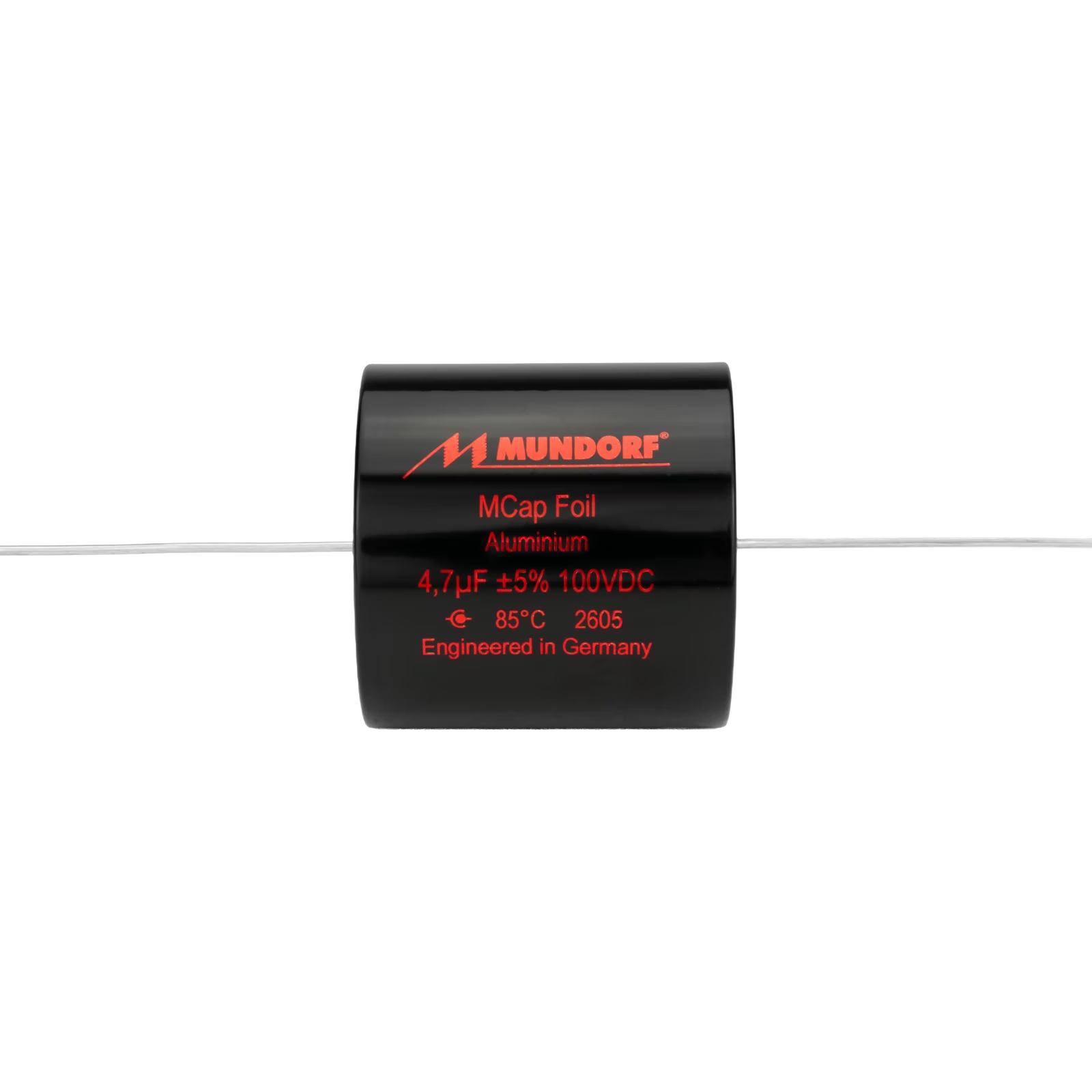
The MCap Foil Alu PP Oil is a Mundorf film-foil capacitor with solid aluminum foil as the electrode. It combines the electrical advantages of a stable metal-foil current path with the mechanical calm of an elaborately impregnated and potted capacitor structure.
We are happy to advise you
Whether ideal components, technical know-how or individual solutions. Let us find the best solution for your application together!
For industrial customers
Order free samples
Would you like to test our products in yours? As a business customer, you can request free samples and see the quality and design for yourself.
NEWSLETTER
News and tips straight to your inbox. Subscribe to our newsletter and choose which topics matter to you.

Tight Tolerances
Tight tolerances in capacitance, inductance, and resistance ensure that capacitors of one type are very close together in terms of their electrical properties. In crossovers, the left and right channels therefore work virtually identically: crossover frequencies, level ratios and phase positions match closely. This is the basis for stable, precise stereo imaging and reproducible results — in series production and also after service.
Tonal Effects
- precise, stable soundstage without drifting
- Coherent overall impression: left and right channels fuse into a single, seamless whole
- characteristic sound is reliably retained even after component replacement/repair
- More stable virtual center and clearer spatial layering
Polypropylene Dielectric
Polypropylene is a high-quality dielectric with a low loss factor, low dielectric absorption and high dielectric strength. These properties enable the storage and delivery of electrical energy with extremely low loss and reduce unwanted recharging effects (dielectric absorption), which can introduce subtle temporal blurring into the music signal. Polypropylene thus forms the electrical basis of many MCAP series and is crucial for neutral, distortion-free signal transmission — and therefore a good prerequisite for all further optimizations.

Tight Tolerances
Tight tolerances in capacitance, inductance, and resistance ensure that capacitors of one type are very close together in terms of their electrical properties. In crossovers, the left and right channels therefore work virtually identically: crossover frequencies, level ratios and phase positions match closely. This is the basis for stable, precise stereo imaging and reproducible results — in series production and also after service.
Tonal Effects
- precise, stable soundstage without drifting
- Coherent overall impression: left and right channels fuse into a single, seamless whole
- characteristic sound is reliably retained even after component replacement/repair
- More stable virtual center and clearer spatial layering
Polypropylene Dielectric
Polypropylene is a high-quality dielectric with a low loss factor, low dielectric absorption and high dielectric strength. These properties enable the storage and delivery of electrical energy with extremely low loss and reduce unwanted recharging effects (dielectric absorption), which can introduce subtle temporal blurring into the music signal. Polypropylene thus forms the electrical basis of many MCAP series and is crucial for neutral, distortion-free signal transmission — and therefore a good prerequisite for all further optimizations.

Tight Tolerances
Tight tolerances in capacitance, inductance, and resistance ensure that capacitors of one type are very close together in terms of their electrical properties. In crossovers, the left and right channels therefore work virtually identically: crossover frequencies, level ratios and phase positions match closely. This is the basis for stable, precise stereo imaging and reproducible results — in series production and also after service.
Tonal Effects
- precise, stable soundstage without drifting
- Coherent overall impression: left and right channels fuse into a single, seamless whole
- characteristic sound is reliably retained even after component replacement/repair
- More stable virtual center and clearer spatial layering
Polypropylene Dielectric
Polypropylene is a high-quality dielectric with a low loss factor, low dielectric absorption and high dielectric strength. These properties enable the storage and delivery of electrical energy with extremely low loss and reduce unwanted recharging effects (dielectric absorption), which can introduce subtle temporal blurring into the music signal. Polypropylene thus forms the electrical basis of many MCAP series and is crucial for neutral, distortion-free signal transmission — and therefore a good prerequisite for all further optimizations.

Tight Tolerances
Tight tolerances in capacitance, inductance, and resistance ensure that capacitors of one type are very close together in terms of their electrical properties. In crossovers, the left and right channels therefore work virtually identically: crossover frequencies, level ratios and phase positions match closely. This is the basis for stable, precise stereo imaging and reproducible results — in series production and also after service.
Tonal Effects
- precise, stable soundstage without drifting
- Coherent overall impression: left and right channels fuse into a single, seamless whole
- characteristic sound is reliably retained even after component replacement/repair
- More stable virtual center and clearer spatial layering
Polypropylene Dielectric
Polypropylene is a high-quality dielectric with a low loss factor, low dielectric absorption and high dielectric strength. These properties enable the storage and delivery of electrical energy with extremely low loss and reduce unwanted recharging effects (dielectric absorption), which can introduce subtle temporal blurring into the music signal. Polypropylene thus forms the electrical basis of many MCAP series and is crucial for neutral, distortion-free signal transmission — and therefore a good prerequisite for all further optimizations.

Tight Tolerances
Tight tolerances in capacitance, inductance, and resistance ensure that capacitors of one type are very close together in terms of their electrical properties. In crossovers, the left and right channels therefore work virtually identically: crossover frequencies, level ratios and phase positions match closely. This is the basis for stable, precise stereo imaging and reproducible results — in series production and also after service.
Tonal Effects
- precise, stable soundstage without drifting
- Coherent overall impression: left and right channels fuse into a single, seamless whole
- characteristic sound is reliably retained even after component replacement/repair
- More stable virtual center and clearer spatial layering
Polypropylene Dielectric
Polypropylene is a high-quality dielectric with a low loss factor, low dielectric absorption and high dielectric strength. These properties enable the storage and delivery of electrical energy with extremely low loss and reduce unwanted recharging effects (dielectric absorption), which can introduce subtle temporal blurring into the music signal. Polypropylene thus forms the electrical basis of many MCAP series and is crucial for neutral, distortion-free signal transmission — and therefore a good prerequisite for all further optimizations.

Tight Tolerances
Tight tolerances in capacitance, inductance, and resistance ensure that capacitors of one type are very close together in terms of their electrical properties. In crossovers, the left and right channels therefore work virtually identically: crossover frequencies, level ratios and phase positions match closely. This is the basis for stable, precise stereo imaging and reproducible results — in series production and also after service.
Tonal Effects
- precise, stable soundstage without drifting
- Coherent overall impression: left and right channels fuse into a single, seamless whole
- characteristic sound is reliably retained even after component replacement/repair
- More stable virtual center and clearer spatial layering
Polypropylene Dielectric
Polypropylene is a high-quality dielectric with a low loss factor, low dielectric absorption and high dielectric strength. These properties enable the storage and delivery of electrical energy with extremely low loss and reduce unwanted recharging effects (dielectric absorption), which can introduce subtle temporal blurring into the music signal. Polypropylene thus forms the electrical basis of many MCAP series and is crucial for neutral, distortion-free signal transmission — and therefore a good prerequisite for all further optimizations.

Tight Tolerances
Tight tolerances in capacitance, inductance, and resistance ensure that capacitors of one type are very close together in terms of their electrical properties. In crossovers, the left and right channels therefore work virtually identically: crossover frequencies, level ratios and phase positions match closely. This is the basis for stable, precise stereo imaging and reproducible results — in series production and also after service.
Tonal Effects
- precise, stable soundstage without drifting
- Coherent overall impression: left and right channels fuse into a single, seamless whole
- characteristic sound is reliably retained even after component replacement/repair
- More stable virtual center and clearer spatial layering
Polypropylene Dielectric
Polypropylene is a high-quality dielectric with a low loss factor, low dielectric absorption and high dielectric strength. These properties enable the storage and delivery of electrical energy with extremely low loss and reduce unwanted recharging effects (dielectric absorption), which can introduce subtle temporal blurring into the music signal. Polypropylene thus forms the electrical basis of many MCAP series and is crucial for neutral, distortion-free signal transmission — and therefore a good prerequisite for all further optimizations.

Tight Tolerances
Tight tolerances in capacitance, inductance, and resistance ensure that capacitors of one type are very close together in terms of their electrical properties. In crossovers, the left and right channels therefore work virtually identically: crossover frequencies, level ratios and phase positions match closely. This is the basis for stable, precise stereo imaging and reproducible results — in series production and also after service.
Tonal Effects
- precise, stable soundstage without drifting
- Coherent overall impression: left and right channels fuse into a single, seamless whole
- characteristic sound is reliably retained even after component replacement/repair
- More stable virtual center and clearer spatial layering
Polypropylene Dielectric
Polypropylene is a high-quality dielectric with a low loss factor, low dielectric absorption and high dielectric strength. These properties enable the storage and delivery of electrical energy with extremely low loss and reduce unwanted recharging effects (dielectric absorption), which can introduce subtle temporal blurring into the music signal. Polypropylene thus forms the electrical basis of many MCAP series and is crucial for neutral, distortion-free signal transmission — and therefore a good prerequisite for all further optimizations.

Tight Tolerances
Tight tolerances in capacitance, inductance, and resistance ensure that capacitors of one type are very close together in terms of their electrical properties. In crossovers, the left and right channels therefore work virtually identically: crossover frequencies, level ratios and phase positions match closely. This is the basis for stable, precise stereo imaging and reproducible results — in series production and also after service.
Tonal Effects
- precise, stable soundstage without drifting
- Coherent overall impression: left and right channels fuse into a single, seamless whole
- characteristic sound is reliably retained even after component replacement/repair
- More stable virtual center and clearer spatial layering
Polypropylene Dielectric
Polypropylene is a high-quality dielectric with a low loss factor, low dielectric absorption and high dielectric strength. These properties enable the storage and delivery of electrical energy with extremely low loss and reduce unwanted recharging effects (dielectric absorption), which can introduce subtle temporal blurring into the music signal. Polypropylene thus forms the electrical basis of many MCAP series and is crucial for neutral, distortion-free signal transmission — and therefore a good prerequisite for all further optimizations.

Tight Tolerances
Tight tolerances in capacitance, inductance, and resistance ensure that capacitors of one type are very close together in terms of their electrical properties. In crossovers, the left and right channels therefore work virtually identically: crossover frequencies, level ratios and phase positions match closely. This is the basis for stable, precise stereo imaging and reproducible results — in series production and also after service.
Tonal Effects
- precise, stable soundstage without drifting
- Coherent overall impression: left and right channels fuse into a single, seamless whole
- characteristic sound is reliably retained even after component replacement/repair
- More stable virtual center and clearer spatial layering
Polypropylene Dielectric
Polypropylene is a high-quality dielectric with a low loss factor, low dielectric absorption and high dielectric strength. These properties enable the storage and delivery of electrical energy with extremely low loss and reduce unwanted recharging effects (dielectric absorption), which can introduce subtle temporal blurring into the music signal. Polypropylene thus forms the electrical basis of many MCAP series and is crucial for neutral, distortion-free signal transmission — and therefore a good prerequisite for all further optimizations.

Tight Tolerances
Tight tolerances in capacitance, inductance, and resistance ensure that capacitors of one type are very close together in terms of their electrical properties. In crossovers, the left and right channels therefore work virtually identically: crossover frequencies, level ratios and phase positions match closely. This is the basis for stable, precise stereo imaging and reproducible results — in series production and also after service.
Tonal Effects
- precise, stable soundstage without drifting
- Coherent overall impression: left and right channels fuse into a single, seamless whole
- characteristic sound is reliably retained even after component replacement/repair
- More stable virtual center and clearer spatial layering
Polypropylene Dielectric
Polypropylene is a high-quality dielectric with a low loss factor, low dielectric absorption and high dielectric strength. These properties enable the storage and delivery of electrical energy with extremely low loss and reduce unwanted recharging effects (dielectric absorption), which can introduce subtle temporal blurring into the music signal. Polypropylene thus forms the electrical basis of many MCAP series and is crucial for neutral, distortion-free signal transmission — and therefore a good prerequisite for all further optimizations.

Tight Tolerances
Tight tolerances in capacitance, inductance, and resistance ensure that capacitors of one type are very close together in terms of their electrical properties. In crossovers, the left and right channels therefore work virtually identically: crossover frequencies, level ratios and phase positions match closely. This is the basis for stable, precise stereo imaging and reproducible results — in series production and also after service.
Tonal Effects
- precise, stable soundstage without drifting
- Coherent overall impression: left and right channels fuse into a single, seamless whole
- characteristic sound is reliably retained even after component replacement/repair
- More stable virtual center and clearer spatial layering
Polypropylene Dielectric
Polypropylene is a high-quality dielectric with a low loss factor, low dielectric absorption and high dielectric strength. These properties enable the storage and delivery of electrical energy with extremely low loss and reduce unwanted recharging effects (dielectric absorption), which can introduce subtle temporal blurring into the music signal. Polypropylene thus forms the electrical basis of many MCAP series and is crucial for neutral, distortion-free signal transmission — and therefore a good prerequisite for all further optimizations.

Tight Tolerances
Tight tolerances in capacitance, inductance, and resistance ensure that capacitors of one type are very close together in terms of their electrical properties. In crossovers, the left and right channels therefore work virtually identically: crossover frequencies, level ratios and phase positions match closely. This is the basis for stable, precise stereo imaging and reproducible results — in series production and also after service.
Tonal Effects
- precise, stable soundstage without drifting
- Coherent overall impression: left and right channels fuse into a single, seamless whole
- characteristic sound is reliably retained even after component replacement/repair
- More stable virtual center and clearer spatial layering
Polypropylene Dielectric
Polypropylene is a high-quality dielectric with a low loss factor, low dielectric absorption and high dielectric strength. These properties enable the storage and delivery of electrical energy with extremely low loss and reduce unwanted recharging effects (dielectric absorption), which can introduce subtle temporal blurring into the music signal. Polypropylene thus forms the electrical basis of many MCAP series and is crucial for neutral, distortion-free signal transmission — and therefore a good prerequisite for all further optimizations.

Tight Tolerances
Tight tolerances in capacitance, inductance, and resistance ensure that capacitors of one type are very close together in terms of their electrical properties. In crossovers, the left and right channels therefore work virtually identically: crossover frequencies, level ratios and phase positions match closely. This is the basis for stable, precise stereo imaging and reproducible results — in series production and also after service.
Tonal Effects
- precise, stable soundstage without drifting
- Coherent overall impression: left and right channels fuse into a single, seamless whole
- characteristic sound is reliably retained even after component replacement/repair
- More stable virtual center and clearer spatial layering
Polypropylene Dielectric
Polypropylene is a high-quality dielectric with a low loss factor, low dielectric absorption and high dielectric strength. These properties enable the storage and delivery of electrical energy with extremely low loss and reduce unwanted recharging effects (dielectric absorption), which can introduce subtle temporal blurring into the music signal. Polypropylene thus forms the electrical basis of many MCAP series and is crucial for neutral, distortion-free signal transmission — and therefore a good prerequisite for all further optimizations.

Tight Tolerances
Tight tolerances in capacitance, inductance, and resistance ensure that capacitors of one type are very close together in terms of their electrical properties. In crossovers, the left and right channels therefore work virtually identically: crossover frequencies, level ratios and phase positions match closely. This is the basis for stable, precise stereo imaging and reproducible results — in series production and also after service.
Tonal Effects
- precise, stable soundstage without drifting
- Coherent overall impression: left and right channels fuse into a single, seamless whole
- characteristic sound is reliably retained even after component replacement/repair
- More stable virtual center and clearer spatial layering
Polypropylene Dielectric
Polypropylene is a high-quality dielectric with a low loss factor, low dielectric absorption and high dielectric strength. These properties enable the storage and delivery of electrical energy with extremely low loss and reduce unwanted recharging effects (dielectric absorption), which can introduce subtle temporal blurring into the music signal. Polypropylene thus forms the electrical basis of many MCAP series and is crucial for neutral, distortion-free signal transmission — and therefore a good prerequisite for all further optimizations.

Tight Tolerances
Tight tolerances in capacitance, inductance, and resistance ensure that capacitors of one type are very close together in terms of their electrical properties. In crossovers, the left and right channels therefore work virtually identically: crossover frequencies, level ratios and phase positions match closely. This is the basis for stable, precise stereo imaging and reproducible results — in series production and also after service.
Tonal Effects
- precise, stable soundstage without drifting
- Coherent overall impression: left and right channels fuse into a single, seamless whole
- characteristic sound is reliably retained even after component replacement/repair
- More stable virtual center and clearer spatial layering
Polypropylene Dielectric
Polypropylene is a high-quality dielectric with a low loss factor, low dielectric absorption and high dielectric strength. These properties enable the storage and delivery of electrical energy with extremely low loss and reduce unwanted recharging effects (dielectric absorption), which can introduce subtle temporal blurring into the music signal. Polypropylene thus forms the electrical basis of many MCAP series and is crucial for neutral, distortion-free signal transmission — and therefore a good prerequisite for all further optimizations.

Tight Tolerances
Tight tolerances in capacitance, inductance, and resistance ensure that capacitors of one type are very close together in terms of their electrical properties. In crossovers, the left and right channels therefore work virtually identically: crossover frequencies, level ratios and phase positions match closely. This is the basis for stable, precise stereo imaging and reproducible results — in series production and also after service.
Tonal Effects
- precise, stable soundstage without drifting
- Coherent overall impression: left and right channels fuse into a single, seamless whole
- characteristic sound is reliably retained even after component replacement/repair
- More stable virtual center and clearer spatial layering
Polypropylene Dielectric
Polypropylene is a high-quality dielectric with a low loss factor, low dielectric absorption and high dielectric strength. These properties enable the storage and delivery of electrical energy with extremely low loss and reduce unwanted recharging effects (dielectric absorption), which can introduce subtle temporal blurring into the music signal. Polypropylene thus forms the electrical basis of many MCAP series and is crucial for neutral, distortion-free signal transmission — and therefore a good prerequisite for all further optimizations.

Tight Tolerances
Tight tolerances in capacitance, inductance, and resistance ensure that capacitors of one type are very close together in terms of their electrical properties. In crossovers, the left and right channels therefore work virtually identically: crossover frequencies, level ratios and phase positions match closely. This is the basis for stable, precise stereo imaging and reproducible results — in series production and also after service.
Tonal Effects
- precise, stable soundstage without drifting
- Coherent overall impression: left and right channels fuse into a single, seamless whole
- characteristic sound is reliably retained even after component replacement/repair
- More stable virtual center and clearer spatial layering
Polypropylene Dielectric
Polypropylene is a high-quality dielectric with a low loss factor, low dielectric absorption and high dielectric strength. These properties enable the storage and delivery of electrical energy with extremely low loss and reduce unwanted recharging effects (dielectric absorption), which can introduce subtle temporal blurring into the music signal. Polypropylene thus forms the electrical basis of many MCAP series and is crucial for neutral, distortion-free signal transmission — and therefore a good prerequisite for all further optimizations.

Tight Tolerances
Tight tolerances in capacitance, inductance, and resistance ensure that capacitors of one type are very close together in terms of their electrical properties. In crossovers, the left and right channels therefore work virtually identically: crossover frequencies, level ratios and phase positions match closely. This is the basis for stable, precise stereo imaging and reproducible results — in series production and also after service.
Tonal Effects
- precise, stable soundstage without drifting
- Coherent overall impression: left and right channels fuse into a single, seamless whole
- characteristic sound is reliably retained even after component replacement/repair
- More stable virtual center and clearer spatial layering
Polypropylene Dielectric
Polypropylene is a high-quality dielectric with a low loss factor, low dielectric absorption and high dielectric strength. These properties enable the storage and delivery of electrical energy with extremely low loss and reduce unwanted recharging effects (dielectric absorption), which can introduce subtle temporal blurring into the music signal. Polypropylene thus forms the electrical basis of many MCAP series and is crucial for neutral, distortion-free signal transmission — and therefore a good prerequisite for all further optimizations.

Tight Tolerances
Tight tolerances in capacitance, inductance, and resistance ensure that capacitors of one type are very close together in terms of their electrical properties. In crossovers, the left and right channels therefore work virtually identically: crossover frequencies, level ratios and phase positions match closely. This is the basis for stable, precise stereo imaging and reproducible results — in series production and also after service.
Tonal Effects
- precise, stable soundstage without drifting
- Coherent overall impression: left and right channels fuse into a single, seamless whole
- characteristic sound is reliably retained even after component replacement/repair
- More stable virtual center and clearer spatial layering
Polypropylene Dielectric
Polypropylene is a high-quality dielectric with a low loss factor, low dielectric absorption and high dielectric strength. These properties enable the storage and delivery of electrical energy with extremely low loss and reduce unwanted recharging effects (dielectric absorption), which can introduce subtle temporal blurring into the music signal. Polypropylene thus forms the electrical basis of many MCAP series and is crucial for neutral, distortion-free signal transmission — and therefore a good prerequisite for all further optimizations.

Tight Tolerances
Tight tolerances in capacitance, inductance, and resistance ensure that capacitors of one type are very close together in terms of their electrical properties. In crossovers, the left and right channels therefore work virtually identically: crossover frequencies, level ratios and phase positions match closely. This is the basis for stable, precise stereo imaging and reproducible results — in series production and also after service.
Tonal Effects
- precise, stable soundstage without drifting
- Coherent overall impression: left and right channels fuse into a single, seamless whole
- characteristic sound is reliably retained even after component replacement/repair
- More stable virtual center and clearer spatial layering
Polypropylene Dielectric
Polypropylene is a high-quality dielectric with a low loss factor, low dielectric absorption and high dielectric strength. These properties enable the storage and delivery of electrical energy with extremely low loss and reduce unwanted recharging effects (dielectric absorption), which can introduce subtle temporal blurring into the music signal. Polypropylene thus forms the electrical basis of many MCAP series and is crucial for neutral, distortion-free signal transmission — and therefore a good prerequisite for all further optimizations.

Tight Tolerances
Tight tolerances in capacitance, inductance, and resistance ensure that capacitors of one type are very close together in terms of their electrical properties. In crossovers, the left and right channels therefore work virtually identically: crossover frequencies, level ratios and phase positions match closely. This is the basis for stable, precise stereo imaging and reproducible results — in series production and also after service.
Tonal Effects
- precise, stable soundstage without drifting
- Coherent overall impression: left and right channels fuse into a single, seamless whole
- characteristic sound is reliably retained even after component replacement/repair
- More stable virtual center and clearer spatial layering
Polypropylene Dielectric
Polypropylene is a high-quality dielectric with a low loss factor, low dielectric absorption and high dielectric strength. These properties enable the storage and delivery of electrical energy with extremely low loss and reduce unwanted recharging effects (dielectric absorption), which can introduce subtle temporal blurring into the music signal. Polypropylene thus forms the electrical basis of many MCAP series and is crucial for neutral, distortion-free signal transmission — and therefore a good prerequisite for all further optimizations.

Tight Tolerances
Tight tolerances in capacitance, inductance, and resistance ensure that capacitors of one type are very close together in terms of their electrical properties. In crossovers, the left and right channels therefore work virtually identically: crossover frequencies, level ratios and phase positions match closely. This is the basis for stable, precise stereo imaging and reproducible results — in series production and also after service.
Tonal Effects
- precise, stable soundstage without drifting
- Coherent overall impression: left and right channels fuse into a single, seamless whole
- characteristic sound is reliably retained even after component replacement/repair
- More stable virtual center and clearer spatial layering
Polypropylene Dielectric
Polypropylene is a high-quality dielectric with a low loss factor, low dielectric absorption and high dielectric strength. These properties enable the storage and delivery of electrical energy with extremely low loss and reduce unwanted recharging effects (dielectric absorption), which can introduce subtle temporal blurring into the music signal. Polypropylene thus forms the electrical basis of many MCAP series and is crucial for neutral, distortion-free signal transmission — and therefore a good prerequisite for all further optimizations.

Tight Tolerances
Tight tolerances in capacitance, inductance, and resistance ensure that capacitors of one type are very close together in terms of their electrical properties. In crossovers, the left and right channels therefore work virtually identically: crossover frequencies, level ratios and phase positions match closely. This is the basis for stable, precise stereo imaging and reproducible results — in series production and also after service.
Tonal Effects
- precise, stable soundstage without drifting
- Coherent overall impression: left and right channels fuse into a single, seamless whole
- characteristic sound is reliably retained even after component replacement/repair
- More stable virtual center and clearer spatial layering
Polypropylene Dielectric
Polypropylene is a high-quality dielectric with a low loss factor, low dielectric absorption and high dielectric strength. These properties enable the storage and delivery of electrical energy with extremely low loss and reduce unwanted recharging effects (dielectric absorption), which can introduce subtle temporal blurring into the music signal. Polypropylene thus forms the electrical basis of many MCAP series and is crucial for neutral, distortion-free signal transmission — and therefore a good prerequisite for all further optimizations.

Tight Tolerances
Tight tolerances in capacitance, inductance, and resistance ensure that capacitors of one type are very close together in terms of their electrical properties. In crossovers, the left and right channels therefore work virtually identically: crossover frequencies, level ratios and phase positions match closely. This is the basis for stable, precise stereo imaging and reproducible results — in series production and also after service.
Tonal Effects
- precise, stable soundstage without drifting
- Coherent overall impression: left and right channels fuse into a single, seamless whole
- characteristic sound is reliably retained even after component replacement/repair
- More stable virtual center and clearer spatial layering
Polypropylene Dielectric
Polypropylene is a high-quality dielectric with a low loss factor, low dielectric absorption and high dielectric strength. These properties enable the storage and delivery of electrical energy with extremely low loss and reduce unwanted recharging effects (dielectric absorption), which can introduce subtle temporal blurring into the music signal. Polypropylene thus forms the electrical basis of many MCAP series and is crucial for neutral, distortion-free signal transmission — and therefore a good prerequisite for all further optimizations.

Tight Tolerances
Tight tolerances in capacitance, inductance, and resistance ensure that capacitors of one type are very close together in terms of their electrical properties. In crossovers, the left and right channels therefore work virtually identically: crossover frequencies, level ratios and phase positions match closely. This is the basis for stable, precise stereo imaging and reproducible results — in series production and also after service.
Tonal Effects
- precise, stable soundstage without drifting
- Coherent overall impression: left and right channels fuse into a single, seamless whole
- characteristic sound is reliably retained even after component replacement/repair
- More stable virtual center and clearer spatial layering
Polypropylene Dielectric
Polypropylene is a high-quality dielectric with a low loss factor, low dielectric absorption and high dielectric strength. These properties enable the storage and delivery of electrical energy with extremely low loss and reduce unwanted recharging effects (dielectric absorption), which can introduce subtle temporal blurring into the music signal. Polypropylene thus forms the electrical basis of many MCAP series and is crucial for neutral, distortion-free signal transmission — and therefore a good prerequisite for all further optimizations.

Tight Tolerances
Tight tolerances in capacitance, inductance, and resistance ensure that capacitors of one type are very close together in terms of their electrical properties. In crossovers, the left and right channels therefore work virtually identically: crossover frequencies, level ratios and phase positions match closely. This is the basis for stable, precise stereo imaging and reproducible results — in series production and also after service.
Tonal Effects
- precise, stable soundstage without drifting
- Coherent overall impression: left and right channels fuse into a single, seamless whole
- characteristic sound is reliably retained even after component replacement/repair
- More stable virtual center and clearer spatial layering
Polypropylene Dielectric
Polypropylene is a high-quality dielectric with a low loss factor, low dielectric absorption and high dielectric strength. These properties enable the storage and delivery of electrical energy with extremely low loss and reduce unwanted recharging effects (dielectric absorption), which can introduce subtle temporal blurring into the music signal. Polypropylene thus forms the electrical basis of many MCAP series and is crucial for neutral, distortion-free signal transmission — and therefore a good prerequisite for all further optimizations.

Tight Tolerances
Tight tolerances in capacitance, inductance, and resistance ensure that capacitors of one type are very close together in terms of their electrical properties. In crossovers, the left and right channels therefore work virtually identically: crossover frequencies, level ratios and phase positions match closely. This is the basis for stable, precise stereo imaging and reproducible results — in series production and also after service.
Tonal Effects
- precise, stable soundstage without drifting
- Coherent overall impression: left and right channels fuse into a single, seamless whole
- characteristic sound is reliably retained even after component replacement/repair
- More stable virtual center and clearer spatial layering
Polypropylene Dielectric
Polypropylene is a high-quality dielectric with a low loss factor, low dielectric absorption and high dielectric strength. These properties enable the storage and delivery of electrical energy with extremely low loss and reduce unwanted recharging effects (dielectric absorption), which can introduce subtle temporal blurring into the music signal. Polypropylene thus forms the electrical basis of many MCAP series and is crucial for neutral, distortion-free signal transmission — and therefore a good prerequisite for all further optimizations.

Tight Tolerances
Tight tolerances in capacitance, inductance, and resistance ensure that capacitors of one type are very close together in terms of their electrical properties. In crossovers, the left and right channels therefore work virtually identically: crossover frequencies, level ratios and phase positions match closely. This is the basis for stable, precise stereo imaging and reproducible results — in series production and also after service.
Tonal Effects
- precise, stable soundstage without drifting
- Coherent overall impression: left and right channels fuse into a single, seamless whole
- characteristic sound is reliably retained even after component replacement/repair
- More stable virtual center and clearer spatial layering
Polypropylene Dielectric
Polypropylene is a high-quality dielectric with a low loss factor, low dielectric absorption and high dielectric strength. These properties enable the storage and delivery of electrical energy with extremely low loss and reduce unwanted recharging effects (dielectric absorption), which can introduce subtle temporal blurring into the music signal. Polypropylene thus forms the electrical basis of many MCAP series and is crucial for neutral, distortion-free signal transmission — and therefore a good prerequisite for all further optimizations.

Tight Tolerances
Tight tolerances in capacitance, inductance, and resistance ensure that capacitors of one type are very close together in terms of their electrical properties. In crossovers, the left and right channels therefore work virtually identically: crossover frequencies, level ratios and phase positions match closely. This is the basis for stable, precise stereo imaging and reproducible results — in series production and also after service.
Tonal Effects
- precise, stable soundstage without drifting
- Coherent overall impression: left and right channels fuse into a single, seamless whole
- characteristic sound is reliably retained even after component replacement/repair
- More stable virtual center and clearer spatial layering
Polypropylene Dielectric
Polypropylene is a high-quality dielectric with a low loss factor, low dielectric absorption and high dielectric strength. These properties enable the storage and delivery of electrical energy with extremely low loss and reduce unwanted recharging effects (dielectric absorption), which can introduce subtle temporal blurring into the music signal. Polypropylene thus forms the electrical basis of many MCAP series and is crucial for neutral, distortion-free signal transmission — and therefore a good prerequisite for all further optimizations.

Tight Tolerances
Tight tolerances in capacitance, inductance, and resistance ensure that capacitors of one type are very close together in terms of their electrical properties. In crossovers, the left and right channels therefore work virtually identically: crossover frequencies, level ratios and phase positions match closely. This is the basis for stable, precise stereo imaging and reproducible results — in series production and also after service.
Tonal Effects
- precise, stable soundstage without drifting
- Coherent overall impression: left and right channels fuse into a single, seamless whole
- characteristic sound is reliably retained even after component replacement/repair
- More stable virtual center and clearer spatial layering
Polypropylene Dielectric
Polypropylene is a high-quality dielectric with a low loss factor, low dielectric absorption and high dielectric strength. These properties enable the storage and delivery of electrical energy with extremely low loss and reduce unwanted recharging effects (dielectric absorption), which can introduce subtle temporal blurring into the music signal. Polypropylene thus forms the electrical basis of many MCAP series and is crucial for neutral, distortion-free signal transmission — and therefore a good prerequisite for all further optimizations.

Tight Tolerances
Tight tolerances in capacitance, inductance, and resistance ensure that capacitors of one type are very close together in terms of their electrical properties. In crossovers, the left and right channels therefore work virtually identically: crossover frequencies, level ratios and phase positions match closely. This is the basis for stable, precise stereo imaging and reproducible results — in series production and also after service.
Tonal Effects
- precise, stable soundstage without drifting
- Coherent overall impression: left and right channels fuse into a single, seamless whole
- characteristic sound is reliably retained even after component replacement/repair
- More stable virtual center and clearer spatial layering
Polypropylene Dielectric
Polypropylene is a high-quality dielectric with a low loss factor, low dielectric absorption and high dielectric strength. These properties enable the storage and delivery of electrical energy with extremely low loss and reduce unwanted recharging effects (dielectric absorption), which can introduce subtle temporal blurring into the music signal. Polypropylene thus forms the electrical basis of many MCAP series and is crucial for neutral, distortion-free signal transmission — and therefore a good prerequisite for all further optimizations.

Tight Tolerances
Tight tolerances in capacitance, inductance, and resistance ensure that capacitors of one type are very close together in terms of their electrical properties. In crossovers, the left and right channels therefore work virtually identically: crossover frequencies, level ratios and phase positions match closely. This is the basis for stable, precise stereo imaging and reproducible results — in series production and also after service.
Tonal Effects
- precise, stable soundstage without drifting
- Coherent overall impression: left and right channels fuse into a single, seamless whole
- characteristic sound is reliably retained even after component replacement/repair
- More stable virtual center and clearer spatial layering
Polypropylene Dielectric
Polypropylene is a high-quality dielectric with a low loss factor, low dielectric absorption and high dielectric strength. These properties enable the storage and delivery of electrical energy with extremely low loss and reduce unwanted recharging effects (dielectric absorption), which can introduce subtle temporal blurring into the music signal. Polypropylene thus forms the electrical basis of many MCAP series and is crucial for neutral, distortion-free signal transmission — and therefore a good prerequisite for all further optimizations.