
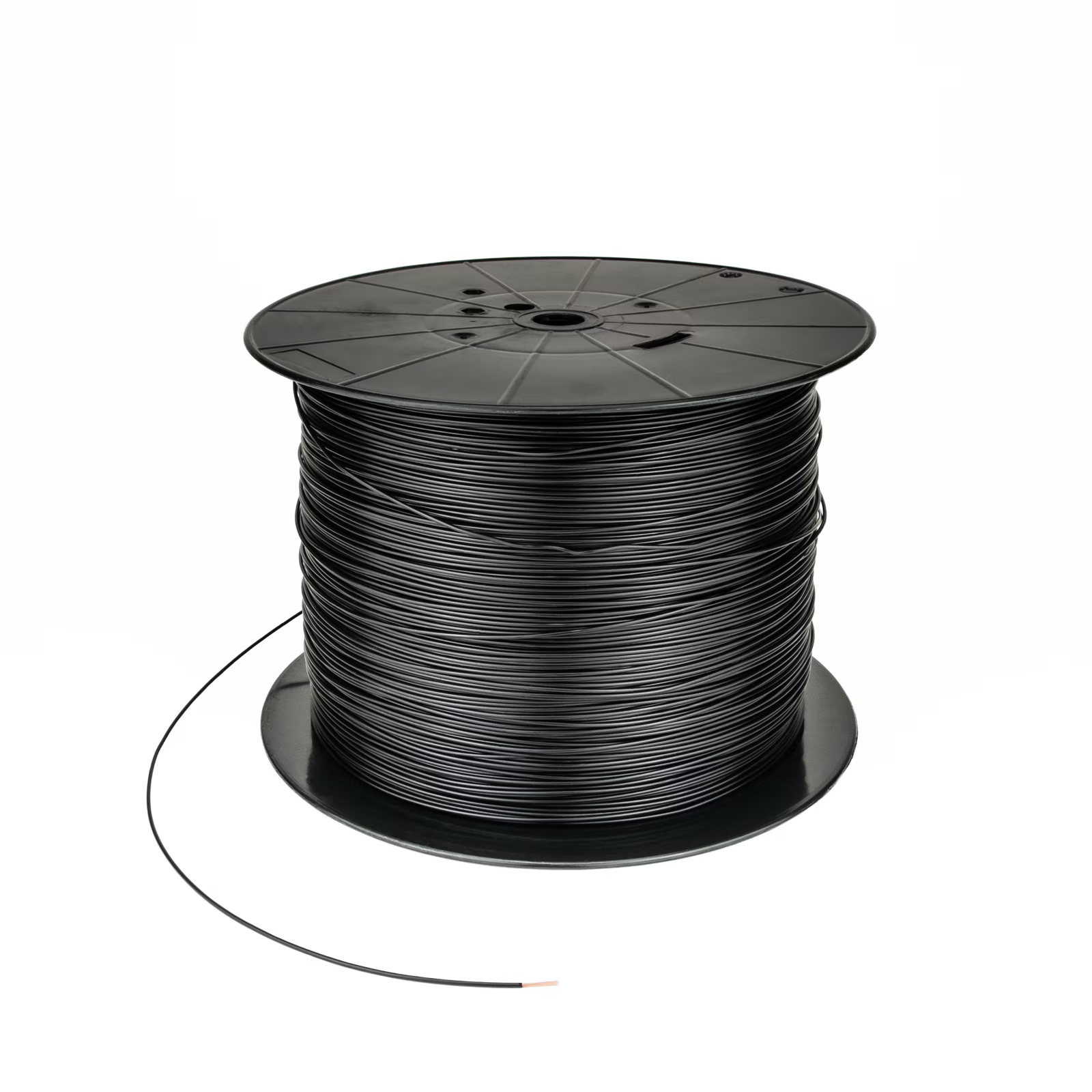


ACW PVC 1.0 mm
Solid Angelique copper conductor – for harmonious timbres, tonal coherence, and defined signal transmission.
We are happy to advise you
Whether ideal components, technical know-how or individual solutions. Let us find the best solution for your application together!
For industrial customers
Order free samples
Would you like to test our products in yours? As a business customer, you can request free samples and see the quality and design for yourself.
NEWSLETTER
News and tips straight to your inbox. Subscribe to our newsletter and choose which topics matter to you.
Non-Magnetic Connections
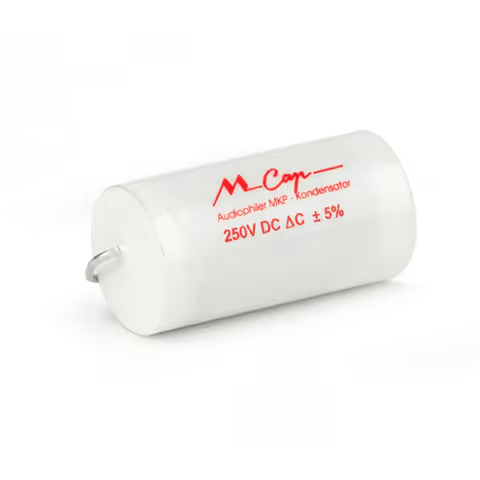
Non-magnetic connections minimize micro-microphone modulations in the current path. In a power supply capacitor, the current flows not only through the coil, but also through the connecting wires and contact points — and this is exactly where ferromagnetic materials can produce undesired effects. Non-magnetic connection materials avoid magnetization and hysteresis in the conductor and thus reduce current-synchronous, very fine impedance modulations. This is a micro-microphonic measure in the actual power path: The connection is closer to the ideal conductor, without “magnetic interference.” In addition, there is additional electrotechnical benefit because non-magnetic, highly conductive materials often lower and stabilize contact and transition resistances. As a result, energy is available more evenly at the amplifier stage — and the sound remains quieter and more controlled.
Tonal effects
- quieter background and less “grit” with complex music
- more stable transients because the current path is less finely modulated
- clearer contours and cleaner room images at high levels
- more consistent sound quality due to more stable contact and conduction conditions
Non-Magnetic Connections
Non-magnetic connections minimize micro-microphone modulations in the current path. In a power supply capacitor, the current flows not only through the coil, but also through the connecting wires and contact points — and this is exactly where ferromagnetic materials can produce undesired effects. Non-magnetic connection materials avoid magnetization and hysteresis in the conductor and thus reduce current-synchronous, very fine impedance modulations. This is a micro-microphonic measure in the actual power path: The connection is closer to the ideal conductor, without “magnetic interference.” In addition, there is additional electrotechnical benefit because non-magnetic, highly conductive materials often lower and stabilize contact and transition resistances. As a result, energy is available more evenly at the amplifier stage — and the sound remains quieter and more controlled.
Tonal effects
- quieter background and less “grit” with complex music
- more stable transients because the current path is less finely modulated
- clearer contours and cleaner room images at high levels
- more consistent sound quality due to more stable contact and conduction conditions

Non-Magnetic Connections
Non-magnetic connections minimize micro-microphone modulations in the current path. In a power supply capacitor, the current flows not only through the coil, but also through the connecting wires and contact points — and this is exactly where ferromagnetic materials can produce undesired effects. Non-magnetic connection materials avoid magnetization and hysteresis in the conductor and thus reduce current-synchronous, very fine impedance modulations. This is a micro-microphonic measure in the actual power path: The connection is closer to the ideal conductor, without “magnetic interference.” In addition, there is additional electrotechnical benefit because non-magnetic, highly conductive materials often lower and stabilize contact and transition resistances. As a result, energy is available more evenly at the amplifier stage — and the sound remains quieter and more controlled.
Tonal effects
- quieter background and less “grit” with complex music
- more stable transients because the current path is less finely modulated
- clearer contours and cleaner room images at high levels
- more consistent sound quality due to more stable contact and conduction conditions
Non-Magnetic Connections
Non-magnetic connections minimize micro-microphone modulations in the current path. In a power supply capacitor, the current flows not only through the coil, but also through the connecting wires and contact points — and this is exactly where ferromagnetic materials can produce undesired effects. Non-magnetic connection materials avoid magnetization and hysteresis in the conductor and thus reduce current-synchronous, very fine impedance modulations. This is a micro-microphonic measure in the actual power path: The connection is closer to the ideal conductor, without “magnetic interference.” In addition, there is additional electrotechnical benefit because non-magnetic, highly conductive materials often lower and stabilize contact and transition resistances. As a result, energy is available more evenly at the amplifier stage — and the sound remains quieter and more controlled.
Tonal effects
- quieter background and less “grit” with complex music
- more stable transients because the current path is less finely modulated
- clearer contours and cleaner room images at high levels
- more consistent sound quality due to more stable contact and conduction conditions

Non-Magnetic Connections
Non-magnetic connections minimize micro-microphone modulations in the current path. In a power supply capacitor, the current flows not only through the coil, but also through the connecting wires and contact points — and this is exactly where ferromagnetic materials can produce undesired effects. Non-magnetic connection materials avoid magnetization and hysteresis in the conductor and thus reduce current-synchronous, very fine impedance modulations. This is a micro-microphonic measure in the actual power path: The connection is closer to the ideal conductor, without “magnetic interference.” In addition, there is additional electrotechnical benefit because non-magnetic, highly conductive materials often lower and stabilize contact and transition resistances. As a result, energy is available more evenly at the amplifier stage — and the sound remains quieter and more controlled.
Tonal effects
- quieter background and less “grit” with complex music
- more stable transients because the current path is less finely modulated
- clearer contours and cleaner room images at high levels
- more consistent sound quality due to more stable contact and conduction conditions

Non-Magnetic Connections
Non-magnetic connections minimize micro-microphone modulations in the current path. In a power supply capacitor, the current flows not only through the coil, but also through the connecting wires and contact points — and this is exactly where ferromagnetic materials can produce undesired effects. Non-magnetic connection materials avoid magnetization and hysteresis in the conductor and thus reduce current-synchronous, very fine impedance modulations. This is a micro-microphonic measure in the actual power path: The connection is closer to the ideal conductor, without “magnetic interference.” In addition, there is additional electrotechnical benefit because non-magnetic, highly conductive materials often lower and stabilize contact and transition resistances. As a result, energy is available more evenly at the amplifier stage — and the sound remains quieter and more controlled.
Tonal effects
- quieter background and less “grit” with complex music
- more stable transients because the current path is less finely modulated
- clearer contours and cleaner room images at high levels
- more consistent sound quality due to more stable contact and conduction conditions

Non-Magnetic Connections
Non-magnetic connections minimize micro-microphone modulations in the current path. In a power supply capacitor, the current flows not only through the coil, but also through the connecting wires and contact points — and this is exactly where ferromagnetic materials can produce undesired effects. Non-magnetic connection materials avoid magnetization and hysteresis in the conductor and thus reduce current-synchronous, very fine impedance modulations. This is a micro-microphonic measure in the actual power path: The connection is closer to the ideal conductor, without “magnetic interference.” In addition, there is additional electrotechnical benefit because non-magnetic, highly conductive materials often lower and stabilize contact and transition resistances. As a result, energy is available more evenly at the amplifier stage — and the sound remains quieter and more controlled.
Tonal effects
- quieter background and less “grit” with complex music
- more stable transients because the current path is less finely modulated
- clearer contours and cleaner room images at high levels
- more consistent sound quality due to more stable contact and conduction conditions

Non-Magnetic Connections
Non-magnetic connections minimize micro-microphone modulations in the current path. In a power supply capacitor, the current flows not only through the coil, but also through the connecting wires and contact points — and this is exactly where ferromagnetic materials can produce undesired effects. Non-magnetic connection materials avoid magnetization and hysteresis in the conductor and thus reduce current-synchronous, very fine impedance modulations. This is a micro-microphonic measure in the actual power path: The connection is closer to the ideal conductor, without “magnetic interference.” In addition, there is additional electrotechnical benefit because non-magnetic, highly conductive materials often lower and stabilize contact and transition resistances. As a result, energy is available more evenly at the amplifier stage — and the sound remains quieter and more controlled.
Tonal effects
- quieter background and less “grit” with complex music
- more stable transients because the current path is less finely modulated
- clearer contours and cleaner room images at high levels
- more consistent sound quality due to more stable contact and conduction conditions

Non-Magnetic Connections
Non-magnetic connections minimize micro-microphone modulations in the current path. In a power supply capacitor, the current flows not only through the coil, but also through the connecting wires and contact points — and this is exactly where ferromagnetic materials can produce undesired effects. Non-magnetic connection materials avoid magnetization and hysteresis in the conductor and thus reduce current-synchronous, very fine impedance modulations. This is a micro-microphonic measure in the actual power path: The connection is closer to the ideal conductor, without “magnetic interference.” In addition, there is additional electrotechnical benefit because non-magnetic, highly conductive materials often lower and stabilize contact and transition resistances. As a result, energy is available more evenly at the amplifier stage — and the sound remains quieter and more controlled.
Tonal effects
- quieter background and less “grit” with complex music
- more stable transients because the current path is less finely modulated
- clearer contours and cleaner room images at high levels
- more consistent sound quality due to more stable contact and conduction conditions

Non-Magnetic Connections
Non-magnetic connections minimize micro-microphone modulations in the current path. In a power supply capacitor, the current flows not only through the coil, but also through the connecting wires and contact points — and this is exactly where ferromagnetic materials can produce undesired effects. Non-magnetic connection materials avoid magnetization and hysteresis in the conductor and thus reduce current-synchronous, very fine impedance modulations. This is a micro-microphonic measure in the actual power path: The connection is closer to the ideal conductor, without “magnetic interference.” In addition, there is additional electrotechnical benefit because non-magnetic, highly conductive materials often lower and stabilize contact and transition resistances. As a result, energy is available more evenly at the amplifier stage — and the sound remains quieter and more controlled.
Tonal effects
- quieter background and less “grit” with complex music
- more stable transients because the current path is less finely modulated
- clearer contours and cleaner room images at high levels
- more consistent sound quality due to more stable contact and conduction conditions

Non-Magnetic Connections
Non-magnetic connections minimize micro-microphone modulations in the current path. In a power supply capacitor, the current flows not only through the coil, but also through the connecting wires and contact points — and this is exactly where ferromagnetic materials can produce undesired effects. Non-magnetic connection materials avoid magnetization and hysteresis in the conductor and thus reduce current-synchronous, very fine impedance modulations. This is a micro-microphonic measure in the actual power path: The connection is closer to the ideal conductor, without “magnetic interference.” In addition, there is additional electrotechnical benefit because non-magnetic, highly conductive materials often lower and stabilize contact and transition resistances. As a result, energy is available more evenly at the amplifier stage — and the sound remains quieter and more controlled.
Tonal effects
- quieter background and less “grit” with complex music
- more stable transients because the current path is less finely modulated
- clearer contours and cleaner room images at high levels
- more consistent sound quality due to more stable contact and conduction conditions

Non-Magnetic Connections
Non-magnetic connections minimize micro-microphone modulations in the current path. In a power supply capacitor, the current flows not only through the coil, but also through the connecting wires and contact points — and this is exactly where ferromagnetic materials can produce undesired effects. Non-magnetic connection materials avoid magnetization and hysteresis in the conductor and thus reduce current-synchronous, very fine impedance modulations. This is a micro-microphonic measure in the actual power path: The connection is closer to the ideal conductor, without “magnetic interference.” In addition, there is additional electrotechnical benefit because non-magnetic, highly conductive materials often lower and stabilize contact and transition resistances. As a result, energy is available more evenly at the amplifier stage — and the sound remains quieter and more controlled.
Tonal effects
- quieter background and less “grit” with complex music
- more stable transients because the current path is less finely modulated
- clearer contours and cleaner room images at high levels
- more consistent sound quality due to more stable contact and conduction conditions

Non-Magnetic Connections
Non-magnetic connections minimize micro-microphone modulations in the current path. In a power supply capacitor, the current flows not only through the coil, but also through the connecting wires and contact points — and this is exactly where ferromagnetic materials can produce undesired effects. Non-magnetic connection materials avoid magnetization and hysteresis in the conductor and thus reduce current-synchronous, very fine impedance modulations. This is a micro-microphonic measure in the actual power path: The connection is closer to the ideal conductor, without “magnetic interference.” In addition, there is additional electrotechnical benefit because non-magnetic, highly conductive materials often lower and stabilize contact and transition resistances. As a result, energy is available more evenly at the amplifier stage — and the sound remains quieter and more controlled.
Tonal effects
- quieter background and less “grit” with complex music
- more stable transients because the current path is less finely modulated
- clearer contours and cleaner room images at high levels
- more consistent sound quality due to more stable contact and conduction conditions

Non-Magnetic Connections
Non-magnetic connections minimize micro-microphone modulations in the current path. In a power supply capacitor, the current flows not only through the coil, but also through the connecting wires and contact points — and this is exactly where ferromagnetic materials can produce undesired effects. Non-magnetic connection materials avoid magnetization and hysteresis in the conductor and thus reduce current-synchronous, very fine impedance modulations. This is a micro-microphonic measure in the actual power path: The connection is closer to the ideal conductor, without “magnetic interference.” In addition, there is additional electrotechnical benefit because non-magnetic, highly conductive materials often lower and stabilize contact and transition resistances. As a result, energy is available more evenly at the amplifier stage — and the sound remains quieter and more controlled.
Tonal effects
- quieter background and less “grit” with complex music
- more stable transients because the current path is less finely modulated
- clearer contours and cleaner room images at high levels
- more consistent sound quality due to more stable contact and conduction conditions

Non-Magnetic Connections
Non-magnetic connections minimize micro-microphone modulations in the current path. In a power supply capacitor, the current flows not only through the coil, but also through the connecting wires and contact points — and this is exactly where ferromagnetic materials can produce undesired effects. Non-magnetic connection materials avoid magnetization and hysteresis in the conductor and thus reduce current-synchronous, very fine impedance modulations. This is a micro-microphonic measure in the actual power path: The connection is closer to the ideal conductor, without “magnetic interference.” In addition, there is additional electrotechnical benefit because non-magnetic, highly conductive materials often lower and stabilize contact and transition resistances. As a result, energy is available more evenly at the amplifier stage — and the sound remains quieter and more controlled.
Tonal effects
- quieter background and less “grit” with complex music
- more stable transients because the current path is less finely modulated
- clearer contours and cleaner room images at high levels
- more consistent sound quality due to more stable contact and conduction conditions

Non-Magnetic Connections
Non-magnetic connections minimize micro-microphone modulations in the current path. In a power supply capacitor, the current flows not only through the coil, but also through the connecting wires and contact points — and this is exactly where ferromagnetic materials can produce undesired effects. Non-magnetic connection materials avoid magnetization and hysteresis in the conductor and thus reduce current-synchronous, very fine impedance modulations. This is a micro-microphonic measure in the actual power path: The connection is closer to the ideal conductor, without “magnetic interference.” In addition, there is additional electrotechnical benefit because non-magnetic, highly conductive materials often lower and stabilize contact and transition resistances. As a result, energy is available more evenly at the amplifier stage — and the sound remains quieter and more controlled.
Tonal effects
- quieter background and less “grit” with complex music
- more stable transients because the current path is less finely modulated
- clearer contours and cleaner room images at high levels
- more consistent sound quality due to more stable contact and conduction conditions

Non-Magnetic Connections
Non-magnetic connections minimize micro-microphone modulations in the current path. In a power supply capacitor, the current flows not only through the coil, but also through the connecting wires and contact points — and this is exactly where ferromagnetic materials can produce undesired effects. Non-magnetic connection materials avoid magnetization and hysteresis in the conductor and thus reduce current-synchronous, very fine impedance modulations. This is a micro-microphonic measure in the actual power path: The connection is closer to the ideal conductor, without “magnetic interference.” In addition, there is additional electrotechnical benefit because non-magnetic, highly conductive materials often lower and stabilize contact and transition resistances. As a result, energy is available more evenly at the amplifier stage — and the sound remains quieter and more controlled.
Tonal effects
- quieter background and less “grit” with complex music
- more stable transients because the current path is less finely modulated
- clearer contours and cleaner room images at high levels
- more consistent sound quality due to more stable contact and conduction conditions
Non-Magnetic Connections
Non-magnetic connections minimize micro-microphone modulations in the current path. In a power supply capacitor, the current flows not only through the coil, but also through the connecting wires and contact points — and this is exactly where ferromagnetic materials can produce undesired effects. Non-magnetic connection materials avoid magnetization and hysteresis in the conductor and thus reduce current-synchronous, very fine impedance modulations. This is a micro-microphonic measure in the actual power path: The connection is closer to the ideal conductor, without “magnetic interference.” In addition, there is additional electrotechnical benefit because non-magnetic, highly conductive materials often lower and stabilize contact and transition resistances. As a result, energy is available more evenly at the amplifier stage — and the sound remains quieter and more controlled.
Tonal effects
- quieter background and less “grit” with complex music
- more stable transients because the current path is less finely modulated
- clearer contours and cleaner room images at high levels
- more consistent sound quality due to more stable contact and conduction conditions
Non-Magnetic Connections
Non-magnetic connections minimize micro-microphone modulations in the current path. In a power supply capacitor, the current flows not only through the coil, but also through the connecting wires and contact points — and this is exactly where ferromagnetic materials can produce undesired effects. Non-magnetic connection materials avoid magnetization and hysteresis in the conductor and thus reduce current-synchronous, very fine impedance modulations. This is a micro-microphonic measure in the actual power path: The connection is closer to the ideal conductor, without “magnetic interference.” In addition, there is additional electrotechnical benefit because non-magnetic, highly conductive materials often lower and stabilize contact and transition resistances. As a result, energy is available more evenly at the amplifier stage — and the sound remains quieter and more controlled.
Tonal effects
- quieter background and less “grit” with complex music
- more stable transients because the current path is less finely modulated
- clearer contours and cleaner room images at high levels
- more consistent sound quality due to more stable contact and conduction conditions

Non-Magnetic Connections
Non-magnetic connections minimize micro-microphone modulations in the current path. In a power supply capacitor, the current flows not only through the coil, but also through the connecting wires and contact points — and this is exactly where ferromagnetic materials can produce undesired effects. Non-magnetic connection materials avoid magnetization and hysteresis in the conductor and thus reduce current-synchronous, very fine impedance modulations. This is a micro-microphonic measure in the actual power path: The connection is closer to the ideal conductor, without “magnetic interference.” In addition, there is additional electrotechnical benefit because non-magnetic, highly conductive materials often lower and stabilize contact and transition resistances. As a result, energy is available more evenly at the amplifier stage — and the sound remains quieter and more controlled.
Tonal effects
- quieter background and less “grit” with complex music
- more stable transients because the current path is less finely modulated
- clearer contours and cleaner room images at high levels
- more consistent sound quality due to more stable contact and conduction conditions

Non-Magnetic Connections
Non-magnetic connections minimize micro-microphone modulations in the current path. In a power supply capacitor, the current flows not only through the coil, but also through the connecting wires and contact points — and this is exactly where ferromagnetic materials can produce undesired effects. Non-magnetic connection materials avoid magnetization and hysteresis in the conductor and thus reduce current-synchronous, very fine impedance modulations. This is a micro-microphonic measure in the actual power path: The connection is closer to the ideal conductor, without “magnetic interference.” In addition, there is additional electrotechnical benefit because non-magnetic, highly conductive materials often lower and stabilize contact and transition resistances. As a result, energy is available more evenly at the amplifier stage — and the sound remains quieter and more controlled.
Tonal effects
- quieter background and less “grit” with complex music
- more stable transients because the current path is less finely modulated
- clearer contours and cleaner room images at high levels
- more consistent sound quality due to more stable contact and conduction conditions

Non-Magnetic Connections
Non-magnetic connections minimize micro-microphone modulations in the current path. In a power supply capacitor, the current flows not only through the coil, but also through the connecting wires and contact points — and this is exactly where ferromagnetic materials can produce undesired effects. Non-magnetic connection materials avoid magnetization and hysteresis in the conductor and thus reduce current-synchronous, very fine impedance modulations. This is a micro-microphonic measure in the actual power path: The connection is closer to the ideal conductor, without “magnetic interference.” In addition, there is additional electrotechnical benefit because non-magnetic, highly conductive materials often lower and stabilize contact and transition resistances. As a result, energy is available more evenly at the amplifier stage — and the sound remains quieter and more controlled.
Tonal effects
- quieter background and less “grit” with complex music
- more stable transients because the current path is less finely modulated
- clearer contours and cleaner room images at high levels
- more consistent sound quality due to more stable contact and conduction conditions
Non-Magnetic Connections
Non-magnetic connections minimize micro-microphone modulations in the current path. In a power supply capacitor, the current flows not only through the coil, but also through the connecting wires and contact points — and this is exactly where ferromagnetic materials can produce undesired effects. Non-magnetic connection materials avoid magnetization and hysteresis in the conductor and thus reduce current-synchronous, very fine impedance modulations. This is a micro-microphonic measure in the actual power path: The connection is closer to the ideal conductor, without “magnetic interference.” In addition, there is additional electrotechnical benefit because non-magnetic, highly conductive materials often lower and stabilize contact and transition resistances. As a result, energy is available more evenly at the amplifier stage — and the sound remains quieter and more controlled.
Tonal effects
- quieter background and less “grit” with complex music
- more stable transients because the current path is less finely modulated
- clearer contours and cleaner room images at high levels
- more consistent sound quality due to more stable contact and conduction conditions

Non-Magnetic Connections
Non-magnetic connections minimize micro-microphone modulations in the current path. In a power supply capacitor, the current flows not only through the coil, but also through the connecting wires and contact points — and this is exactly where ferromagnetic materials can produce undesired effects. Non-magnetic connection materials avoid magnetization and hysteresis in the conductor and thus reduce current-synchronous, very fine impedance modulations. This is a micro-microphonic measure in the actual power path: The connection is closer to the ideal conductor, without “magnetic interference.” In addition, there is additional electrotechnical benefit because non-magnetic, highly conductive materials often lower and stabilize contact and transition resistances. As a result, energy is available more evenly at the amplifier stage — and the sound remains quieter and more controlled.
Tonal effects
- quieter background and less “grit” with complex music
- more stable transients because the current path is less finely modulated
- clearer contours and cleaner room images at high levels
- more consistent sound quality due to more stable contact and conduction conditions

Non-Magnetic Connections
Non-magnetic connections minimize micro-microphone modulations in the current path. In a power supply capacitor, the current flows not only through the coil, but also through the connecting wires and contact points — and this is exactly where ferromagnetic materials can produce undesired effects. Non-magnetic connection materials avoid magnetization and hysteresis in the conductor and thus reduce current-synchronous, very fine impedance modulations. This is a micro-microphonic measure in the actual power path: The connection is closer to the ideal conductor, without “magnetic interference.” In addition, there is additional electrotechnical benefit because non-magnetic, highly conductive materials often lower and stabilize contact and transition resistances. As a result, energy is available more evenly at the amplifier stage — and the sound remains quieter and more controlled.
Tonal effects
- quieter background and less “grit” with complex music
- more stable transients because the current path is less finely modulated
- clearer contours and cleaner room images at high levels
- more consistent sound quality due to more stable contact and conduction conditions

Non-Magnetic Connections
Non-magnetic connections minimize micro-microphone modulations in the current path. In a power supply capacitor, the current flows not only through the coil, but also through the connecting wires and contact points — and this is exactly where ferromagnetic materials can produce undesired effects. Non-magnetic connection materials avoid magnetization and hysteresis in the conductor and thus reduce current-synchronous, very fine impedance modulations. This is a micro-microphonic measure in the actual power path: The connection is closer to the ideal conductor, without “magnetic interference.” In addition, there is additional electrotechnical benefit because non-magnetic, highly conductive materials often lower and stabilize contact and transition resistances. As a result, energy is available more evenly at the amplifier stage — and the sound remains quieter and more controlled.
Tonal effects
- quieter background and less “grit” with complex music
- more stable transients because the current path is less finely modulated
- clearer contours and cleaner room images at high levels
- more consistent sound quality due to more stable contact and conduction conditions

Non-Magnetic Connections
Non-magnetic connections minimize micro-microphone modulations in the current path. In a power supply capacitor, the current flows not only through the coil, but also through the connecting wires and contact points — and this is exactly where ferromagnetic materials can produce undesired effects. Non-magnetic connection materials avoid magnetization and hysteresis in the conductor and thus reduce current-synchronous, very fine impedance modulations. This is a micro-microphonic measure in the actual power path: The connection is closer to the ideal conductor, without “magnetic interference.” In addition, there is additional electrotechnical benefit because non-magnetic, highly conductive materials often lower and stabilize contact and transition resistances. As a result, energy is available more evenly at the amplifier stage — and the sound remains quieter and more controlled.
Tonal effects
- quieter background and less “grit” with complex music
- more stable transients because the current path is less finely modulated
- clearer contours and cleaner room images at high levels
- more consistent sound quality due to more stable contact and conduction conditions